🔥 “Putin Calls EU Leaders ‘Little Pigs’: A Diplomatic Shockwave and What It Means for Global Stability”
On December 17, 2025, Russian President Vladimir Putin unleashed a blistering criticism of European Union leaders by calling them “little pigs” in a speech that instantly went viral across global media and social platforms. The comment — crude, personalised, and unprecedented at this level of diplomacy — was not a throwaway insult. It came at a critical moment ahead of a major EU summit on Ukraine, sanctions, and frozen Russian assets. Within hours, the phrase was trending on Google Search and X (formerly Twitter), capturing the world’s attention and pushing the geopolitical temperature even higher.
The larger question now is: Does this rhetoric mark a dangerous shift toward a new Cold War language, one where personal invective replaces cautious diplomatic discourse? The answer depends on how Europe, Russia, and global partners like India respond in the coming weeks.
1️⃣ Explosive Intro: Why This Matters
The phrase “little pigs” is not a random insult. Calling EU leaders this term in a televised address was highly unusual for a head of state, especially one with Putin’s global stature. It wasn’t just online fodder — the phrase instantly shot to the top of trending lists, dominating major outlets and sparking outrage across capitals from Brussels to New Delhi.
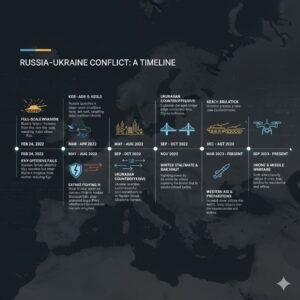
In democratic societies, political leaders are used to fiery rhetoric. But for a strategic rival — whose war in Ukraine has already reshaped European defence, energy markets, and global alliances — to choose such language signals highly emotional brinkmanship. It reflects deep frustration in Moscow about what Russia sees as Europe’s relentless sanctioning and diplomatic isolation. The real shock: this is not a joke — it’s geopolitics. It’s communication strategy. And it’s now at the heart of one of the most dangerous conflicts in modern history.
2️⃣ What Exactly Did Putin Say?
During a meeting with senior military officials and press, Putin described some European leaders openly as “little pigs”, further accusing them of wanting to benefit from what he termed Russia’s decline and “collapse.” He said Russia would meet its objectives in Ukraine either through diplomacy or force — a line that combines both threat and political posturing.
This wasn’t whispered behind closed doors. It was televised and widely reported, with several outlets noting the tone was unusually abrasive for a sitting president of a major power. Putin’s remark came as European leaders were debating whether to freeze €210 billion of Russian assets indefinitely and possibly channel funds to support Ukraine — a move Russia has staunchly opposed.
Crucially, the insult was both emotional and strategic: emotional in its language, strategic in its timing. Putin clearly wanted to signal both anger at European policies and to rally domestic and allied audiences against a narrative he sees as Western domination. In geopolitical messaging, even insults can be deliberate tactics.
3️⃣ Why Europe Reacted So Strongly
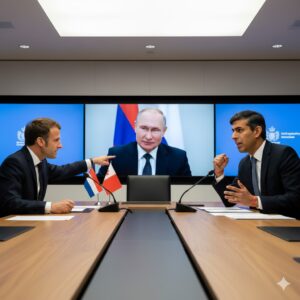
European leaders did not take the insult lightly. Across Brussels, Berlin, Paris, and Warsaw, the comment was seen as a breach of diplomatic norms. For the EU, preserving a rules-based order and respectful dialogue has been central to its identity; such crude language from a foreign leader threatens that order.
European policymakers have spent the last four years navigating Russia’s aggression in Ukraine, imposing 19 sanctions packages so far in 2025 alone, targeting individuals, entities, weapons supply chains, and Russia’s “shadow fleet” helping Moscow evade restrictions. These measures have hammered Russia’s economy and isolated it, but they have also bred resentment in Moscow.
In response to Putin’s comment, several EU officials reiterated that political disagreements should be handled with dignity and respect, not insults. Some European media characterised the remark as an attempt to distract from Russia’s isolated position and the very real diplomatic crisis unfolding at the EU summit.
Public reaction in Europe has been one of anger and disbelief, with commentators saying such rhetoric could undermine decades of delicate diplomacy and make consensus on sanctions even harder to reach.
4️⃣ Underlying Russia–Europe Tension (A Historical Snapshot)
To understand why this insult hit such a nerve, we have to step back. Russia and Europe’s relationship has been strained for decades, but it visibly deteriorated after Russia’s full-scale invasion of Ukraine in February 2022, which led to unprecedented sanctions and diplomatic sanctions.
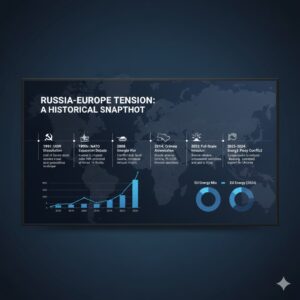
Before 2022, Russia was a major supplier of oil and gas to Europe — in 2021, about 36% of the EU’s natural gas came from Russia, and Europe relied heavily on pipeline supplies. After Kyiv was invaded, Europe worked to wean itself off Russian energy, diversification which both hurt and reshaped markets globally.
The EU sanctions regime has been extensive: from freezing Russia’s foreign reserves to restricting exports of technology crucial to the Russian military. Russia’s demands — including a halt to NATO’s eastward expansion — have been repeatedly rejected by European leaders as non-starters, further fuelling tension.
All this sets the stage for why the insult was more than crude: it was a symbol of a deeply fractious and deteriorated relationship.
5️⃣ What Putin Actually Wants
So, what’s behind the sarcastic insult? Diplomats and strategic analysts see several layers:
Domestic messaging: Russia’s government has increasingly used strong rhetoric to burnish its leadership image at home, framing the conflict in Ukraine as a defensive and glorious cause.
Global signalling: Putin’s comment was heard not just in Europe but across Asia, Africa, and the Middle East. It sends a message to China, India, and others that Russia considers the EU a declining power whose political resolve is weak.
Strategic deterrence: Harsh language can sometimes be intended to change the conversation or reset expectations — a kind of psychological warfare that seeks to weaken adversaries’ confidence while consolidating one’s own base.
Taken together, the insult was less a slip of the tongue and more a calculated rhetorical move in the larger information war.
6️⃣ Why Harsh Rhetoric Is Increasing in Global Diplomacy
In recent years, global politics has seen an uptick in blunt, unfiltered language from world leaders — and it’s not just Russia. Elections in major democracies in 2025 have pushed politicians toward populist communication, where spicy rhetoric plays well with domestic audiences and on social media.
Leaders increasingly use short, viral phrases to dominate headlines — and this plays into narrative competition between great powers. What would once have been private diplomatic complaints now show up on Twitter, forcing foes to respond publicly rather than behind closed doors.
This trend makes diplomacy more volatile and misunderstandings more likely — especially when leaders speak past one another rather than with one another.
7️⃣ Impact on World Markets
These new tensions have real economic consequences.
Oil markets: Geopolitical risk premiums are rising again, pushing crude prices upward as traders price in instability. Russia, still a major oil exporter, indirectly influences these markets despite sanctions.
Currencies: The Euro has seen jittery swings against the US Dollar and Indian Rupee as markets react to risk asset movements.
Russian ruble: Russia’s currency fluctuated as investors digested the political signal from Putin’s speech, which combined defiance with the threat of further military escalation. Markets hate uncertainty, and crude diplomatic language feeds uncertainty.
These economic shifts are felt globally — from European households paying higher energy bills to Indian importers navigating costlier commodity prices.
8️⃣ Impact on India
From Delhi’s standpoint, this moment is delicate. India maintains a strategic partnership with Russia, including defence cooperation and energy trade, while also engaging deeply with European markets.
India has been careful to balance relations without choosing sides overtly. New Delhi has significant economic ties with both the EU (a major trading partner) and Russia (a long-standing strategic partner). In 2025, India imported Russian crude at discounted rates amid sanctions — a move that has drawn occasional US criticism.
From an Indian government perspective, escalated Europe-Russia rhetoric is not something to cheer — it complicates diplomacy, risks market instability, and potentially drags India into narratives it would prefer to avoid.
9️⃣ What Experts Are Saying
Top geopolitical analysts see Putin’s insult as a calculated shift, not a blunder.
Some Western think tanks interpret it as a tactic to divert attention from Russia’s economic pressures and military challenges. Others see it as part of Russia’s broader “hybrid warfare” strategy that includes sabotage, cyber operations, and psychological tactics to weaken Western unity.
Inside Europe, analysts argue that such rhetoric will only harden positions and reduce diplomatic space. From India, experts stress the need for dialogue and de-escalation, warning that political insults rarely yield peaceful outcomes.
🔟 Will This Escalate Into a Larger Conflict?
The insult could have consequences beyond headlines. There is risk of:
1. Continued Ukraine war escalation: Putin has already said Russia might advance territory if Europe resists peace proposals.
2. EU–NATO hardening: NATO continues to back Ukraine, with enhanced troop deployments and deterrence measures.
3. Diplomatic breakdown: Trust has eroded, and personal insults make future negotiations harder.
However, history shows crises also produce negotiation channels — if cooler heads prevail. The Indian government and many Asian partners have called for restraint, dialogue, and peaceful resolution, stressing that geopolitical insults do not substitute for negotiation.
🏁 Conclusion — A Moment of Truth in Global Diplomacy
Putin’s “little pigs” comment is much more than a meme. It reflects a deeply strained global system, one in which old norms of diplomatic language are being tested. For India and much of the Global South, this is a time to advocate for peace and dialogue, not division.
What happens next will define the geopolitical landscape for years — not just for Europe and Russia, but for every country whose economy, security, and diplomatic relations are tied to stability in Europe and Eurasia.
To visit official website of NATO click here
📌 Putin Calls EU Leaders ‘Little Pigs’ – Frequently Asked Questions (FAQ)
1️⃣ Why did Vladimir Putin call European leaders “little pigs”?
Putin used the phrase “little pigs” during a televised address aimed at criticising European governments for extending sanctions and debating the permanent freezing of over €210 billion worth of Russian assets. The remark reflects Moscow’s frustration with Europe’s Ukraine policies, NATO support, and long-term sanctions pressure. Analysts believe it was not accidental—it was a calculated insult meant to provoke, rally Russia’s domestic audience, and show defiance to the West.
2️⃣ Where and when did Putin make the comment?
The comment was made on 17 December 2025 during a high-level briefing with senior military officials in Moscow. The remark quickly spread across Western and Asian media outlets and trended on platforms like Google and X because of the language used and the geopolitical timing.
3️⃣ How did the European Union react to Putin’s statement?
EU leaders condemned the language as undiplomatic and hostile, arguing that name-calling escalates tensions and damages diplomatic norms. Some members blamed Putin for distracting global attention away from Russian economic struggles and battlefield losses in Ukraine. European newspapers described the insult as “historic” and “provocative.”
4️⃣ What does this statement mean for Russia–Europe relations?
Relations were already at their lowest point since the Cold War due to:
the Ukraine war
NATO expansion
sanctions
energy conflict
Putin’s insult adds another emotional layer to this strategic divide and further reduces chances of near-term negotiations.
5️⃣ Will Putin’s comment affect global markets?
Short-term volatility is already visible.
Oil prices saw upward pressure
The Euro weakened slightly against USD
The Russian Ruble fluctuated
Geopolitical language like this spooks investors because it implies potential escalation rather than de-escalation.
6️⃣ How does this situation affect India?
India sits in a unique position:
Russia is a defence and energy partner
EU is a major trade and investment partner
New Delhi will avoid taking sides publicly, but Indian analysts warn that prolonged Europe–Russia hostility could raise oil prices, delay trade negotiations with Europe, and disrupt global currency stability.
7️⃣ Is this the first time Putin has used harsh language against Europe?
Putin has criticised Europe before—calling Western governments “colonial,” “arrogant,” and “two-faced”—but the use of “little pigs” is unprecedented. The tone suggests the Kremlin is shifting to sharper, more emotional rhetoric for internal political advantage.
8️⃣ Could this lead to a larger military conflict?
The insult alone won’t start a war, but it reflects worsening communication between Russia and Europe. Combined with:
NATO troop deployments,
frozen Russian assets, and
ongoing Ukraine battles,
the risk of escalation remains serious.
9️⃣ Why is harsh language becoming common in global diplomacy?
Social media pressure + election cycles + populism = aggressive speech. Leaders speak to domestic audiences, not just diplomats. Insults are becoming political tools.
🔟 Should India take an official stand?
India will likely:
urge peace
avoid condemning either side
maintain energy and defence ties with Russia
continue EU trade negotiations
New Delhi’s foreign policy depends on balance, not emotional reactions to rhetoric.
To visit the official website of the President of Russia click here
📌 People Also Ask (PAA)
1️⃣ What did Vladimir Putin mean by calling EU leaders “little pigs”?
Putin used the term to mock European decision-makers as weak, arrogant, and dependent on US strategic direction. Analysts say it was aimed at humiliating Europe during its Ukraine sanctions summit and projecting Russian strength globally.
2️⃣ Why did Putin attack Europe verbally now?
The comment came just as the EU prepared to freeze about €210 billion in Russian assets permanently and expand Ukraine funding — a move the Kremlin sees as economic war. Timing was not accidental.
3️⃣ How are European leaders responding to Putin’s insult?
European politicians condemned the language, stating it crosses diplomatic red lines. Some EU members are now pushing for tighter sanctions and NATO coordination, arguing Putin’s sarcasm proves negotiation is impossible without pressure.
4️⃣ How has Russia–Europe tension changed since the Ukraine war?
Before 2022, Russia supplied almost 36% of Europe’s gas and had strong trade ties. Today, relations have collapsed under sanctions, energy cuts, and battlefield support to Ukraine — creating a near-Cold War environment.
5️⃣ Could Putin’s comment impact global oil prices?
Yes. Harsh Russia–EU rhetoric normally increases the geopolitical risk premium in oil markets. Traders fear supply disruption, pushing Brent crude upward whenever tensions spike.
6️⃣ What does Putin gain by insulting Europe publicly?
It helps him:
rally domestic support
show anti-West strength
intimidate EU politicians
shift media attention away from battlefield pressure
It’s a communication strategy, not an emotional slip.
7️⃣ What does this mean for India’s foreign policy?
India balances both sides — Russia (energy + defence) and the EU (trade + investment). New Delhi will avoid public judgement but will monitor oil prices, Ukraine escalation, and diplomatic fallout.
8️⃣ Is a bigger conflict coming after Putin’s insult?
Experts say language alone won’t trigger war, but it reflects worsening political trust. Combined with NATO troop activity and frozen assets, it increases escalation risk.
9️⃣ Why is strong language increasing among world leaders recently?
Social media + domestic politics + election pressures have replaced polite diplomacy with viral insults. Leaders speak for domestic applause, not international etiquette.
🔟 What role does NATO play in this tension?
NATO continues military support to Ukraine and sees Russia as a long-term strategic threat. Putin’s insult hardens NATO’s stance and strengthens Europe’s argument for military unity.
To visit official website of EU click here
📌 People Also Ask
1️⃣ Why is Putin calling European leaders “little pigs”?
Putin used the phrase as a public insult aimed at EU leadership while criticising sanctions and Ukraine support. In US and UK media, the comment is seen as psychological warfare, while Indian analysts view it as a political strategy to pressure Europe.
2️⃣ Did Vladimir Putin actually say “little pigs” on live TV?
Yes. The comment was made during a televised address discussing Europe’s sanctions and frozen Russian assets. The clip is circulating widely across American, British, and Indian social platforms.
3️⃣ How are European countries responding to Putin’s remark?
Europe has condemned the insult, calling it hostile and offensive. US and UK newspapers report that Brussels may push tougher sanctions, while Indian media stresses the need for dialogue.
4️⃣ What does Putin’s statement mean for the Ukraine war?
The insult signals hardening positions. US analysts warn it shows no peace negotiations are close, UK think tanks call it propaganda, and Indian diplomats argue the conflict needs political—not personal—solutions.
5️⃣ Will Putin’s “little pigs” comment affect oil and gas prices globally?
It could. US traders watch Russia–Europe tensions closely, UK energy firms react to risk spikes, and Indian oil buyers fear price jumps because India imports a large share of crude from global markets.
6️⃣ What does this mean for NATO and EU security?
US military experts say this rhetoric will strengthen NATO unity, the UK sees it as justification for defence spending, and Indian analysts monitor how it might reshape Eurasian security.
7️⃣ Why is harsh political language rising worldwide?
In the US and UK, politicians use bold language for election appeal. In India, social media narratives amplify aggressive diplomacy. Putin’s remark fits the same trend of global political theatre.
8️⃣ Could this insult push Europe and Russia toward a larger conflict?
It adds tension but won’t start a war. US intelligence commentary suggests escalation risk remains tied to battlefield events, UK military reporters warn rhetoric fuels mistrust, and India urges calm diplomacy.
9️⃣ How are Americans reacting to Putin’s comment?
US reactions split: some call it dangerous, others dismiss it as trolling. American cable networks have amplified the quote heavily.
🔟 What does this statement mean for India–Russia relations?
India will not abandon Moscow over rhetoric. Russia is a key defence and energy ally. New Delhi will continue balancing ties with Europe, Washington and Moscow.
📌 PAA Questions + Answers
1️⃣ What triggered Putin to insult EU leaders now?
The insult happened right before the EU vote on freezing Russian assets permanently. The timing suggests emotional pressure and political signalling.
2️⃣ Did Putin apologise for calling European leaders “little pigs”?
No. Russia doubled down, framing the insult as a reaction to anti-Russian policies.
3️⃣ Are EU leaders planning retaliation after Putin’s remark?
EU diplomats are considering more sanctions, stronger NATO dialogue, and blocking Russian trade routes.
4️⃣ Why is the phrase “little pigs” trending globally?
It’s unusual to hear a nuclear-armed leader use childish insults on live television. That shock factor fueled viral searches.
5️⃣ Is Putin losing patience with Europe?
Analysts think so — sanctions, Ukraine losses, and diplomatic isolation are piling pressure on Moscow.
6️⃣ What was the public reaction in Europe to Putin’s words?
European citizens mocked and criticised Putin across social media — the comment fed anger and humour simultaneously.
7️⃣ Did Western media censor Putin’s insult?
No. US, UK, and European outlets covered the quote directly, calling it “unprecedented language”.
8️⃣ Has any EU leader responded directly to the insult?
Some officials called the language “childish”, others said it “proves Russia is desperate to provoke Europe”.
9️⃣ Will Putin’s language damage future peace talks?
Yes — insults make diplomacy harder. Negotiators require trust, and this remark erodes it.
🔟 How does Russia justify insulting Europe?
Russia argues Europe has been insulting Moscow for years through sanctions, NATO expansion and Ukraine aid.
1️⃣1️⃣ Did NATO react to Putin’s insult?
NATO didn’t react directly, but the alliance emphasised continued military support to Ukraine.
1️⃣2️⃣ Could Putin face international backlash over his remark?
Western governments already use the incident as proof of Russian aggression.
1️⃣3️⃣ Is this the start of a propaganda war between Russia and the EU?
Yes — both sides are framing narratives to influence global opinion and domestic voters.
1️⃣4️⃣ Has Russia used similar insults in the past?
Russia has criticised the West heavily, but the term “little pigs” stands out as rare and unusually personal.
1️⃣5️⃣ What does Ukraine say about Putin’s language?
Ukraine called it proof that Russia is not serious about peace. Kyiv believes Europe must respond unitedly.
1️⃣6️⃣ Will this remark push Europe closer to the US?
Probably. Europe typically strengthens US alignment when Russia’s rhetoric becomes confrontational.
1️⃣7️⃣ Is Putin trying to appeal to his domestic audience?
Yes — the tone energises nationalist voters inside Russia who want to see Moscow talking tough.
1️⃣8️⃣ How is India reacting to this diplomatic drama?
India remains neutral, urging stability, avoiding inflammatory language, and prioritising its energy diplomacy.
1️⃣9️⃣ Why is Putin focusing insults on Europe, not America?
Putin may see Europe as more vulnerable diplomatically, economically, and politically than the US.
2️⃣0️⃣ Could this insult reshape geopolitical alliances in 2025?
Yes — hostile language hardens alliances, pushes states to choose sides, and increases military posturing.