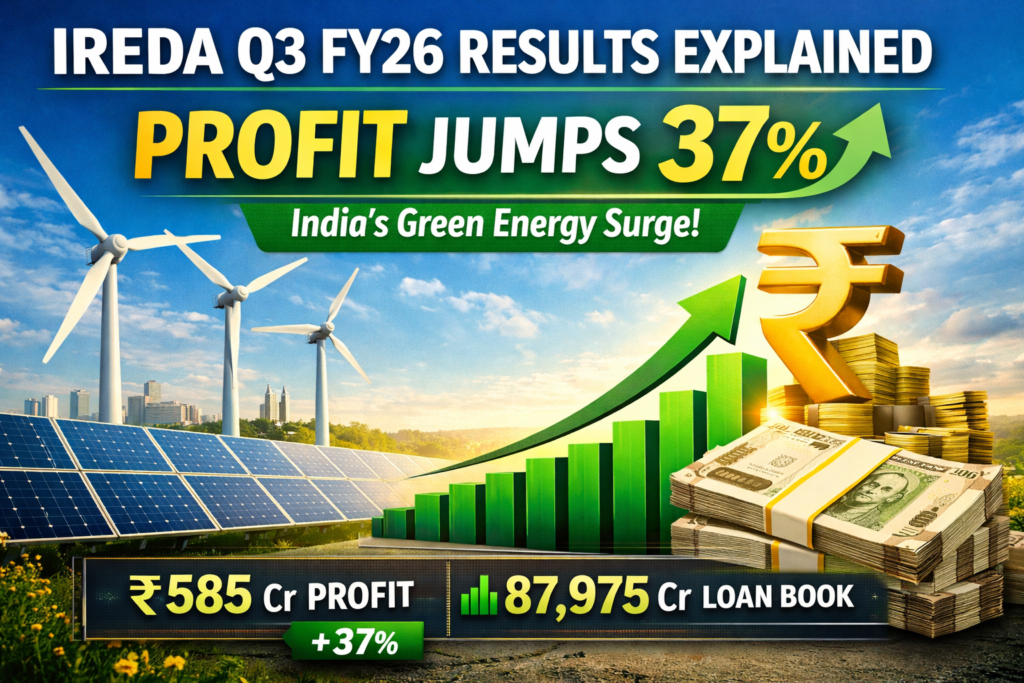
As someone who has closely observed India’s economic and institutional evolution for over three decades, I can say with confidence that moments like this are rare. The Q3 FY26 results of Indian Renewable Energy Development Agency (IREDA) are not just strong quarterly numbers. They mark a structural shift in how India finances its future. This is not about one PSU performing well; it is about how India is quietly building long-term energy sovereignty through disciplined green finance.
The audited results for the quarter ended December 31, 2025, announced on January 9, 2026, confirm that IREDA has moved beyond its old image as a niche renewable lender. Today, it stands at the center of India’s clean energy transformation, fully aligned with the national vision of 500 GW non-fossil fuel capacity by 2030. What we are witnessing is the compounding effect of policy clarity, institutional reform, and execution discipline.
1. The Executive Summary: A “Navratna” in Full Bloom
IREDA’s Q3 FY26 performance proves that national responsibility and commercial profitability can go hand in hand. The company is no longer just supporting renewable projects; it is financing the backbone of Viksit Bharat’s energy transition. In an era where many global green lenders are struggling with asset quality and funding costs, IREDA is expanding profitably while improving risk metrics.
. IREDA OFFICIAL RESULTS & COMPANY PROFILE
What stands out most is operational agility. In my 30 years of watching Indian PSUs, very few have demonstrated the ability to publish fully audited quarterly results within just nine days of quarter-end. This reflects deep internal reforms, improved governance, and confidence in data integrity.
The headline number—a 37% year-on-year jump in profit—is not a statistical accident. It is the outcome of tighter underwriting standards, better project selection, improving power-sector discipline, and access to lower-cost capital after attaining Navratna status. This quarter confirms that IREDA has entered a structurally higher growth phase.
2. Real-Time Q3 FY26 Financial Snapshot (Audited Data)
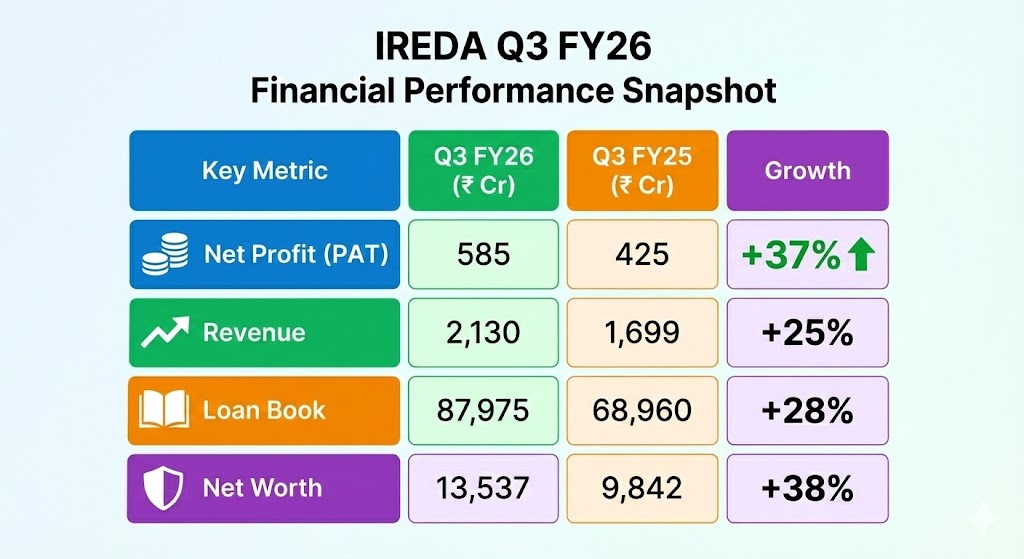
The financial performance of IREDA in Q3 FY26 is impressive not only in absolute terms but also in its consistency across metrics. The company reported a Profit After Tax (PAT) of ₹585 crore, compared to ₹425 crore in Q3 FY25. A 37% growth at this scale signals operational maturity, not just expansion.
Revenue from operations rose to ₹2,130 crore, up from ₹1,698 crore last year, registering a solid 25% year-on-year increase. This growth is driven by higher interest income from an expanding loan book and better yield management, not by one-time accounting gains.
The balance sheet also strengthened significantly. Net worth crossed ₹13,537 crore, a sharp 38% increase from the previous year. For a lender, rising net worth is crucial because it directly translates into higher lending capacity without overleveraging.
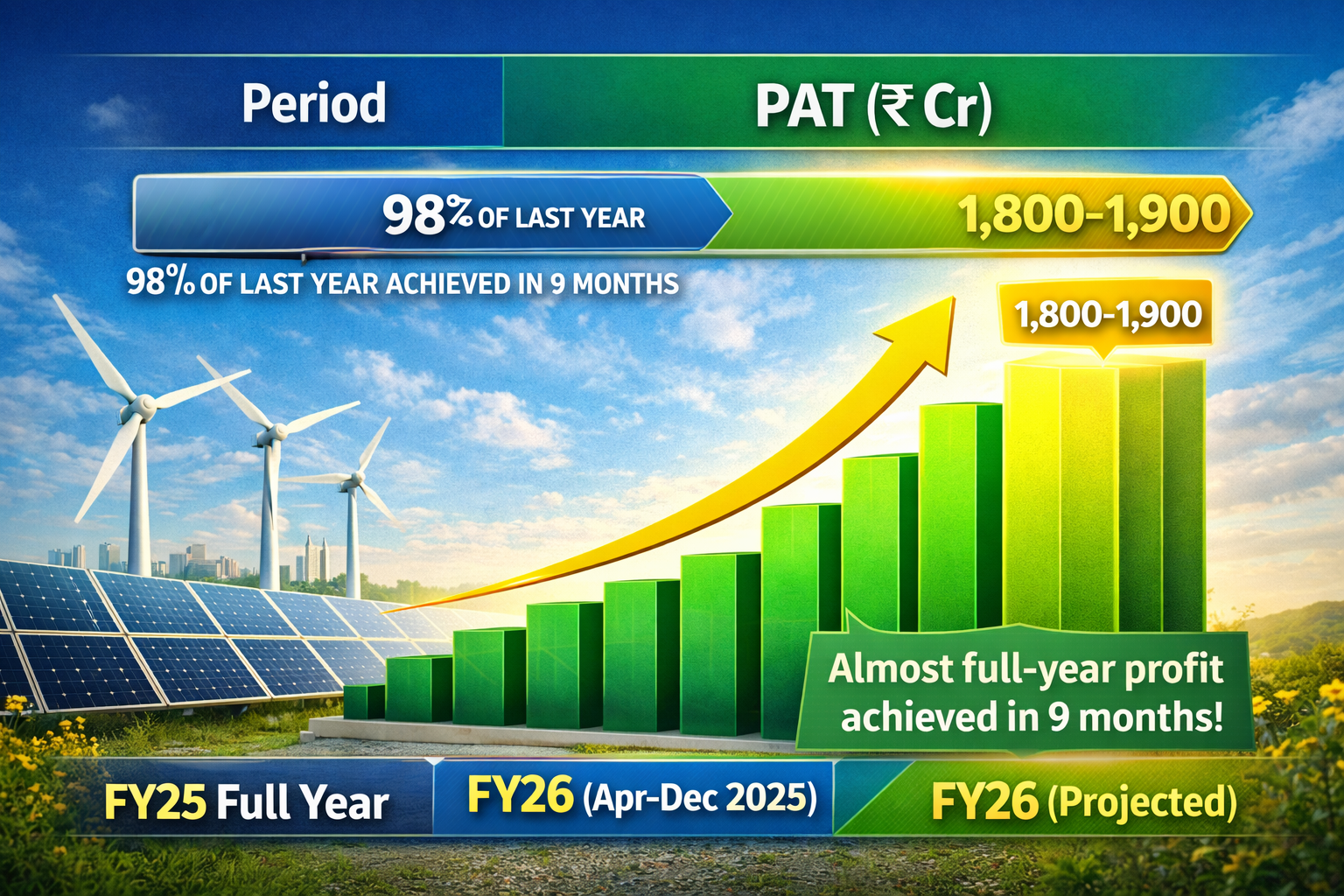
Looking at the nine-month performance (April–December 2025), IREDA has already reported a total PAT of ₹1,381 crore, which is close to its full-year profit of the previous financial year. This trajectory suggests that FY26 could be a record year in every sense.
3. Fundamental Deep-Dive: The “Quality” of Growth
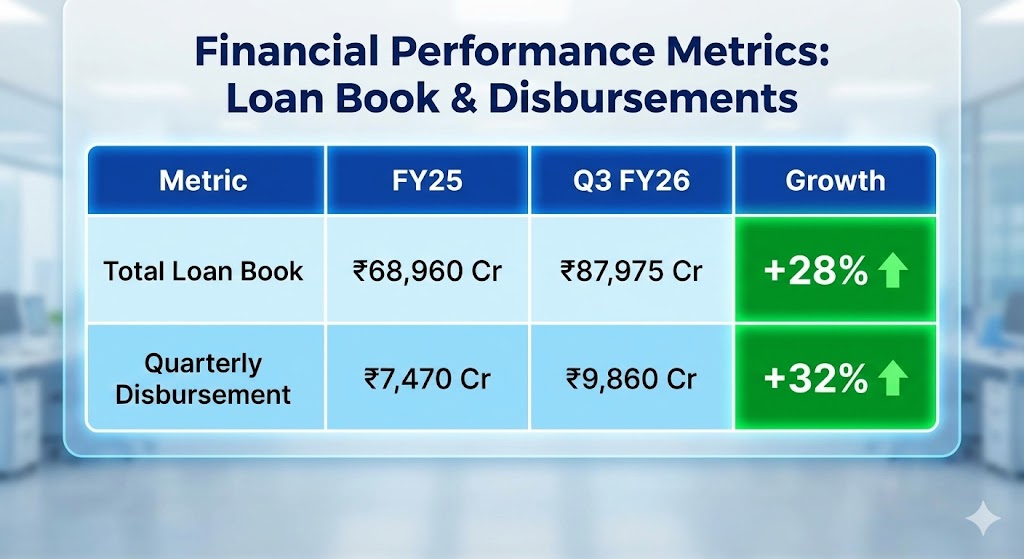
Growth is meaningful only when it is sustainable. What makes IREDA’s Q3 FY26 numbers exceptional is not just scale, but quality. The loan book expanded to ₹87,975 crore, marking a 28% year-on-year increase. This expansion reflects strong demand from solar, wind, hybrid energy, green hydrogen, and EV infrastructure projects.
Disbursements during the quarter stood at ₹9,860 crore, up 32% from last year. This confirms that renewable projects are not stuck on paper; they are being executed on the ground. Land acquisition, grid connectivity, and power purchase agreements are moving faster than before.
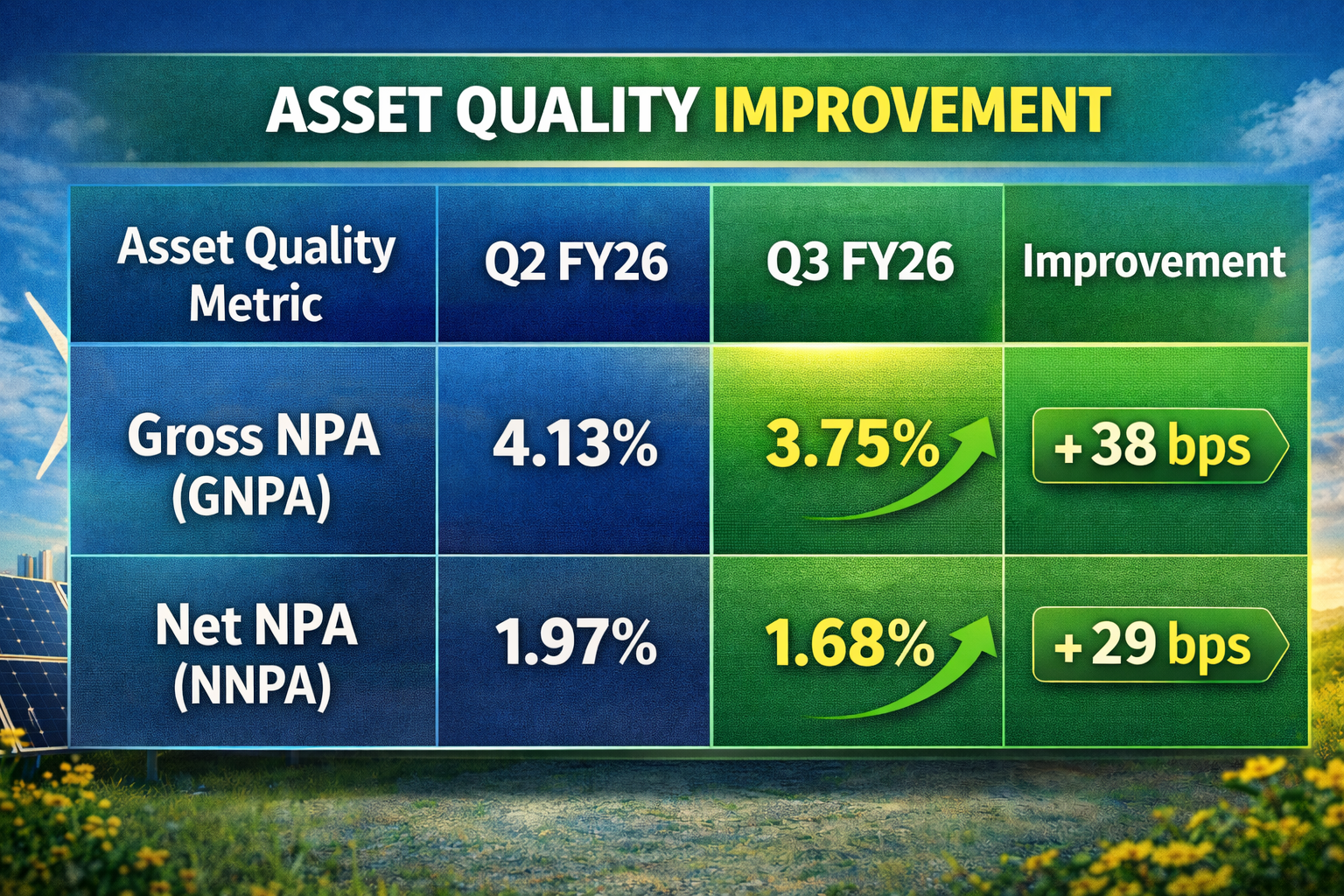
Most importantly, asset quality is improving—something rarely seen during rapid expansion phases. Gross NPA declined to 3.75% from 4.13% sequentially, while Net NPA improved to 1.68% from 1.97%. For a lender operating in what is often labeled a “risky” sector, this is a strong signal of underwriting discipline.
This improvement is also linked to structural reforms in the power sector. The government’s Late Payment Surcharge (LPS) rules have forced DISCOMs to clear dues on time, improving cash flows across the renewable value chain. Better borrower cash flow ultimately means better loan servicing for IREDA.
4. The Government & BJP Angle: Financing the 500 GW Target
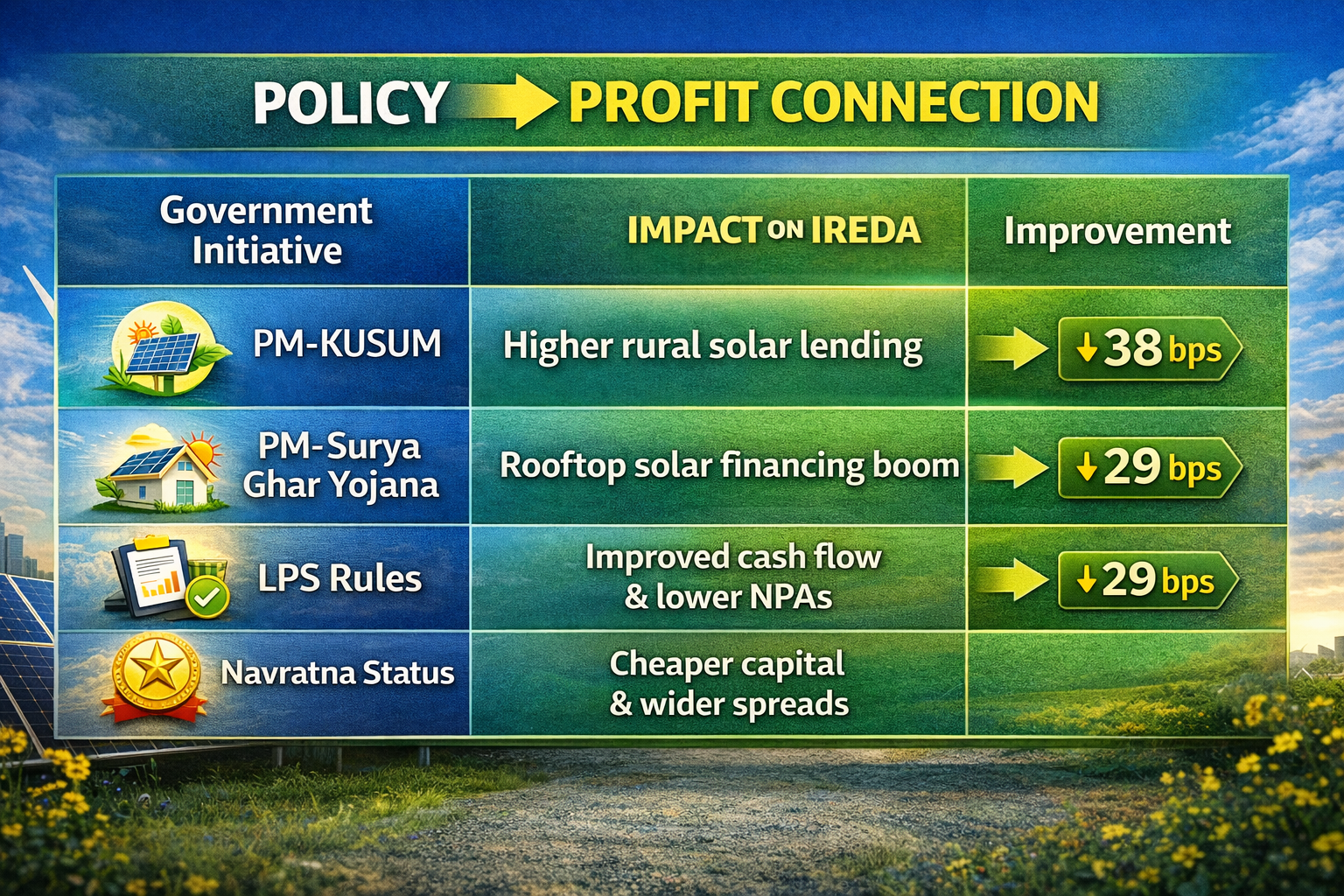
IREDA’s performance cannot be separated from the broader policy environment shaped by the Bharatiya Janata Party-led government. Renewable energy is no longer treated as a side project; it is a strategic national priority. IREDA functions as the financial arm of flagship schemes such as PM-KUSUM and PM-Surya Ghar (Muft Bijli Yojana).
Under PM-Surya Ghar, millions of households are expected to install rooftop solar systems. Each installation requires financing that is affordable, scalable, and reliable—precisely where IREDA’s role becomes critical. Instead of relying heavily on private banks, the government has empowered a PSU with sector expertise to lead this financing wave.
There is also a deeper strategic dimension. Every rupee lent by IREDA to domestic solar manufacturers, EPC players, and storage companies reduces India’s dependence on imported equipment, especially from China. This is Aatmanirbhar Bharat in action, not just in words but in balance-sheet terms.
The Navratna status, granted in FY25, has played a decisive role. It allows IREDA greater financial autonomy, enabling it to raise funds through private placements, bonds, and Qualified Institutional Placements (QIPs) at lower costs. These savings are now visible in improved interest spreads and higher profitability.
MINISTRY OF NEW & RENEWABLE ENERGY (MNRE)
5. Geoeconomic Logic: Green Finance as Diplomacy
In today’s fragmented global order, energy security is no longer just an economic issue; it is a geoeconomic weapon. Oil prices remain volatile due to persistent tensions involving the US, Russia, Iran, and West Asia. For an import-dependent country like India, this volatility acts as a hidden tax on growth.
IREDA’s financing of domestic renewable capacity creates what I call a “geoeconomic shield.” Every additional gigawatt of solar or wind reduces India’s exposure to global fossil fuel shocks. This has long-term benefits for inflation control, fiscal stability, and current account management.
On the global stage, IREDA is emerging as a model institution for BRICS+ and the Global South. Many developing nations are searching for ways to finance clean energy without relying excessively on Western capital or multilateral institutions with rigid conditions. India’s experience with IREDA offers a replicable framework—policy-backed, commercially viable, and nationally aligned.
In this sense, green finance itself becomes a tool of diplomacy, enhancing India’s leadership credibility in climate negotiations and South-South cooperation.
6. Stock Perspective: Valuation vs. Vision
From a market standpoint, IREDA presents a rare case where valuation and long-term vision appear aligned. The company currently commands a market capitalization of over ₹38,000 crore. At a price-to-earnings ratio of around 22x, the stock is not cheap, but it is far from overvalued.
This valuation is justified by a 51% profit CAGR over the last five years, a number few financial institutions can match. More importantly, this growth is policy-backed and structurally supported, reducing downside risk.
Technically, the stock has been consolidating in the ₹135–140 range, indicating strong institutional support. Such consolidation after a sharp rally often precedes the next leg of upward movement, especially when fundamentals continue to improve.
For long-term investors, IREDA is not a trading story. It is a compounding story tied directly to India’s energy transition over the next decade.
7. Conclusion: The “Energy For Ever” Promise
The final takeaway is simple. IREDA is no longer just another PSU lender. It has evolved into a wealth creator for investors and a strategic instrument for national development. Since its listing, the stock has delivered multibagger returns of over 118%, rewarding those who understood its long-term relevance early.
As India approaches the February 1, 2026 Union Budget, green infrastructure financing is expected to take center stage. Green bonds, blended finance models, and credit enhancement mechanisms are likely to expand—and IREDA will be at the heart of all of them.
The promise is clear: affordable, domestic, and secure energy financing for decades to come. In a world searching for sustainable growth models, IREDA stands as proof that disciplined governance and national vision can compound together.
INDIA’S 500 GW RENEWABLE TARGET (OFFICIAL)
Key Financial Snapshot (For Data Visualization Use)
| Key Metric | Q3 FY26 (₹ Cr) | Q3 FY25 (₹ Cr) | Growth |
|---|---|---|---|
| Net Profit (PAT) | 585 | 425 | +37% |
| Revenue | 2,130 | 1,699 | +25% |
| Loan Book | 87,975 | 68,960 | +28% |
| Net Worth | 13,537 | 9,842 | +38% |
❓ Frequently Asked Questions (FAQs) on IREDA Q3 FY26 Results
1. What are IREDA Q3 FY26 results in simple terms?
The Q3 FY26 results show that Indian Renewable Energy Development Agency (IREDA) recorded strong growth across profits, revenue, and lending. Profit after tax rose by 37% year-on-year to ₹585 crore, while the loan book expanded by 28%, indicating rising demand for renewable energy financing in India.
2. Why did IREDA’s profit increase sharply in Q3 FY26?
IREDA’s profit growth was driven by three key factors:
first, higher loan disbursements to solar, wind, and clean energy projects;
second, lower funding costs after receiving Navratna status;
and third, improving asset quality as power sector cash flows stabilised.
3. How strong is IREDA’s loan book growth?
As of Q3 FY26, IREDA’s total loan book stood at ₹87,975 crore, up from ₹68,960 crore in FY25. This reflects strong execution of renewable energy projects and faster financial closure across utility-scale and rooftop solar segments.
4. Is renewable energy lending risky for IREDA?
While renewable projects were once considered high-risk, the situation has improved significantly. In Q3 FY26, Gross NPA fell to 3.75% and Net NPA declined to 1.68%, showing better repayment behaviour and stronger project cash flows. Government reforms in the power sector have also reduced payment delays.
5. How do government policies support IREDA’s growth?
Government initiatives such as PM-KUSUM, PM-Surya Ghar Yojana, and Late Payment Surcharge (LPS) rules directly improve demand and cash flow visibility for renewable projects. These policies increase lending opportunities for IREDA while reducing credit risk.
6. What does Navratna status mean for IREDA?
Navratna status gives IREDA greater financial autonomy. It allows the company to raise funds at lower cost, access capital markets more efficiently, and approve larger projects internally. This directly improves interest margins and long-term profitability.
7. How does IREDA support India’s 500 GW renewable energy target?
IREDA acts as a key financial backbone for India’s renewable expansion. By funding solar parks, wind projects, hybrid systems, storage, and rooftop installations, it enables faster capacity addition required to achieve the 500 GW non-fossil fuel target by 2030.
8. Why is IREDA important for India’s energy security?
By financing domestic renewable energy, IREDA helps reduce India’s dependence on imported fossil fuels. This lowers exposure to global oil price volatility, supports the rupee, and improves long-term economic stability.
9. Has IREDA delivered returns to long-term investors so far?
Since its listing, IREDA has delivered strong market performance, supported by rising profits and policy backing. However, stock performance depends on broader market conditions, and past returns do not guarantee future outcomes.
10. What should readers watch going forward?
Key factors to watch include:
Union Budget 2026 announcements on green finance
Growth in green bonds and blended finance
Asset quality trends
Pace of renewable capacity addition
These elements will shape IREDA’s medium- to long-term trajectory.🔍 People Also Ask (PAA): IREDA Q3 FY26 Results
What is IREDA and what does it do?
Indian Renewable Energy Development Agency (IREDA) is a government-owned financial institution that provides loans for renewable energy projects such as solar, wind, hydro, EV infrastructure, and green hydrogen. Its role is to support India’s clean energy transition by ensuring affordable and long-term financing.
Is IREDA a government company or private company?
IREDA is a central public sector enterprise (CPSE) under the Ministry of New and Renewable Energy (MNRE). It operates as a professionally managed PSU with commercial objectives while supporting national energy goals.
Why are IREDA Q3 FY26 results considered important?
The Q3 FY26 results are important because they show high profit growth, strong loan expansion, and improving asset quality at the same time. This combination indicates structural strength rather than temporary growth, especially in a sector that was once considered risky.
How much profit did IREDA make in Q3 FY26?
IREDA reported a Profit After Tax (PAT) of ₹585 crore in Q3 FY26, which represents a 37% year-on-year increase compared to the same quarter last year.
What is IREDA’s total loan book as of Q3 FY26?
As of Q3 FY26, IREDA’s loan book stood at ₹87,975 crore, reflecting strong demand from renewable energy developers and faster execution of clean energy projects across India.
Are IREDA’s NPAs increasing or decreasing?
IREDA’s asset quality has improved.
Gross NPA declined to 3.75%
Net NPA declined to 1.68%
This shows better repayment behaviour and stronger project cash flows in the renewable energy sector.
How does government policy affect IREDA’s performance?
Government initiatives such as PM-KUSUM, PM-Surya Ghar Yojana, and power-sector reforms directly increase renewable project viability. This leads to higher loan demand and lower default risk for IREDA.
What does Navratna status mean for IREDA investors?
Navratna status gives IREDA more operational and financial independence. It allows the company to raise funds at lower cost, approve larger projects internally, and improve profitability over time.
Is renewable energy financing in India financially sustainable?
Recent data suggests it is becoming more sustainable. Improved DISCOM discipline, long-term power purchase agreements, and falling technology costs have strengthened the financial stability of renewable projects.
How is IREDA linked to India’s 500 GW renewable energy target?
IREDA plays a key financing role by funding large solar parks, wind farms, rooftop solar systems, and energy storage projects—making it a critical institution for achieving India’s 500 GW non-fossil fuel capacity target by 2030.
Why is IREDA relevant for India’s long-term economy?
By supporting domestic renewable energy, IREDA helps reduce oil imports, stabilise energy costs, protect foreign exchange reserves, and improve long-term economic resilience.