India’s Geopolitical Masterstroke: From Putin to Zelensky, Why India Is Not Isolated but Rising
For weeks, critics and commentators—especially across the border in Pakistan—were celebrating what they believed was India’s diplomatic downfall. They argued that India’s relationship with the United States was deteriorating, China was already hostile, and Europe was upset after President Vladimir Putin received a warm reception in New Delhi. According to them, India was on the verge of global isolation, and Pakistan was somehow “isolating” India on the world stage.
But today’s developments have shattered that narrative completely. What many interpreted as India’s diplomatic silence or miscalculation is now revealing itself as a carefully executed geopolitical strategy. India is not being pushed into a corner; it is actually expanding its influence on multiple fronts—Russia, Ukraine, Europe, and the United States—all at the same time.
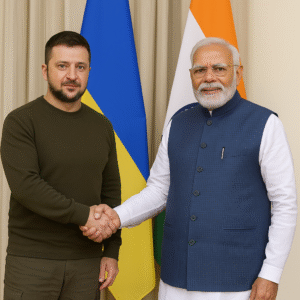
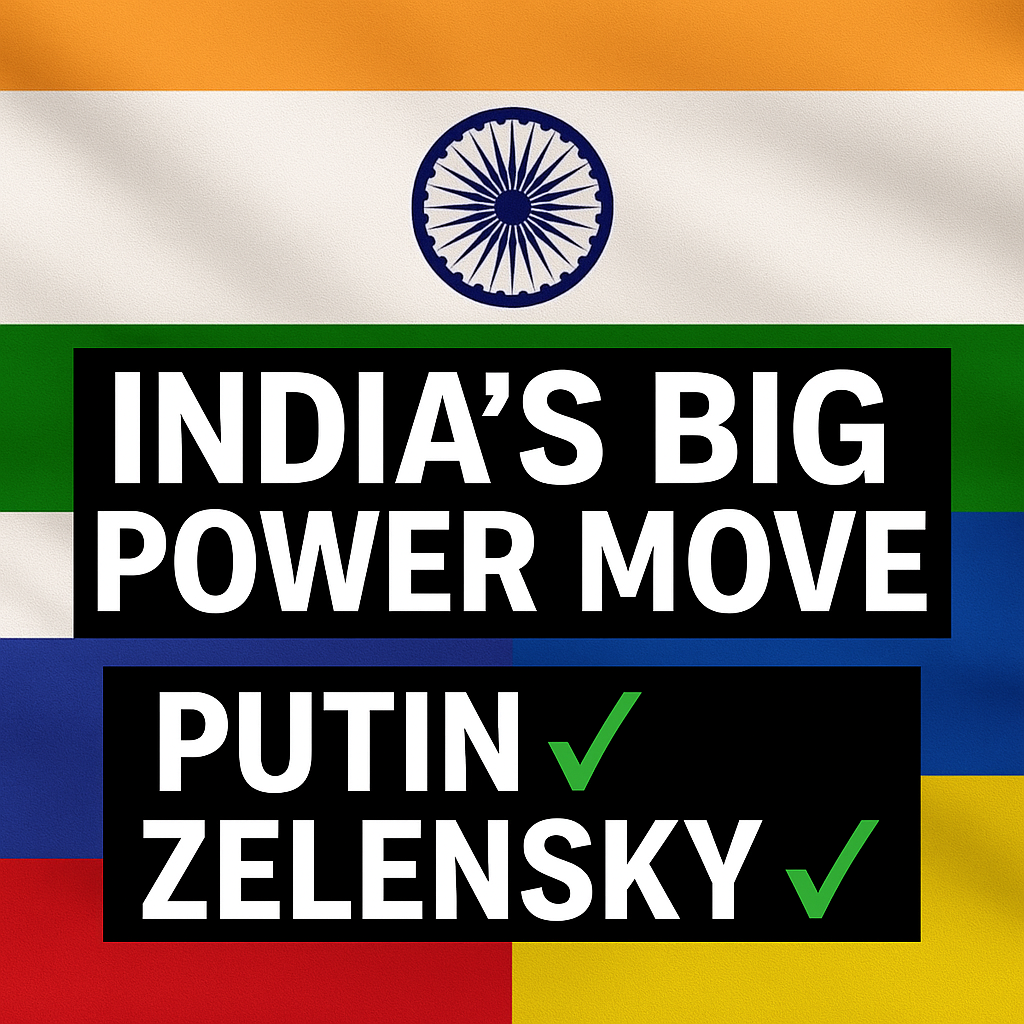
Recent reports confirm that India is working on finalising a visit by Ukrainian President Volodymyr Zelenskyy, with both sides coordinating potential dates. The move comes soon after India hosted Russia’s President Putin—making India one of the few nations capable of engaging both sides of the most polarizing global conflict of the decade.
This is not isolation.
This is strategic balance.
This is geopolitical maturity.
Why Critics Misread India’s Diplomatic Silence
When Putin left India without any major public announcement, critics assumed India had weakened its ties with Europe and the US. This conclusion was not only premature but fundamentally flawed. India was not hiding deals, nor was it avoiding global scrutiny. Instead, India was ensuring that its partnerships with the West, especially in technology and defence, remained intact.
In today’s global environment, loud diplomacy often leads to unnecessary friction. Silent diplomacy, on the other hand, opens doors to bigger opportunities. And that is exactly what India was doing—building geopolitical space quietly while protecting its long-term interests.
Hosting Putin and Inviting Zelensky: India’s Balancing Act
India is in a rare position in global geopolitics: it enjoys trust in Moscow and respect in Kyiv. At a time when the Russia–Ukraine war has divided the world, India is one of the only major powers that can speak to both sides without losing credibility.
After Putin’s successful visit, reports now confirm that India is preparing for Zelensky’s visit as part of a diplomatic balancing exercise. This move is not symbolic—it has deep economic, geopolitical, and strategic significance.
Inviting the Ukrainian President helps India reassure Europe, strengthen ties with key partners like France and Germany, and demonstrate that India is not aligned with any one side of the conflict. Instead, India is aligned with its own national interests.
Official website of Ministry of External Affair click here
Ukraine’s Importance to India: More Than Just Diplomacy
Before the Russia–Ukraine war began, Ukraine was already a crucial defence partner for India. Many of India’s Soviet-era military platforms—aircraft, naval engines, and key components—were serviced or upgraded by Ukrainian companies. Getting these services from Ukraine was not only cheaper but often of higher quality due to their inherited Soviet-era expertise.
The war disrupted this defence link, but India now wants to revive it in a new form. Zelensky’s potential visit signals a fresh beginning for defence cooperation. Ukraine’s experience with drone warfare, artillery systems, and battlefield innovation gives it a competitive edge in modern military technology. India stands to gain enormous strategic insights from this cooperation.
Ukraine Has Something No Other Country Has: Real War Data
One of Ukraine’s biggest strengths today is not an army or weapon system—it is battlefield data. Ukraine has accumulated millions of hours of drone footage and real-time combat analytics after holding back Russia for nearly three years. This includes detailed information on:
Which weapons survive modern warfare
What tactics succeed or fail
How drones, artillery, and cyber warfare interact
How modern defence systems perform under real battle pressure
This kind of live, real-world war data is priceless in the age of AI-driven warfare.
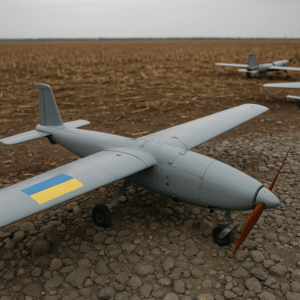
India, which faces a long-term strategic challenge from China, would benefit greatly from learning how Ukraine has countered a far stronger military. India is not seeking to take sides, but it absolutely wants access to this knowledge—and Ukraine is willing to cooperate.
Strategic Collaborations in Agriculture, Minerals, and Reconstruction
Ukraine is one of the world’s largest exporters of agricultural products. Before the war, India imported a significant volume of sunflower oil from Ukraine. Restarting and expanding trade in agriculture will boost both economies.
But the bigger opportunity lies in critical minerals. Ukraine holds valuable deposits of rare earth minerals, essential for electronic manufacturing, defence technology, and electric vehicles. As India pushes aggressively toward Atmanirbhar Bharat, securing supplies of critical minerals is a strategic necessity.
Ukraine also needs investment for post-war reconstruction—roads, bridges, energy systems, and infrastructure. India is ready to help, and in return, it gains deeper political and economic leverages in Eastern Europe.
Why Europe Actually Needs India More Than Ever
Some European countries were uneasy about Putin’s visit, but they did not distance themselves from India. In fact, Europe understands that India is the only large democratic power capable of balancing Russia, countering China, and stabilising the Indo-Pacific region.
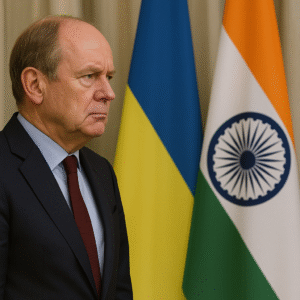
Countries like France, Germany, and the UK have made it clear that India is a central pillar in their Indo-Pacific policies. They rely on India for trade, technology, and geopolitical equilibrium. Hosting Zelensky helps reassure Europe that India respects their priorities, even as it maintains strong defence ties with Russia.
India is not losing Europe. India is managing Europe.
The True Geopolitical Picture: India Is Becoming Indispensable
India is not choosing sides. India is choosing advantages.
And every major world power is engaging with India because they cannot afford to ignore it.
Russia needs India for energy, defence sales, and global legitimacy.
Ukraine needs India for reconstruction, diplomacy, and global support.
Europe needs India for trade, technology, and China-balancing.
The United States needs India as a strategic partner in Asia and as a counterweight to China.
Even China, despite differences, recognises India’s growing economic and military weight.
A country is isolated only when nobody wants it. Today, everybody wants India.
Why Pakistan Misunderstood India’s Geopolitics Completely
Pakistan imagined that India’s ties with the US and Europe would collapse after hosting Putin. They assumed India would be forced into a corner. But Pakistan severely underestimated India’s geopolitical skill.
While Pakistan struggles with IMF loans, political instability, and reliance on one or two allies, India is building partnerships with all major power centres simultaneously.
The shock today in Pakistan’s media is understandable—they thought India was playing checkers while India was actually playing chess.
Conclusion: India Is Not Isolated — India Is Rising
India’s strategy today is not based on emotional alliances but practical, interest-driven partnerships. Hosting Putin while preparing to host Zelensky is not a contradiction—it is intelligent diplomacy. It tells the world that India can talk to both sides, negotiate with both sides, and benefit from both sides.
From defence and minerals to technology and reconstruction, India is opening multiple geopolitical doors at the same time. And far from being isolated, India is becoming one of the most central, necessary, and influential players in global affairs.
The world is not ignoring India.
The world is coming to India.
And India is welcoming everyone—on its own terms.
Follow me on facebook