

1️⃣ Introduction — Why This Historic FTA Matters to Every Indian
In late December 2025, India and New Zealand officially concluded a landmark Free Trade Agreement (FTA) after intensive negotiations that began earlier in March 2025 and took just nine months to finalise, a remarkably quick pace for such comprehensive deals.
For Indian readers, this is not just another “diplomatic headline” — it’s an agreement that will touch the lives of farmers, exporters, students, professionals, and small business owners alike. India’s exports will receive zero duty access into New Zealand, while goods and services from New Zealand will face far lower tariffs here. This means cheaper goods, more export opportunities, expanded jobs, foreign investment, and deeper economic ties that position India as a trusted trade partner in the broader Indo-Pacific region.
Economically, this deal aims to double bilateral trade within five years and attract around $20 billion in investment from New Zealand into India over the next 15 years, reflecting deep mutual confidence.
2️⃣ Background — Why India & New Zealand Needed This FTA
India’s trade policy in the last decade has evolved significantly. After choosing not to join the Regional Comprehensive Economic Partnership (RCEP) — a vast Asia-Pacific trade bloc — in 2019, India focused on pursuing bilateral FTAs with partners that bring quality market access and strategic balance.

New Zealand, a small but export-oriented Pacific economy, has steadily sought deeper market ties beyond traditional partners. The FTA negotiations were relaunched in early 2025 after over a decade of stalled talks — reflecting mutual desire to unlock complementarities in trade and services.
By diversifying beyond traditional markets like the Gulf and the U.S., India gains a foothold in stable, high-rule-based markets. For New Zealand, access to India’s 1.4 billion consumer base is a strategic opportunity.
3️⃣ What the FTA Includes — A Closer Look at the Deal

The India–New Zealand trade agreement is not a simple tariff pact — it’s a comprehensive economic framework covering goods, services, investment, mobility and regulatory cooperation:
Tariff Reductions & Market Access
New Zealand exporters will see tariffs reduced or eliminated on about 95 % of their goods entering India, one of the highest tariff coverage rates in any Indian FTA.
Around 57 % of these goods will be duty-free from day one, increasing to 82 % once fully implemented, with the remaining facing steep cuts.
India will eliminate or sharply cut tariffs on almost all imports from New Zealand, including machinery, automotive components, textiles, leather goods, and more.
Services & Temporary Mobility
India secured market access in over 100 service sectors, while New Zealand offered Most Favoured Nation (MFN) status in many services, meaning Indian service providers receive the same privileges as New Zealand’s best partners.
Provisions include student visas with work rights, post-study work options of up to 4 years for Indian graduates in STEM fields, and pathways for skilled Indian professionals to work in New Zealand.
Investment & Business Movement
New Zealand has committed to $20 billion in investment in India over the next 15 years, with focus on key sectors like tech, manufacturing and services.
The deal also simplifies procedures for businesses to operate and invest across borders, enhancing regulatory cooperation.
4️⃣ India’s Export Advantage — New Markets for Indian Industries
This FTA opens new doors for India’s export-oriented industries. Here’s how different sectors stand to benefit:
Pharmaceuticals & Healthcare
Indian medicines and generic drugs are already competitive in global markets. Duty-free access into New Zealand can boost Indian pharmaceutical export revenues and improve economies of scale.
Textiles & Apparel
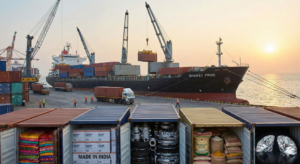
India’s strong textile sector, which supports millions of livelihoods, will find new demand in New Zealand’s consumer market, especially for cotton and ready-made garments.
Engineering Goods & Machinery
High-value Indian machinery and engineering equipment — used across agriculture and industry — can now enter New Zealand with reduced tariffs, making Indian manufacturers more competitive abroad.
IT & Services
Indian IT services and software companies gain expanded opportunities to serve New Zealand’s digital economy, especially in fintech, cloud services, and healthcare tech.
Collectively, these sectors could see export growth that supports job creation, higher factory utilization and direct engagement with New Zealand firms.
5️⃣ New Zealand’s Gains — A Balanced Win for Both Sides
The FTA is not one-sided — New Zealand also gains considerably:
Agricultural & Horticultural Exports
New Zealand is a major exporter of wool, forestry products, horticultural produce (like apples and kiwifruit), and seafood. Duty reductions will expand these sectors’ reach into India’s large middle-class market.
Services & Tourism
New Zealand’s education sector stands to benefit from increased Indian student enrollment, boosted further by enhanced visa provisions. Tourism ties are also expected to strengthen, with more travel and cultural exchange.
Enhanced Job Opportunities for Kiwis
With better access to the Indian market, New Zealand exporters expect job growth domestically, particularly in food processing, forestry and logistics.
6️⃣ Geo-Economics: How the FTA Fits Into the Indo-Pacific Strategy
This trade deal is not just about economics — it reflects a broader geo-economic posture. India’s pivot to high-standard FTAs with strategic partners like the UK, UAE and now New Zealand shows New Delhi’s intent to diversify beyond traditional markets and build resilient global supply links.

For New Zealand, aligning with India enhances its foothold in the Indo-Pacific — a region increasingly at the centre of global trade competition. This relationship offers both countries a chance to balance trade dependencies and reduce exposure to regional political tensions, including shifts in U.S.–China dynamics.
7️⃣ FDI and Industry Outlook — Investment Flow & Growth Potential
The $20 billion investment pledge from New Zealand signals long-term confidence in India’s economy. Over 15 years, this capital can fuel sectors like:
Technology startups and innovation
Food processing and cold-chain infrastructure
Renewables like green hydrogen and wind energy
Healthcare and traditional medicine linkages
The pact’s investment components also encourage cross-border joint ventures, boosting technology transfer and business collaboration.
8️⃣ Jobs, Visas & People-to-People Benefits
One of the most immediately noticeable aspects of this FTA for ordinary Indians is its impact on people:
Indian students now get longer post-study work options in New Zealand.
Skilled professionals such as IT experts, medical personnel and engineers can access job opportunities in a welcoming market.
A working-holiday visa scheme allows young Indians to spend up to 12 months working and traveling in New Zealand.
This mobility enhances cultural ties and gives Indian youth global exposure — something every job seeker will read with interest.
9️⃣ Impact on Indian Farmers & MSMEs

The deal consciously excluded opening dairy tariffs fully to protect Indian farmers and sensitive sectors, a strategic move to balance liberalisation with domestic livelihoods.
Other safeguards ensure that local agriculture and small and medium enterprises (MSMEs) are shielded from sudden import shocks. These protective measures demonstrate India’s commitment to inclusive economic reforms that account for farmers, workers and local businesses.
🔟 Stock Market & Rupee Impact
Economically, FTAs often influence markets:
Export-oriented sectors like pharma, textiles, engineering and IT may see stock gains on expectations of higher overseas revenue.
Increased foreign direct investment (FDI) often strengthens economic confidence, supporting the Indian rupee against global currencies.
As this pact comes into force, analysts and investors will closely watch trade volumes and investment flows for market signals.
1️⃣1️⃣ Timeline — When Will It Take Effect?
Though negotiations concluded in December 2025, the agreement still needs formal signing and legal review, expected in early to mid-2026.
Implementation will then be phased, with tariff reductions and services commitments rolling out over several years — typical of modern FTAs, giving businesses and regulators time to adjust.
1️⃣2️⃣ Obstacles & Risks — Real Challenges Ahead
No agreement is without risks. Some of the key challenges include:
Parliamentary approval in New Zealand, where some political groups oppose immigration aspects.
Domestic industry concerns about competition in certain sectors.
Global trade uncertainties, including U.S. tariffs and supply chain shifts.
India must manage these risks carefully to ensure broader benefits are realised.
1️⃣3️⃣ How This Fits India’s Global FTA Strategy

This FTA with New Zealand adds to India’s expanding trade portfolio alongside deals with the UAE, UK and other partners, signaling a proactive trade diplomacy after years of cautious negotiations.
As India seeks broader access to high-value markets, agreements like this strengthen its global economic footprint and help stabilise supply chains in a shifting geopolitical landscape.
1️⃣4️⃣ Conclusion — A Win for India’s Economic Future
In sum, the India–New Zealand Free Trade Agreement is more than just a tariff reduction deal. It is a symbol of India’s growing economic confidence, global partnerships and strategic diversification.
For Indian exporters, students, workers and policymakers, this pact promises expanded markets, deeper collaboration, more jobs, and stronger resilience in global trade. Its impact will unfold gradually, but the foundation it lays for shared prosperity and Indo-Pacific cooperation is unmistakable.
To visit official site of Ministry of Commerce click here
✅ India–NZ FTA FAQs
1️⃣ What is the India–New Zealand Free Trade Agreement about?
The FTA aims to reduce tariffs, boost exports, improve investment flows and make it easier for Indian goods and services to access the New Zealand market. It includes duty cuts on textiles, engineering goods, pharma, along with mobility access for students and skilled workers.
2️⃣ When will tariff reductions start?
Tariff cuts are expected to begin in phases from mid-2026, once both countries complete legal and parliamentary approvals. Some categories may become zero-duty from year one.
3️⃣ How will this deal help Indian exporters?
Indian exporters in pharma, textiles, auto components, IT, and engineering goods will gain direct entry into the New Zealand retail economy with lower import duties, improving price competitiveness.
4️⃣ Will dairy products from New Zealand flood Indian markets?
No. Dairy access has strict safeguards. Sensitive Indian agricultural sectors are protected through quotas and tariff-control mechanisms to prevent domestic price damage.
5️⃣ What job benefits will Indians get from the FTA?
The agreement opens visa routes for Indian IT workers, medical staff, engineers, students, and tourism professionals, including smoother post-study work pathways.
6️⃣ How will the FTA impact the stock market?
Sectors like textiles, pharmaceuticals, logistics, tourism and shipping may see positive sentiment as export earnings grow, increasing profit visibility for listed companies.
7️⃣ Will this deal strengthen India’s rupee?
If trade surpluses rise and New Zealand investments flow into Indian infrastructure and manufacturing, the rupee could gain long-term strength against major currencies.
8️⃣ Why did India avoid FTA with New Zealand earlier?
Talks were stalled due to dairy sensitivities and gaps in negotiation priorities, but global trade diversification needs and Indo-Pacific cooperation reopened the door.
9️⃣ What are the risks of this FTA?
Political resistance, farmer concerns, logistics costs and China’s trade positioning in the Pacific remain factors that both countries must manage carefully.
🔟 Who benefits the most from this deal?
Ordinary consumers (cheaper goods), exporters, Indian students, skilled professionals, and both governments win through deeper trade integration and supply-chain access.
People Also Ask (PAA) – India–New Zealand FTA
1️⃣ What benefits will the India–New Zealand FTA bring to Indian exporters?
The agreement opens duty-free or low-tariff access for Indian goods like textiles, pharma, machinery, engineering products, auto parts and IT services, making them cheaper and more competitive in New Zealand.
2️⃣ Will Indian students get easier visas to New Zealand after the FTA?
Yes. The deal includes special education pathways, post-study work rights, and smoother student visa processing for Indian students pursuing higher education in New Zealand.
3️⃣ How much investment will New Zealand make in India under the FTA?
New Zealand has committed to around $20 billion in long-term investment into sectors like tech, manufacturing, renewable energy and logistics.
4️⃣ When will tariff cuts under the FTA begin?
Tariff reductions are expected to start from mid-2026, after both countries complete legal verification and parliamentary procedures.
5️⃣ Will the FTA hurt Indian dairy farmers?
Safeguards and quotas protect India’s dairy sector. New Zealand dairy access will be gradual and closely monitored to avoid harming Indian farmers.
6️⃣ What sectors in New Zealand will benefit from this trade deal?
New Zealand gains greater access to India’s 1.4 billion-consumer market in dairy, meat, wine, wool, horticulture, and tourism.
7️⃣ Will this FTA create jobs in India?
Yes. The agreement increases demand for Indian exports, IT services, engineering contracts and logistics, which can create thousands of new jobs over time.
8️⃣ How will the FTA affect India’s rupee?
Higher exports, strong FDI flow, and trade surplus can support long-term rupee stability and may lower import-driven inflation.
9️⃣ Does the deal include technology or digital cooperation?
The FTA includes digital trade provisions, fintech collaboration potential and may integrate Indian UPI payments with New Zealand systems.
🔟 How is this FTA different from RCEP or other trade agreements?
Unlike multi-country blocs, this bilateral FTA focuses on custom tariff cuts, student mobility, services, and investment guarantees instead of broad regional alignment.







Giving da88games.com a spin. The graphics are pretty nice. Let’s hope my balance looks even nicer afterwards! Here is the direct link: da88games