India’s 6.9% Growth Story: How Reforms and Trade Deals Are Powering FY27

I. The Hook: Resilience in the Eye of the Storm
At a time when much of the world is bracing for slower growth, India is quietly standing out. According to India Ratings & Research (Ind-Ra), India’s economy is projected to grow at 6.9% in FY27. This number matters—not just because it is high, but because of when it is coming.

Globally, the mood is tense. The United States is leaning toward tougher trade policies, global trade volumes are soft, and Europe is struggling to escape low growth. Many economies are preparing for a tariff-heavy world where cross-border trade becomes more expensive and unpredictable. In this environment, a near-7% growth forecast looks almost unreal.
But this resilience is not accidental. India’s current growth story is different from the past. Earlier cycles relied heavily on consumption—people spending more during good times. The FY27 outlook, however, is driven by something deeper: investment-led growth, stronger public finances, and a deliberate effort to reduce external vulnerability.
In simple words, India has been building its economic muscles while others were still relying on old strengths. That is why Ind-Ra’s forecast is being described by analysts as a “Goldilocks” scenario—not too hot to cause instability, not too cold to stall jobs and incomes.
India Ratings & Research (Ind-Ra)
II. Structural Reforms: Fine-Tuning the Engine
One big reason behind this optimism lies in structural reforms that are now entering a mature phase. Unlike earlier years of disruptive change, 2026 onward is about fine-tuning.
GST Rationalization 2.0
The Goods and Services Tax (GST) system is no longer in its experimental phase. In 2026, policymakers shifted focus from sweeping rate changes to fixing inverted duty structures, especially for MSMEs. For small manufacturers, this matters a lot. When taxes on raw materials are higher than taxes on finished goods, working capital gets stuck in refunds.
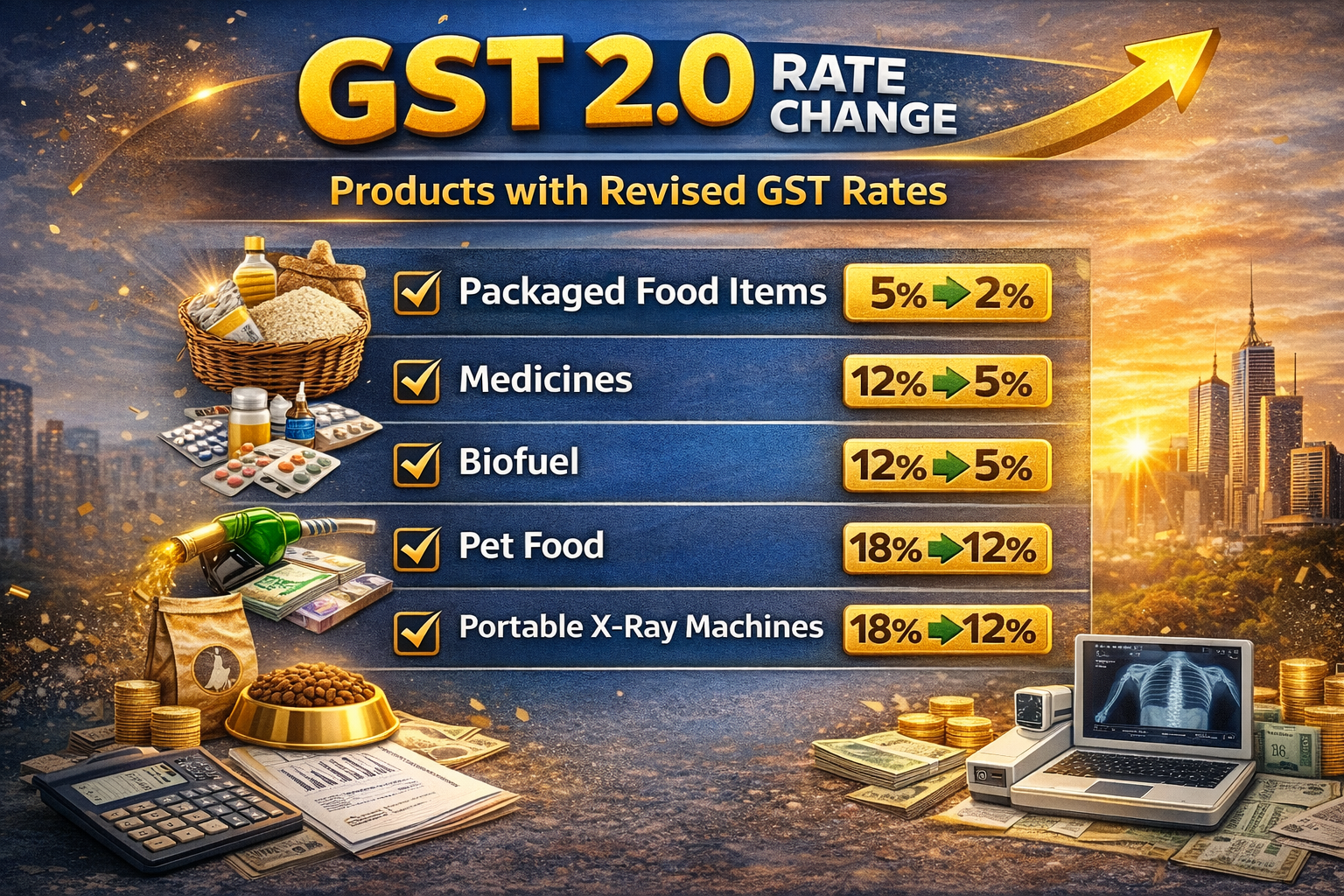
By correcting these distortions, the government has improved cash flow for MSMEs, boosted confidence, and reduced compliance friction. The result is visible in better GST collections and higher formalization of small businesses—adding directly to measured GDP.
Goods and Services Tax Network (GSTN)
Fiscal Stimulus and Tax Relief
Another important pillar is the income-tax cuts announced in the FY26 Union Budget. These cuts are now showing real impact. Urban households are spending more on housing, travel, and consumer durables, while rural demand is supported through higher government capital spending.
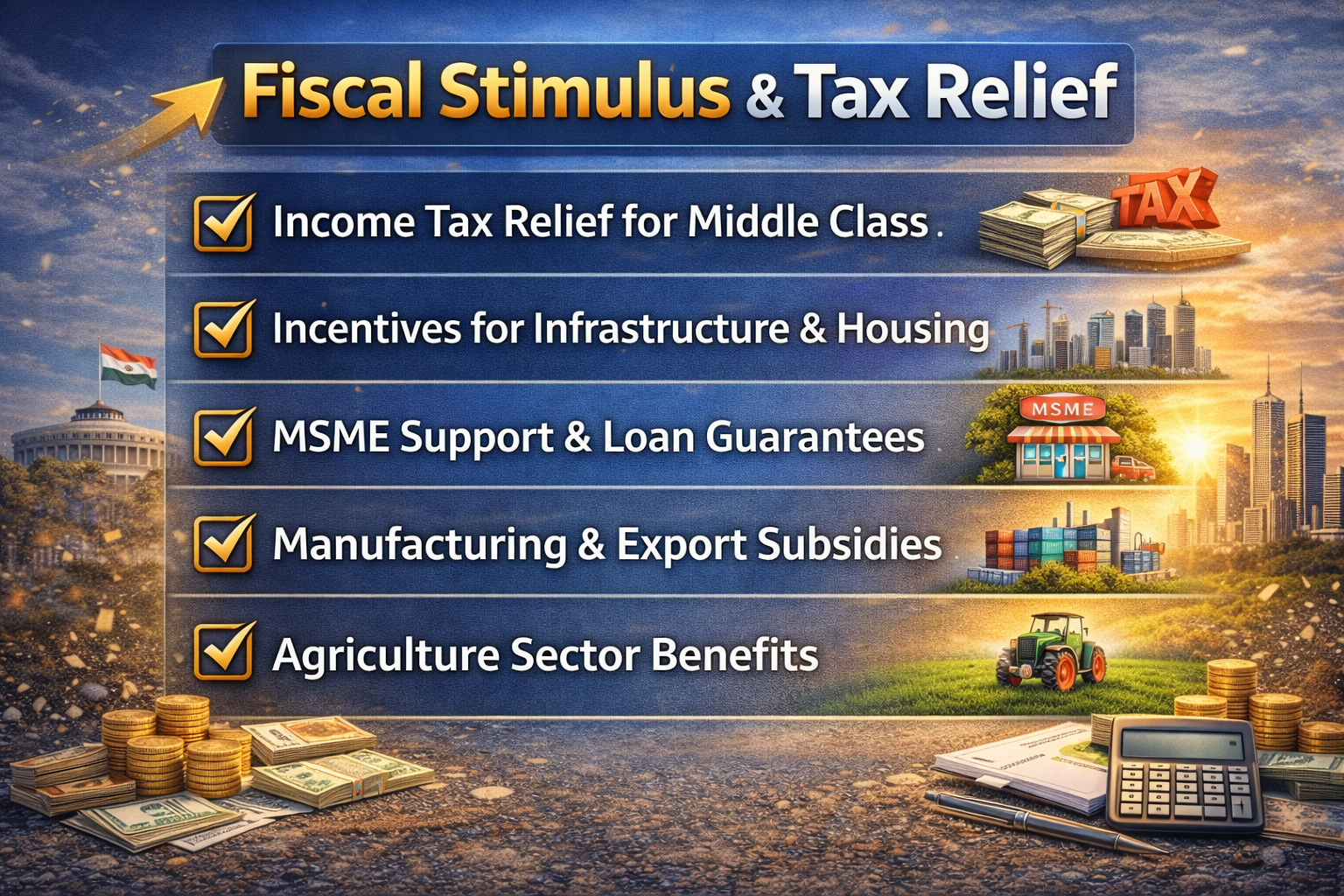
This is not reckless spending. The government has balanced tax relief with fiscal discipline, keeping the deficit under control while stimulating demand. That balance is one reason rating agencies remain comfortable with India’s macro stability.
Digital Transformation and the Formal Economy
Technology has quietly changed India’s tax system. AI-driven analytics, e-invoicing, and real-time reporting have reduced tax leakage. What was once part of the shadow economy is now being captured in official data.
This does two things at once: it raises government revenue without increasing tax rates, and it expands formal GDP. Over time, this creates a virtuous cycle—more revenue, better infrastructure, and stronger investor confidence.
Ministry of Finance, Government of India
III. The Trade Agreement Surge: Breaking the $1 Trillion Barrier
Trade is another area where India’s strategy has evolved sharply. Instead of depending on uncertain multilateral systems, New Delhi has focused on targeted Free Trade Agreements (FTAs).
Operationalizing New FTAs
The UK–India FTA and the India–New Zealand pact are expected to become fully operational in FY27. These deals open duty-free or low-duty corridors for Indian goods and services, especially in textiles, IT services, pharmaceuticals, and engineering products.

What makes these agreements important is timing. They are coming just as global tariffs are rising elsewhere. For Indian exporters, this creates safe channels where costs remain predictable.
The EFTA Edge
Equally significant is the India–EFTA agreement, involving Switzerland, Norway, Iceland, and Liechtenstein. The deal includes a $100 billion investment commitment over 15 years, with early inflows already visible in advanced manufacturing and clean technology.
This is not just about exports. It is about long-term capital, technology transfer, and supply-chain diversification away from single-country dependence.
Geopolitical De-Risking
Together, these trade deals reduce India’s exposure to high-tariff US routes and China-centric supply chains. In a world where trade is increasingly politicized, this diversification acts as a geoeconomic shield.
Ministry of Commerce & Industry (India)
IV. Real-Time Data: The Market Pulse
Economic forecasts mean little if markets disagree. Interestingly, India’s markets are showing measured confidence, not euphoria.
Nifty 50 Dynamics
The Nifty 50 has seen profit booking below the 26,300 level, even as growth projections remain strong. This is not a sign of weakness. Instead, it reflects prudent adjustment after a strong rally.
Investors are rotating from overheated pockets into sectors linked to infrastructure, manufacturing, and capital goods—areas that benefit most from investment-led growth.
Export Snapshot
Merchandise exports stood at around $437 billion in FY25, holding steady despite global headwinds. The bigger story lies ahead. With services exports added, India is targeting nearly $950 billion in combined exports by FY27.
West Asia trade pacts, stable demand for IT services, and rising electronics exports are key drivers. Unlike earlier cycles, growth is coming from multiple sectors, not one narrow engine.
The Goldilocks Indicator: Inflation and Monetary Policy
Inflation is projected to remain close to 4%, well within comfort range. This gives the Reserve Bank of India (RBI) room to maintain a neutral to accommodative stance.
For companies, this means borrowing costs stay manageable. For households, it means price stability without sacrificing growth. This balance is rare—and powerful.
V. The Risk Factors: What Could Go Wrong?
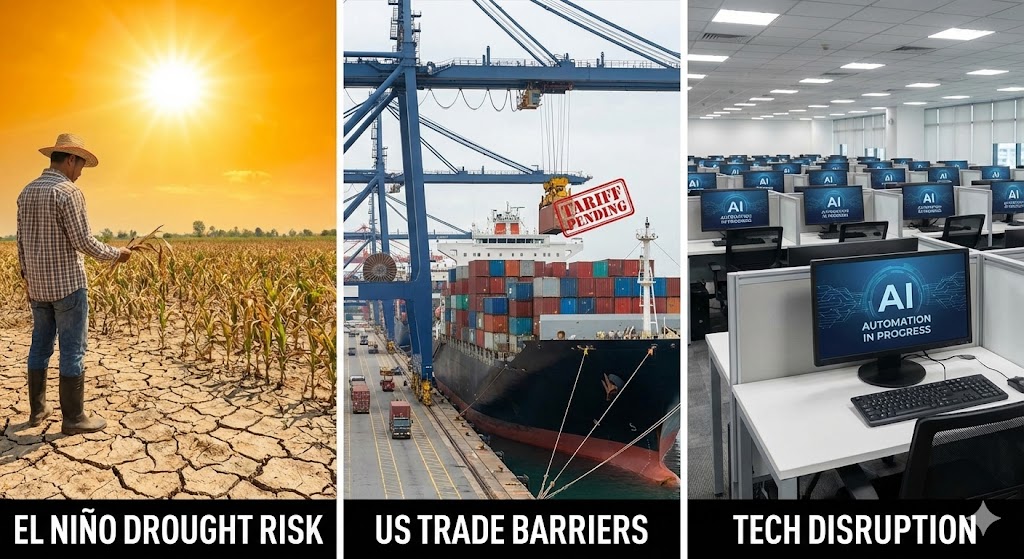
No forecast is without risks. Ind-Ra itself highlights several areas to watch.
The El Niño Threat
Weather risks remain real. A mid-2026 El Niño pattern could impact agricultural output and rural incomes. While the economy is less dependent on agriculture than before, farm distress can still affect consumption and inflation.
US Tariff Volatility
Although India is relatively insulated, secondary sanctions or sudden tariff changes—especially related to energy trade—could create short-term volatility. India’s diversified sourcing helps, but global policy shocks cannot be fully avoided.
AI as a Headwind
Ironically, technology itself poses a challenge. Ind-Ra warns that AI could disrupt traditional service exports if reskilling does not keep pace. India’s advantage lies in scale and talent, but policy and private investment must move fast to protect this edge.
VI. Conclusion: The Logic of Optimism
India’s 6.9% growth projection for FY27 is more than a forecast. It is a statement of intent. At a time when global trade is fragmenting and tariffs are rising, India is choosing resilience over dependence.
By strengthening domestic demand, fixing structural weaknesses, and locking in long-term trade and investment deals, India is positioning itself as a stable anchor in a volatile world. This does not mean risks are gone. It means the economy is better prepared to absorb them.
In that sense, the “6.9% fortress” is not about isolation. It is about confidence built on reform, diversification, and discipline. And that is why, even as others slow down, India’s growth story for FY27 looks both credible and durable.
❓ Frequently Asked Questions (FAQ)
1. What does India’s 6.9% growth forecast for FY27 mean?
It means India’s economy is expected to grow at a strong and stable pace in FY27, even as many global economies face slower growth due to trade tensions and weak demand.
2. Who projected India’s 6.9% GDP growth?
The forecast was made by India Ratings & Research (Ind-Ra), which is a respected credit rating and economic research agency.
3. Why is India growing faster than many other countries?
India’s growth is being driven by strong domestic demand, rising investment, infrastructure spending, and reforms that support businesses and formal economic activity.
4. What is meant by a “Goldilocks” economy?
A Goldilocks economy is one that is not growing too fast or too slow. Growth is strong, inflation is under control, and financial stability is maintained.
5. How are reforms helping India’s economy in FY27?
Reforms like GST rationalisation, digital tax compliance, and improved ease of doing business are reducing inefficiencies and boosting confidence among investors and MSMEs.
6. What role do trade agreements play in India’s growth?
New trade agreements with countries like the UK, New Zealand, and EFTA nations provide Indian exporters stable, low-tariff access to global markets, reducing risk from global trade wars.
7. Is India protected from global tariff wars?
India is not completely immune, but diversified trade partners and strong domestic demand make the economy more resilient compared to many export-dependent countries.
8. Why is investment-led growth important for India?
Investment-led growth creates long-term capacity, jobs, and productivity improvements, making economic growth more sustainable than consumption-only expansion.
9. How does inflation affect India’s FY27 outlook?
Inflation is expected to remain close to the RBI’s comfort range, allowing borrowing costs to stay stable and supporting both businesses and consumers.
10. What is the RBI’s role in supporting growth?
The Reserve Bank of India is expected to maintain a neutral to accommodative stance, ensuring credit availability while keeping inflation under control.
11. Are Indian stock markets aligned with this growth forecast?
Yes. While markets may see short-term corrections or profit-booking, long-term fundamentals remain supportive of growth-oriented sectors.
12. What risks could affect India’s FY27 growth?
Key risks include global trade volatility, climate-related shocks like El Niño, and skill gaps in adapting to AI-driven changes in services.
13. How does this growth help ordinary citizens?
Higher growth supports job creation, income stability, better infrastructure, and improved government capacity to invest in social and economic development.
14. Can India maintain this growth beyond FY27?
If reforms continue, investments remain strong, and global shocks are managed well, India has the potential to sustain high growth in the coming years.
15. Why does India’s FY27 growth matter globally?
India’s steady growth provides stability to the global economy at a time when many regions are facing uncertainty and slowing expansion.
🔍 People Also Ask
Why is India expected to grow at 6.9% in FY27?
India’s growth is driven by strong domestic demand, rising public and private investment, stable inflation, and reforms that support manufacturing, MSMEs, and infrastructure.
How does India’s FY27 growth compare with other major economies?
India’s projected growth is significantly higher than that of the US, Europe, Japan, and the UK, where growth rates are expected to remain between 1% and 2%.
What role do trade agreements play in India’s growth?
Trade agreements help India reduce tariff risks, diversify export markets, attract long-term investment, and protect exporters from global trade disruptions.
Is India insulated from global tariff wars?
India is not fully immune, but its diversified trade partners and strong domestic market reduce the impact compared to more export-dependent economies.
Why is investment-led growth important for FY27?
Investment-led growth builds long-term productive capacity, creates jobs, and improves productivity, making growth more sustainable over time.
How does GST reform support economic growth?
GST rationalisation improves cash flow for businesses, especially MSMEs, reduces compliance costs, and increases formalisation of the economy.
What is the impact of inflation on India’s FY27 outlook?
Moderate inflation allows interest rates to remain stable, supporting borrowing, consumption, and investment without overheating the economy.
Why is India called a “Goldilocks” economy?
Because growth is strong but stable, inflation is under control, and financial risks are limited—neither too hot nor too weak.
Can global recession risks affect India’s FY27 growth?
Global slowdowns may affect exports, but India’s domestic demand and investment cycle provide a strong buffer against external shocks.
How does RBI policy influence India’s growth prospects?
A neutral to accommodative RBI stance supports credit growth while maintaining price stability, which is critical for sustained expansion.
Which sectors will benefit most from India’s FY27 growth?
Infrastructure, manufacturing, capital goods, MSMEs, services exports, and technology-enabled sectors are expected to gain the most.
What risks could slow India’s growth in FY27?
Climate risks, global trade volatility, energy price shocks, and slow workforce upskilling for AI-driven changes could affect momentum.
Why does India’s FY27 growth matter globally?
India’s strong growth provides stability to the global economy at a time when many large economies are slowing.
Is India becoming a global economic anchor?
Yes. With steady growth, diversified trade, and macro stability, India is increasingly seen as a reliable growth engine globally.
Can India sustain high growth beyond FY27?
Sustained reforms, continued investment, and skill development will be key to maintaining strong growth in the years ahead.