1. Executive Summary: Quality Over Quantity
As someone who has observed India’s political economy and financial markets for over three decades, I see ICICI Prudential Life Insurance’s Q3 FY26 performance as much more than a quarterly earnings update. It is a signal of how India’s insurance industry is quietly reshaping itself to align with policy intent, household needs, and long-term capital formation. On the surface, the headline number appears underwhelming: total premium income declined by about 3.4% year-on-year. For momentum-driven investors, that number alone could raise doubts. But for a fundamental analyst, this decline is not a weakness. It is a conscious choice.
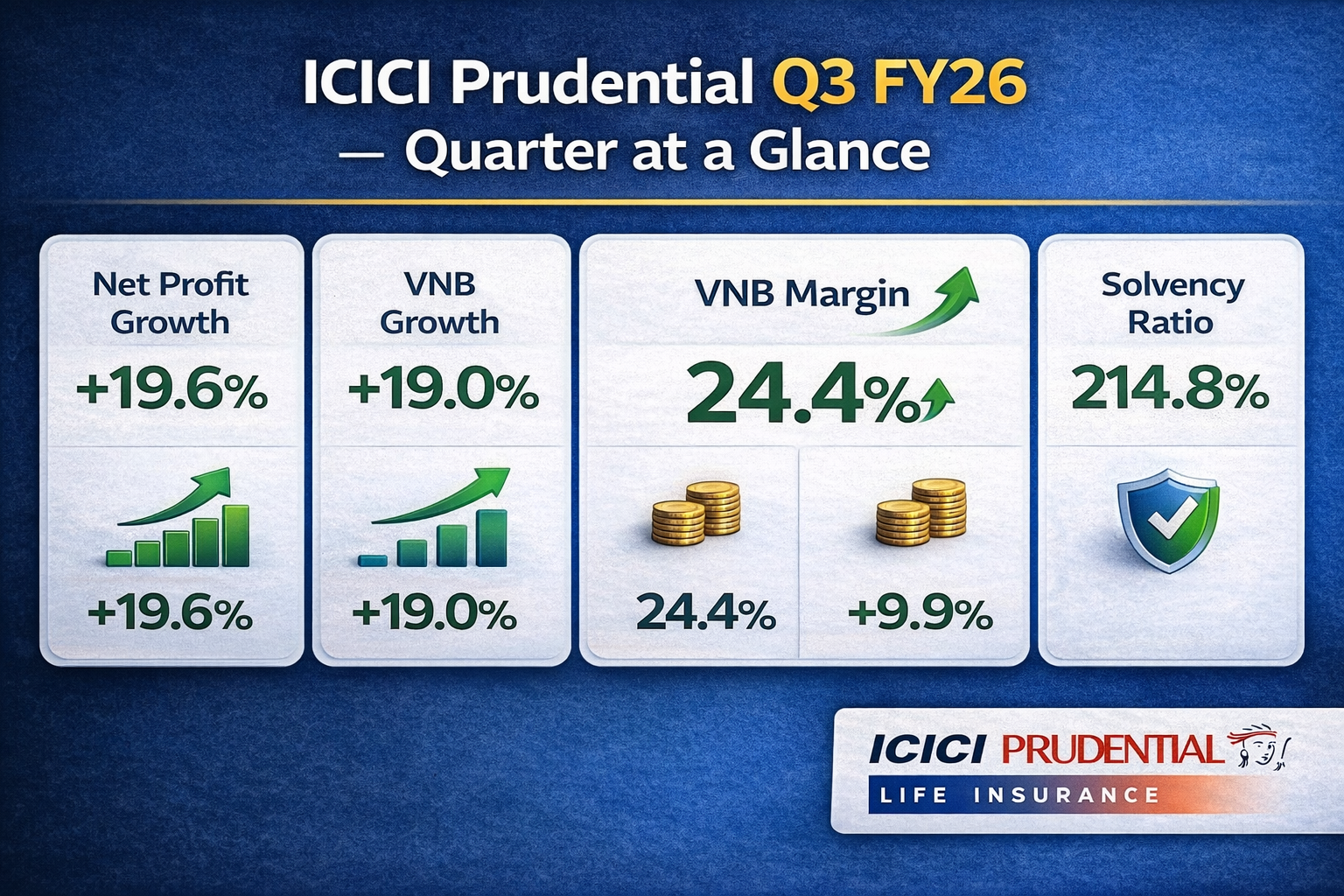
The real story of the quarter lies in profitability and value creation. Despite muted top-line growth, ICICI Prudential reported nearly 20% growth in net profit and a similar rise in Value of New Business (VNB). This divergence between premium growth and profit growth tells us that the company is prioritizing margin over volume. In simple terms, it is selling better quality insurance rather than just selling more insurance.
There is also a broader context. Unlike global financial firms that are still grappling with volatile interest rates, geopolitical tensions, and slowing demand, India’s life insurance sector is increasingly driven by domestic realities. Rising awareness of protection gaps, favourable policy reforms, and stable macro conditions are allowing insurers like ICICI Prudential to decouple from global uncertainty and focus on long-term value. Q3 FY26 is a clear example of that shift.
ICICI Prudential – Official Investor Results
2. The Financial Scorecard: Q3 FY26 Snapshot
To understand why this quarter matters, we need to look at the core numbers side by side. The data below highlights how ICICI Prudential’s focus has shifted from volume-led growth to margin-led profitability.
| Key Metric | Q3 FY26 (Actual) | Q3 FY25 (YoY) | Change (%) / Bps |
|---|---|---|---|
| Net Profit (PAT) | ₹390 Crore | ₹326 Crore | +19.6% |
| VNB (Value of New Business) | ₹615 Crore | ₹517 Crore | +19.0% |
| VNB Margin | 24.4% | 21.2% | +320 bps |
| Retail APE | ₹2,116 Crore | ₹1,926 Crore | +9.9% |
| Solvency Ratio | 214.8% | 190% | Strong |
What stands out immediately is the expansion in VNB margin to 24.4%. A margin improvement of over 300 basis points in a single year is not accidental. It reflects changes in product mix, pricing discipline, and cost control. Retail Annualized Premium Equivalent (APE) growth of nearly 10% shows that demand has not disappeared; it has simply shifted toward more sustainable products.
The solvency ratio of 214.8% is another crucial indicator. This means the company holds more than double the regulatory minimum capital required. In an industry where trust and long-term commitments matter, such capital strength is not just a number. It is a confidence signal to policyholders and investors alike.
3. Fundamental Analysis: The “Margin Surge” Mechanics
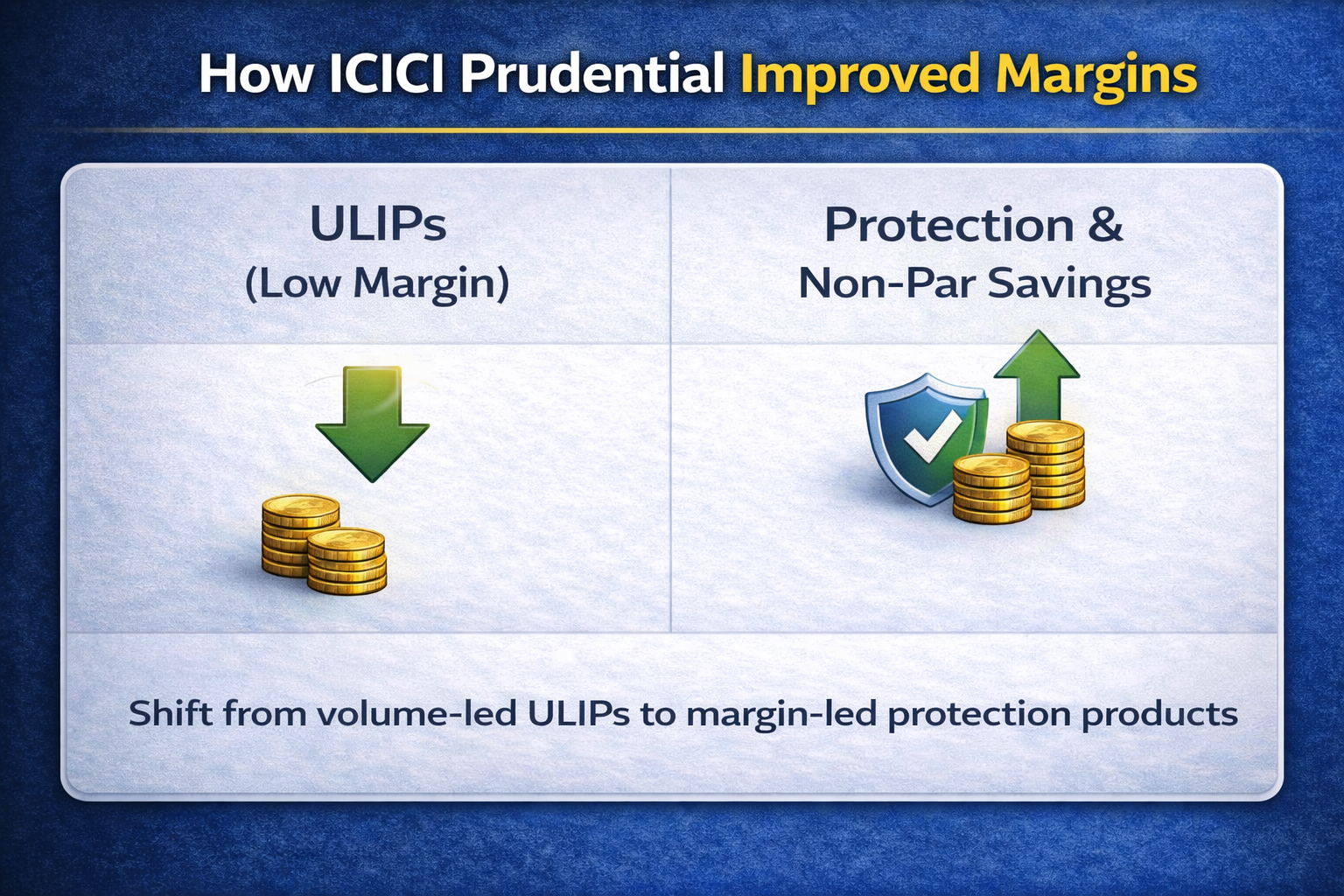
The sharp improvement in margins did not happen by chance. It is the outcome of a deliberate change in what ICICI Prudential chooses to sell. Over the last few years, the company has been steadily reducing its dependence on low-margin Unit Linked Insurance Plans (ULIPs). ULIPs are popular during bull markets, but they are capital-intensive and sensitive to market cycles. In contrast, protection and non-participating savings products offer more predictable margins and stable long-term value.
This quarter, the impact of that shift became very clear. Retail protection APE grew by an impressive 40.8% year-on-year. This is not just a growth number; it reflects a behavioural change among Indian households. More families are buying pure protection products that focus on risk cover rather than investment returns.
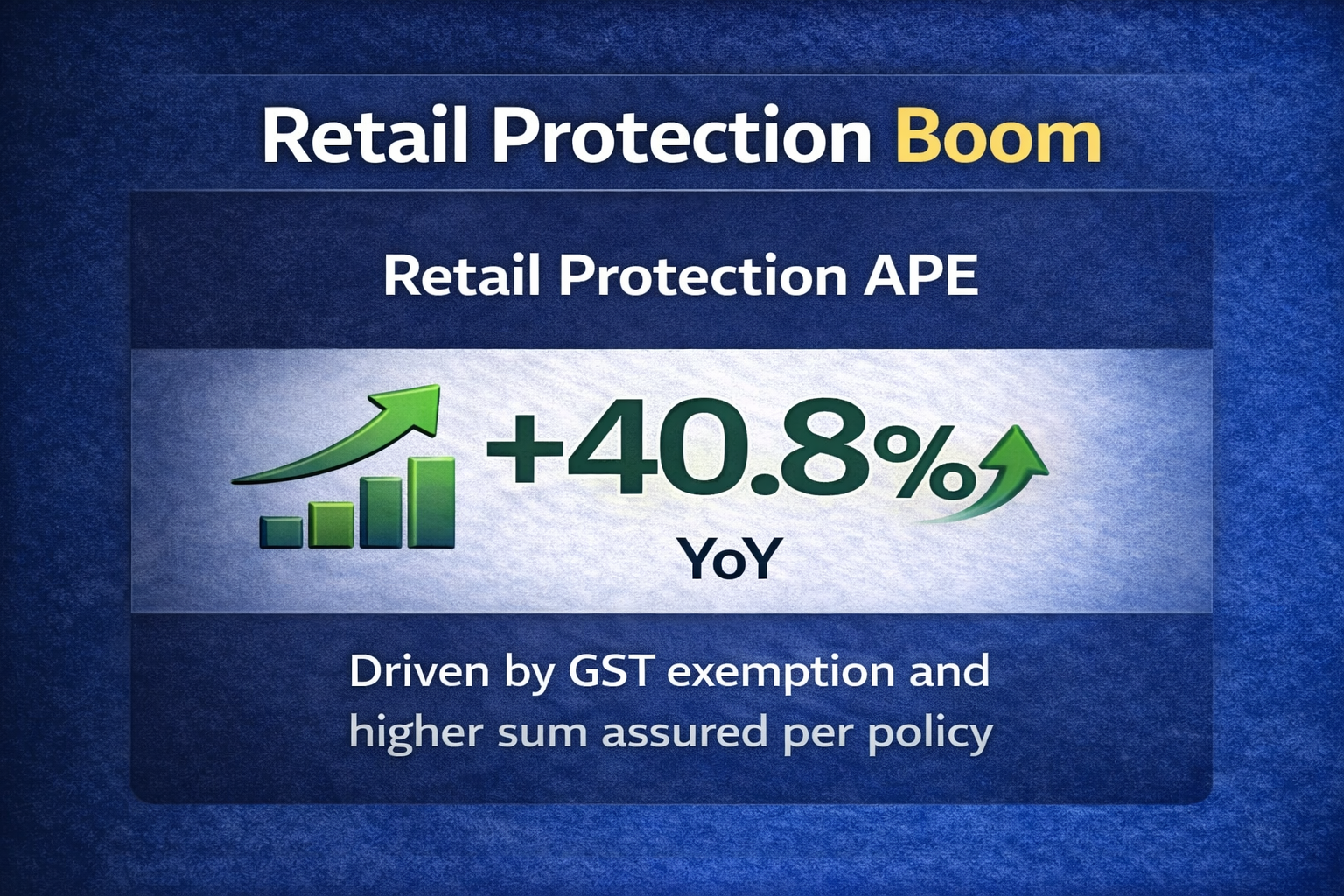
A major reason behind this surge is policy-driven. The reduction of GST on individual protection products from 18% to zero has significantly lowered the effective cost of term insurance. As a result, customers are opting for higher sum assured per policy. For the insurer, this improves the Embedded Value (EV) of each policy over its lifetime. In simple words, fewer policies are needed to generate the same or even higher long-term value.
This is why profit growth is outpacing premium growth. ICICI Prudential is earning more from each rupee of premium it writes, which is exactly what a mature financial institution should aim for.
4. The Policy Catalyst: GST Reform & the “Insurance for All” Vision
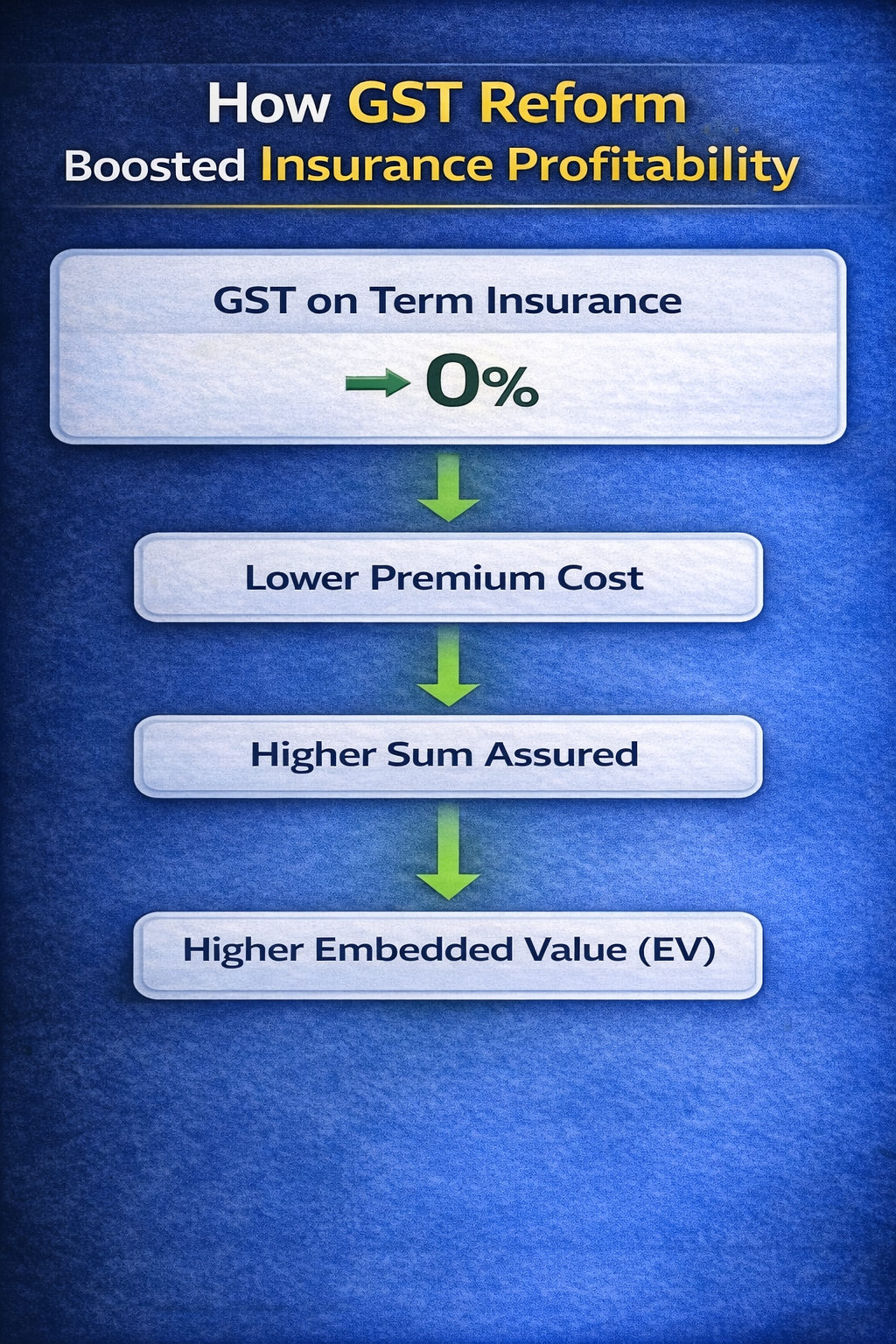
Public policy has played a decisive role in shaping this quarter’s outcome. The GST Council’s decision in September 2025 to exempt individual term insurance from GST was not just a tax cut. It was a strategic move aligned with the government’s broader “Insurance for All” vision.
India has long suffered from a protection gap, where a large portion of the population lacks adequate life cover. High indirect taxes made pure protection products less attractive. By removing GST, the government effectively nudged households toward risk protection rather than speculative savings.
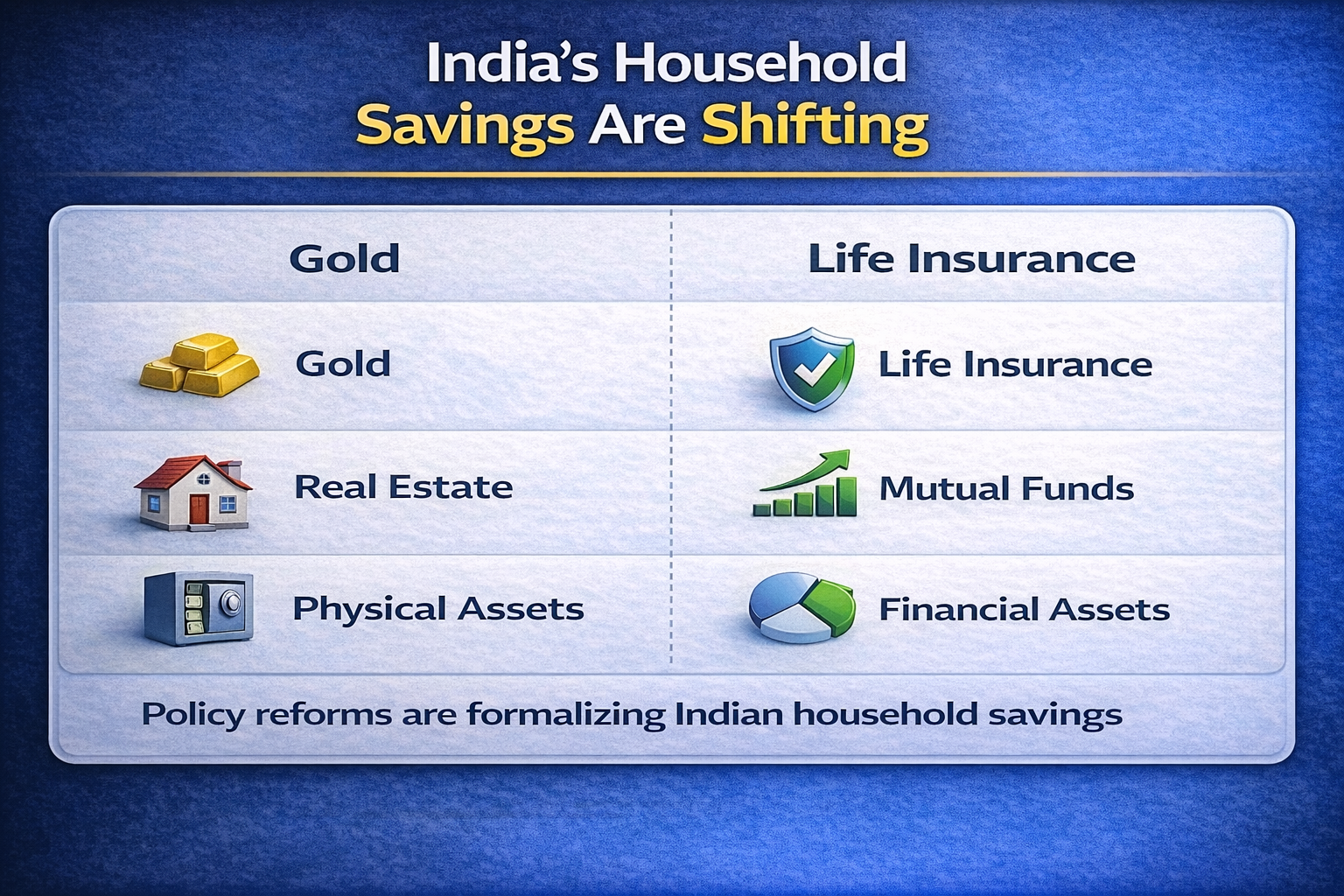
From a geoeconomic perspective, this reform has deeper implications. Indian households traditionally prefer physical assets such as gold and real estate. Tax rationalization in insurance encourages a gradual shift from physical savings to financial instruments. This improves transparency, deepens capital markets, and supports long-term economic stability.
Another important policy development is the continued push toward allowing 100% foreign direct investment in insurance. While ICICI Prudential already has a strong balance sheet, higher FDI limits create optionality. They prepare the sector for future capital infusion cycles, technology upgrades, and global best practices. For ICICI Prudential, this policy environment strengthens its ability to scale without compromising solvency or governance.
GST Council – Term Insurance Exemption
5. Operational Efficiency & Asset Quality
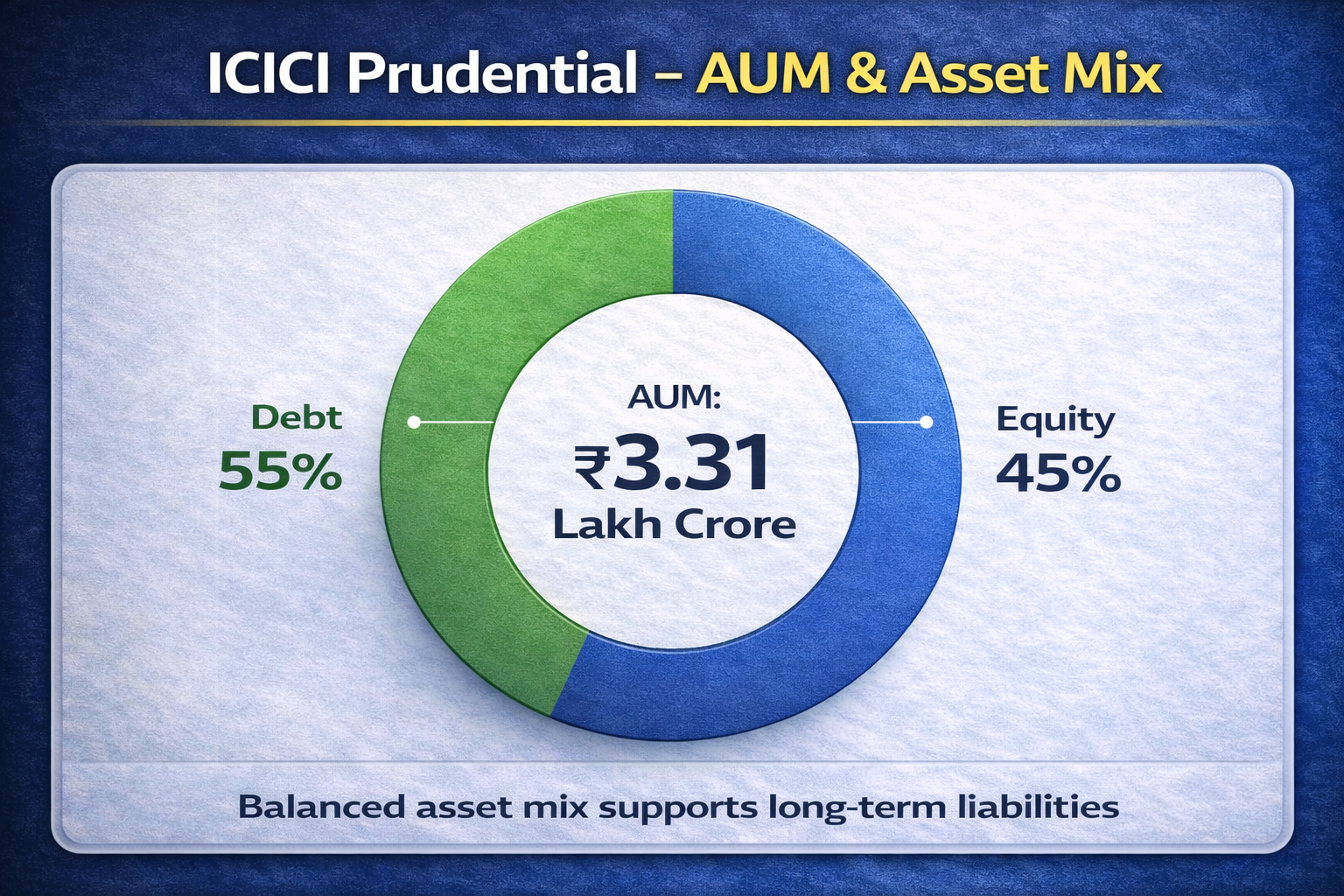
Beyond products and policy, operational discipline remains a key differentiator. ICICI Prudential’s Assets Under Management (AUM) reached ₹3.31 lakh crore in Q3 FY26, growing by about 6.5% year-on-year. The asset mix remains conservative, with roughly 55% in debt and 45% in equity. This balance helps protect policyholder funds while still participating in long-term equity growth.
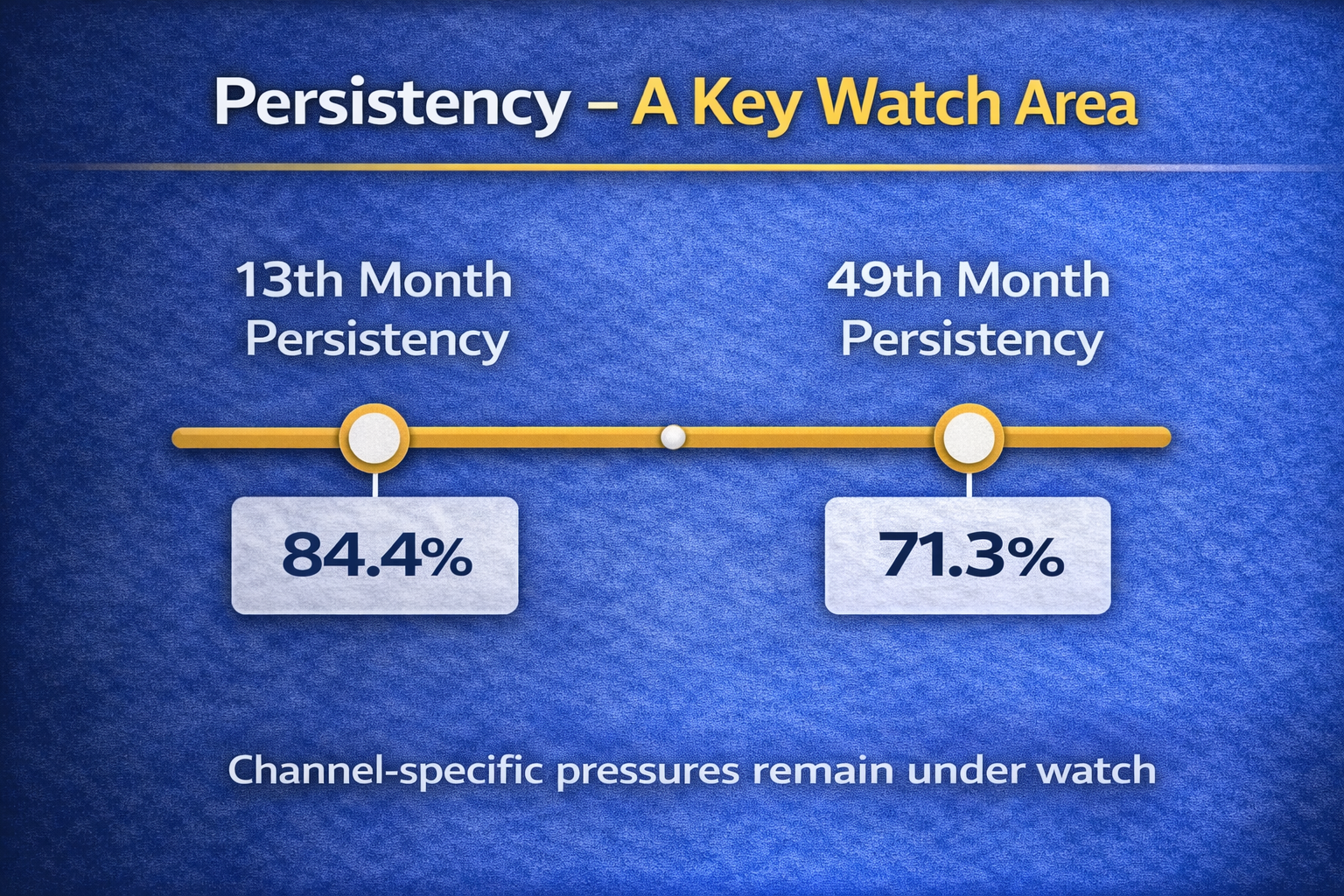
Persistency ratios offer a more nuanced picture. The 13th-month persistency stood at 84.4%, while the 49th-month persistency was 71.3%. These numbers are healthy by industry standards, but they also highlight pressure points. Certain distribution channels, especially those dependent on aggressive sales incentives, continue to show higher attrition. For investors, this is an area to monitor rather than panic about.
Claim settlement remains a strong pillar. With a settlement ratio of 99.3%, ICICI Prudential reinforces trust in a market where reputation matters as much as returns. In a competitive and trust-based business like insurance, high claim settlement ratios are not just good ethics; they are good economics.
6. Geopolitical & Market Valuation Outlook
The global backdrop remains uncertain. Western economies are still dealing with the after-effects of prolonged high interest rates, while geopolitical tensions continue to disrupt capital flows. India, by contrast, has maintained relative macro stability. The Reserve Bank of India’s steady policy stance has helped domestic financial institutions plan with greater clarity.
For life insurers, stable interest rates support predictable yields on shareholder funds. This stability benefits companies like ICICI Prudential that rely on long-duration assets to match long-term liabilities.
Valuation, however, is where opinions diverge. ICICI Prudential currently trades at a premium to its Embedded Value. When compared with peers like HDFC Life Insurance and SBI Life Insurance, the premium reflects confidence in its margin trajectory and capital strength. The key question is whether this premium is justified.

Management has guided toward sustaining VNB margins above 24%. If achieved, this would place ICICI Prudential among the most efficient players in the sector. However, rising distribution costs and competitive pressure could test this ambition. The much-discussed “VNB doubling” trajectory is achievable, but it will require continued discipline and favourable policy support.
IRDAI – Life Insurance Industry Data
7. Conclusion: The Veteran’s Verdict

From a long-term perspective, ICICI Prudential’s Q3 FY26 results mark an important transition. The company is clearly moving away from being a volume-driven insurer toward becoming a value-focused financial institution. High capital adequacy, strong margins, and a clear emphasis on protection products form the core of the bull case.
At the same time, there are risks. Growth in the single premium segment declined by about 21%, reflecting weaker appetite for lump-sum products. Persistency volatility in certain channels also needs close monitoring. These factors remind us that the transition is still a work in progress.
My final assessment is balanced but constructive. ICICI Prudential is no longer chasing scale at any cost. It is building a “value fortress” that prioritizes profitability, solvency, and long-term trust. In a financial system that is gradually maturing, this shift may prove more valuable than headline growth. For investors who understand the difference between volume and value, Q3 FY26 offers a clear and instructive signal.
❓ FAQs
1. Why did ICICI Prudential’s premium income fall in Q3 FY26?
ICICI Prudential’s total premium declined due to a strategic shift away from low-margin ULIPs toward high-margin protection products. This was a conscious quality-focused move.
2. How did ICICI Prudential’s profit grow in Q3 FY26?
Profit grew 19.6% YoY due to higher VNB margins (24.4%), better product mix, and strong growth in retail protection business.
3. What is VNB and why is it important for insurance companies?
VNB (Value of New Business) measures the long-term profitability of new policies. Higher VNB and margins indicate stronger future earnings quality.
4. How did GST exemption impact ICICI Prudential’s business?
GST exemption on individual term insurance lowered policy costs, increased sum assured per policy, and significantly boosted retail protection demand and embedded value.
5. Is ICICI Prudential financially strong?
Yes. ICICI Prudential reported a solvency ratio of 214.8%, well above regulatory requirements, indicating strong capital adequacy and balance sheet health.
6. How does ICICI Prudential compare with HDFC Life and SBI Life?
ICICI Prudential currently trades at a premium valuation due to higher margins, strong protection growth, and superior capital position compared to peers.
7. What is ICICI Prudential’s outlook for FY26 and beyond?
Management aims to sustain 24%+ VNB margins, grow protection business, and benefit from favourable policy reforms, though persistency and costs remain watch points.
🔍 PEOPLE ALSO ASK (PAA)
Why did ICICI Prudential focus on margins instead of premium growth?
Because long-term profitability in insurance depends on product quality, not just premium volume. Margin-led growth improves embedded value and shareholder returns.
Is ICICI Prudential a good long-term investment?
ICICI Prudential suits long-term investors seeking exposure to India’s insurance growth, provided they are comfortable with valuation premiums and gradual growth.
What is the solvency ratio of ICICI Prudential in Q3 FY26?
The solvency ratio stood at 214.8%, indicating strong capital buffers and low financial risk.
How does GST reform help life insurance companies?
GST reform reduces policy costs, increases insurance penetration, formalizes household savings, and improves long-term profitability for insurers.
What risks should investors watch in ICICI Prudential?
Key risks include persistency pressure in some channels, rising distribution costs, and muted growth in single-premium products.