1. Executive Summary: The “Scale Economy” Dividend
As a political and economic observer for over three decades, I have seen the Indian mutual fund industry travel a long distance—from a niche savings product used mainly by urban elites to the backbone of household financialization. The Q3 FY26 results of HDFC Asset Management Company are a clear sign that this industry is now entering a more mature phase. This is no longer about growth at any cost. It is about scale, margins, and strategic diversification.
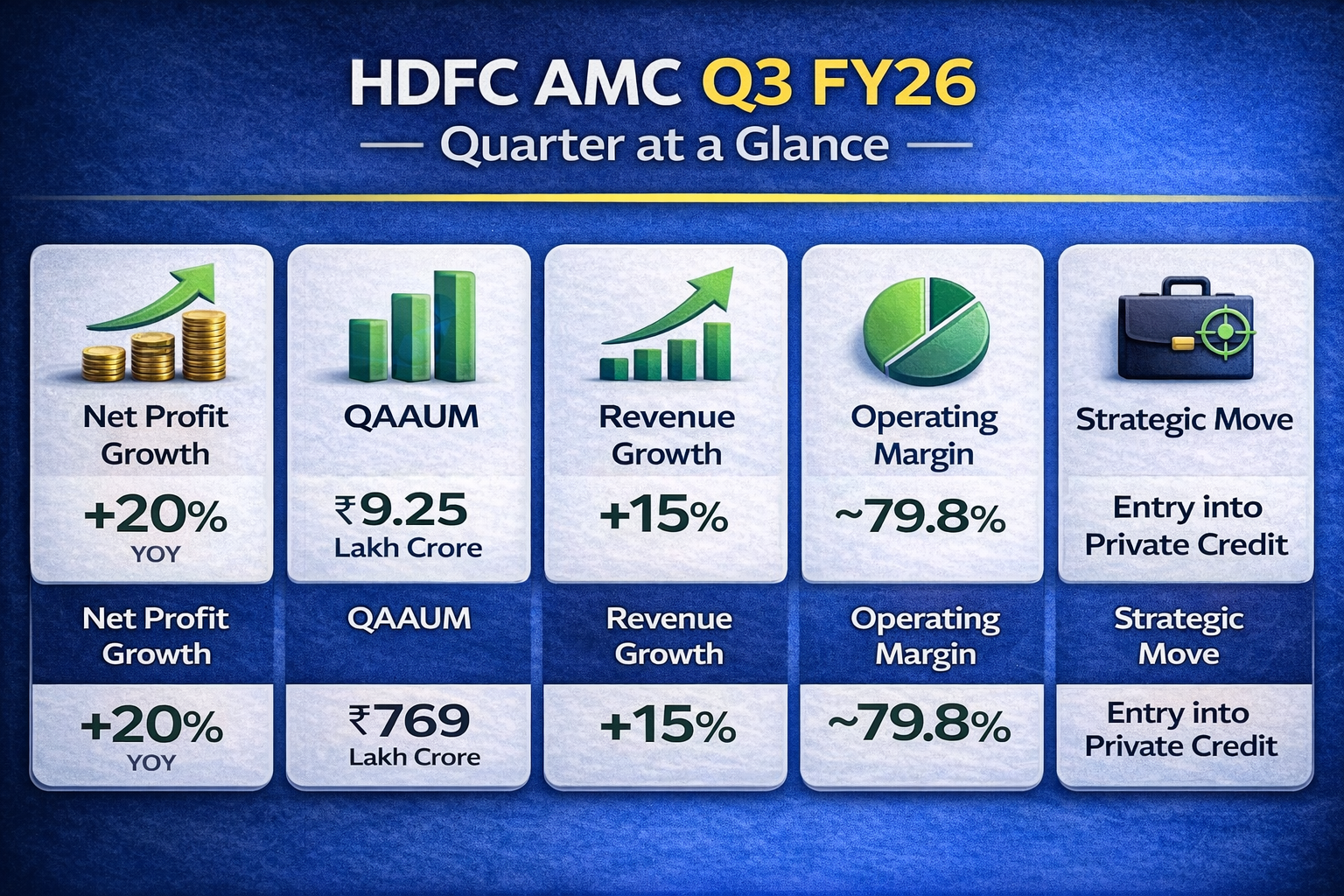
At first glance, the headline numbers already look strong. HDFC AMC delivered nearly 20% year-on-year growth in net profit, even as the industry faces “telescopic pricing” pressures, where management fees automatically reduce as Assets Under Management (AUM) increase. In a business where revenue per rupee managed is structurally capped by regulation, this kind of profit growth tells us something important: scale is now working in favour of the largest, most efficient players.
Two strategic signals stand out in this quarter. First, the 1:1 bonus issue, which improves liquidity and broadens retail participation in the stock. Second, the company’s entry into private credit, marking a clear pivot beyond traditional mutual funds. Together, these moves suggest that HDFC AMC’s management is no longer just defending market leadership; it is actively redeploying capital to capture the next phase of growth in India’s financial ecosystem.
HDFC AMC – Official Q3 FY26 Financial Results
2. The Financial Scorecard: Q3 FY26 vs. Q3 FY25
Before diving deeper into strategy and policy, it is important to ground the discussion in hard numbers. The Q3 FY26 financial scorecard shows why investors continue to treat HDFC AMC as the bellwether of India’s asset management industry.
| Metric | Q3 FY26 (Actual) | Q3 FY25 (YoY) | Change (%) |
|---|---|---|---|
| Consolidated Net Profit (PAT) | ₹769.4 Cr | ₹641.4 Cr | +20.0% |
| Revenue from Operations | ₹1,074.0 Cr | ₹934.0 Cr | +15.0% |
| Total Income | ₹1,233.0 Cr | ₹1,027.0 Cr | +20.1% |
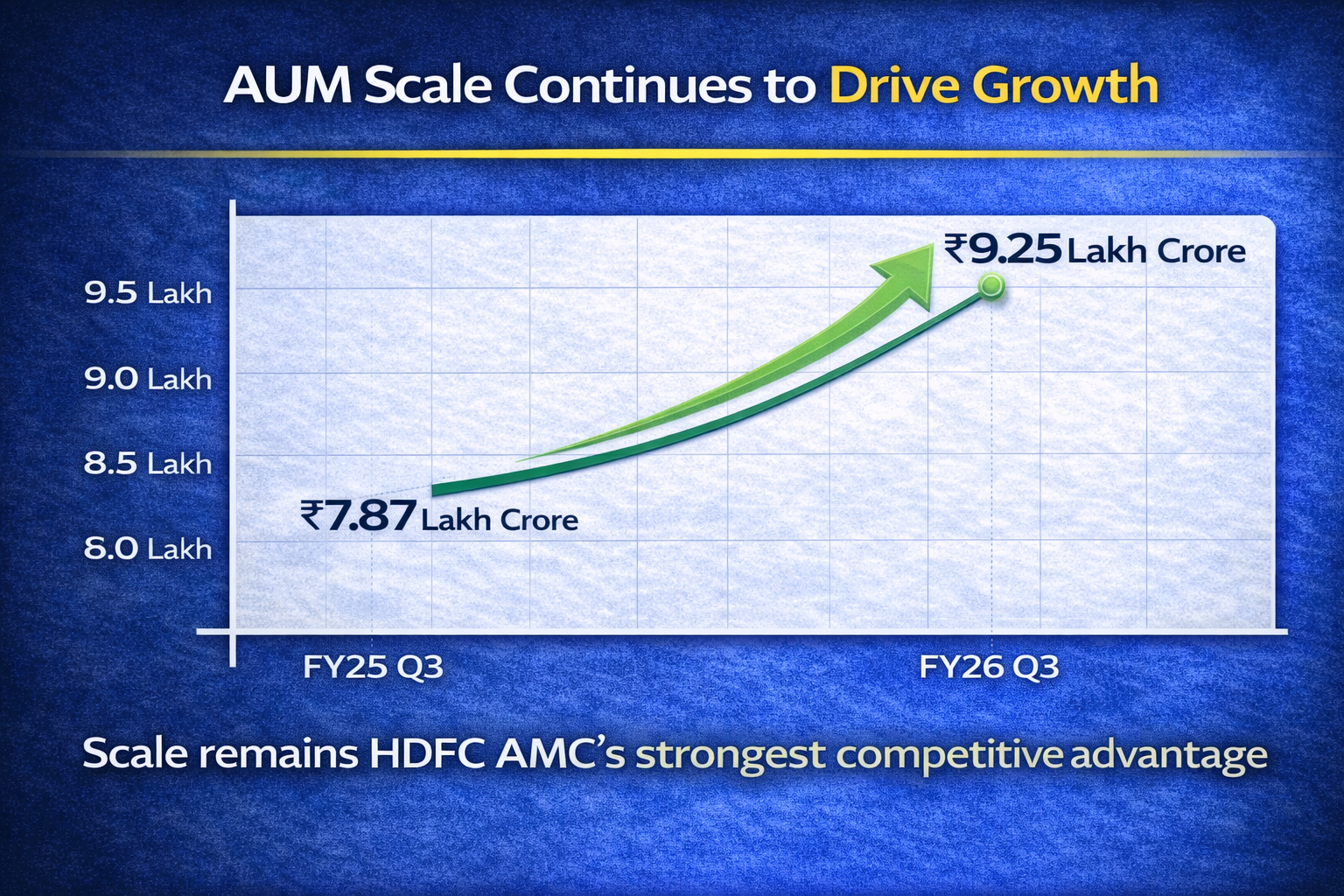
| QAAUM (Quarterly Avg. AUM) | ₹9.25 Lakh Cr | ₹7.87 Lakh Cr | +17.5% |
| Operating Margin | ~79.8% | 81.9% | -210 bps |
The most striking feature here is the combination of AUM growth and profitability. Quarterly average AUM crossed ₹9.25 lakh crore, reflecting strong equity market participation and steady inflows. At the same time, operating margins, though slightly lower year-on-year, remain close to 80%. In most industries, such margins would be considered extraordinary. In asset management, they reflect a well-oiled cost structure and the power of scale.
3. Fundamental Analysis: Deconstructing the “Yield” vs. “AUM” Battle
To understand HDFC AMC’s performance, one must understand the central tension in the asset management business: AUM growth versus yield per unit of AUM. As AUM rises, regulations force fund houses to charge lower fees, especially on large schemes. This is the essence of telescopic pricing, a framework laid down by Securities and Exchange Board of India to protect investors.
In Q3 FY26, HDFC AMC’s AUM engine continued to fire on all cylinders. The ₹9.25 lakh crore milestone is not just about size; it is about the quality of assets. A significant portion of this AUM remains equity-oriented, which typically commands higher management fees than debt or liquid funds. Equity AUM also reflects investor confidence in long-term wealth creation, driven largely by retail participation.
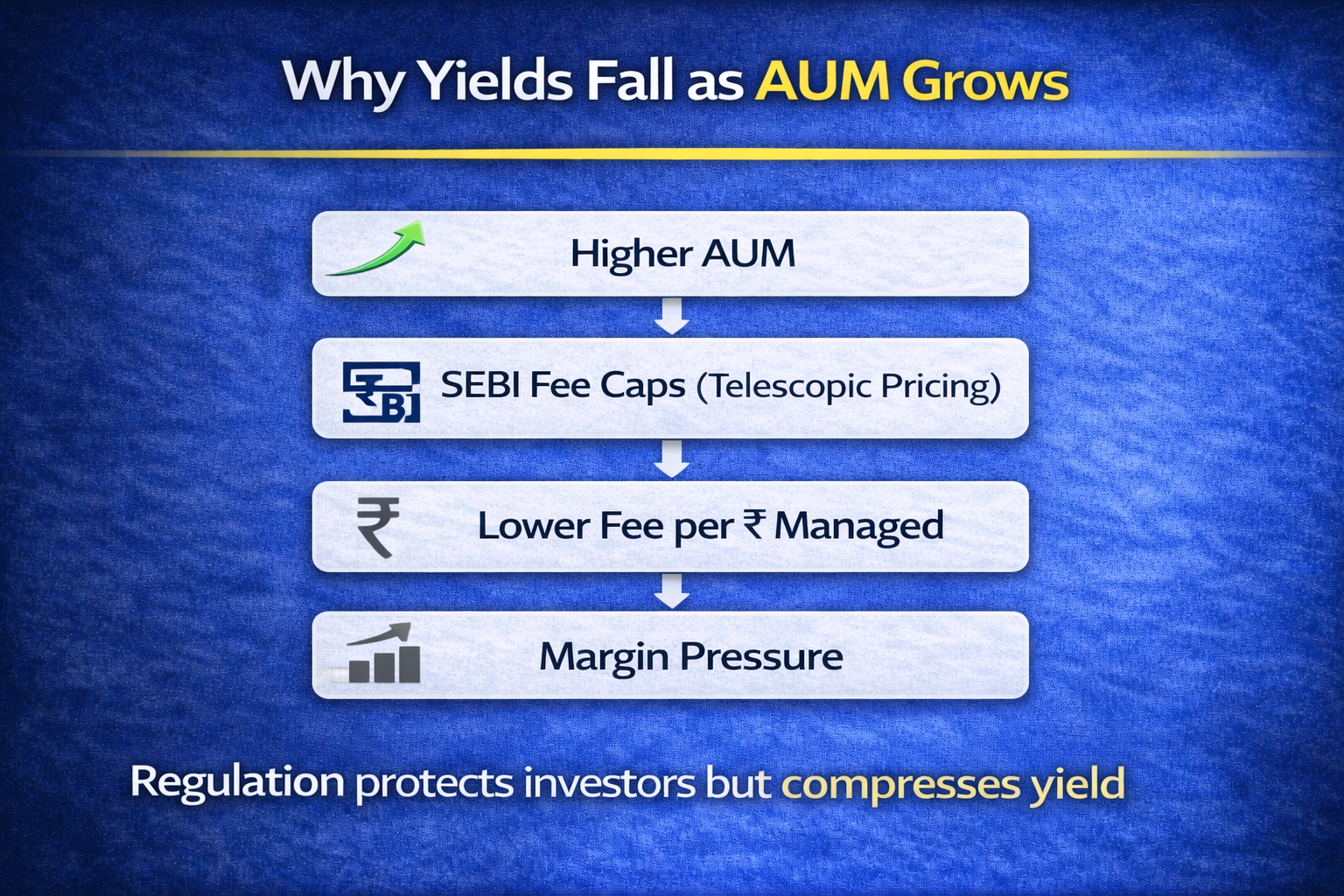
However, yield compression is unavoidable at this scale. As schemes grow larger, the effective fee rate declines. HDFC AMC’s counter-strategy has been twofold. First, tight cost control. The company has consistently invested in technology and centralized operations, allowing it to service a growing asset base without proportionate increases in expenses. Second, distribution strength. By leveraging the vast network of HDFC Bank, which has over 9,400 branches across India, HDFC AMC continues to expand its reach at a relatively low marginal cost.
The result is a business where lower yields are more than offset by higher volumes and operational efficiency. This is the “scale economy dividend” that smaller AMCs struggle to achieve.
SEBI – Mutual Fund Expense Ratio & Fee Structure
4. Strategic Pivot: Beyond Traditional Mutual Funds
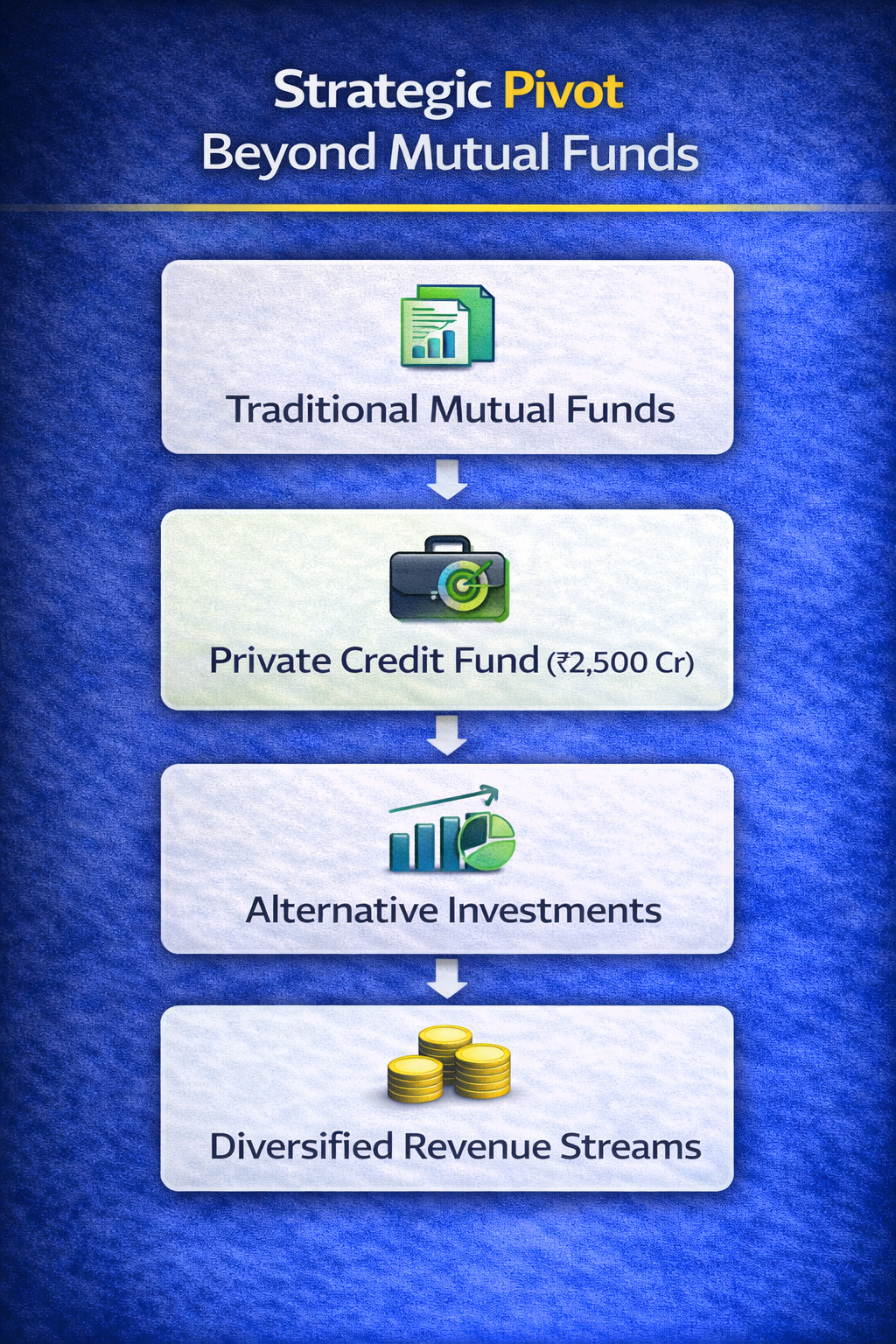
Perhaps the most important takeaway from Q3 FY26 is that HDFC AMC is no longer content with being just a mutual fund company. The launch of a ₹2,500-crore private credit fund marks a decisive entry into the alternative investment space. This is a significant shift, both strategically and philosophically.
Private credit caters mainly to institutional and high-net-worth investors seeking higher yields than traditional fixed income. In India, this segment is gaining traction as mid-market companies look for non-bank funding options. From a geoeconomic perspective, this reflects a broader trend: banks are becoming more selective due to regulatory capital requirements, creating space for asset managers to step in.
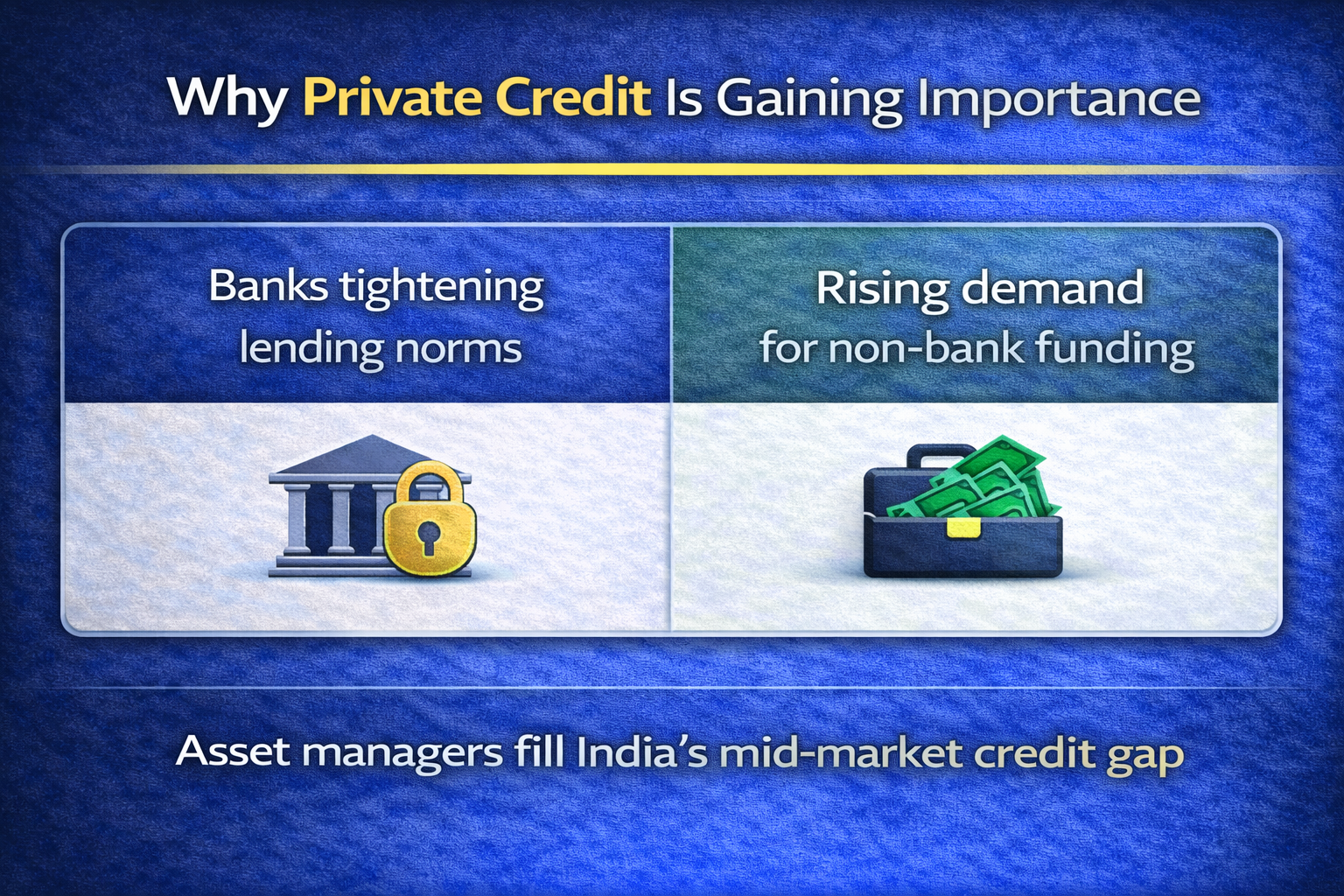
By entering private credit, HDFC AMC is diversifying its revenue streams away from retail equity market cycles. This also positions the company as a quasi “shadow banking” participant, though with a much more transparent and regulated structure. Over time, alternative assets could contribute meaningfully to profits, especially if equity markets turn volatile.
The 1:1 bonus issue, approved in late 2025, also fits into this strategic pivot. While a bonus issue does not change fundamentals, it improves stock liquidity and affordability. In an era where retail participation in equities is rising sharply, this move makes HDFC AMC more accessible to long-term individual investors.
AMFI – Industry AUM & SIP Flow Data
5. Geopolitical & Policy Overlay: The “Amrit Kaal” of Financialization
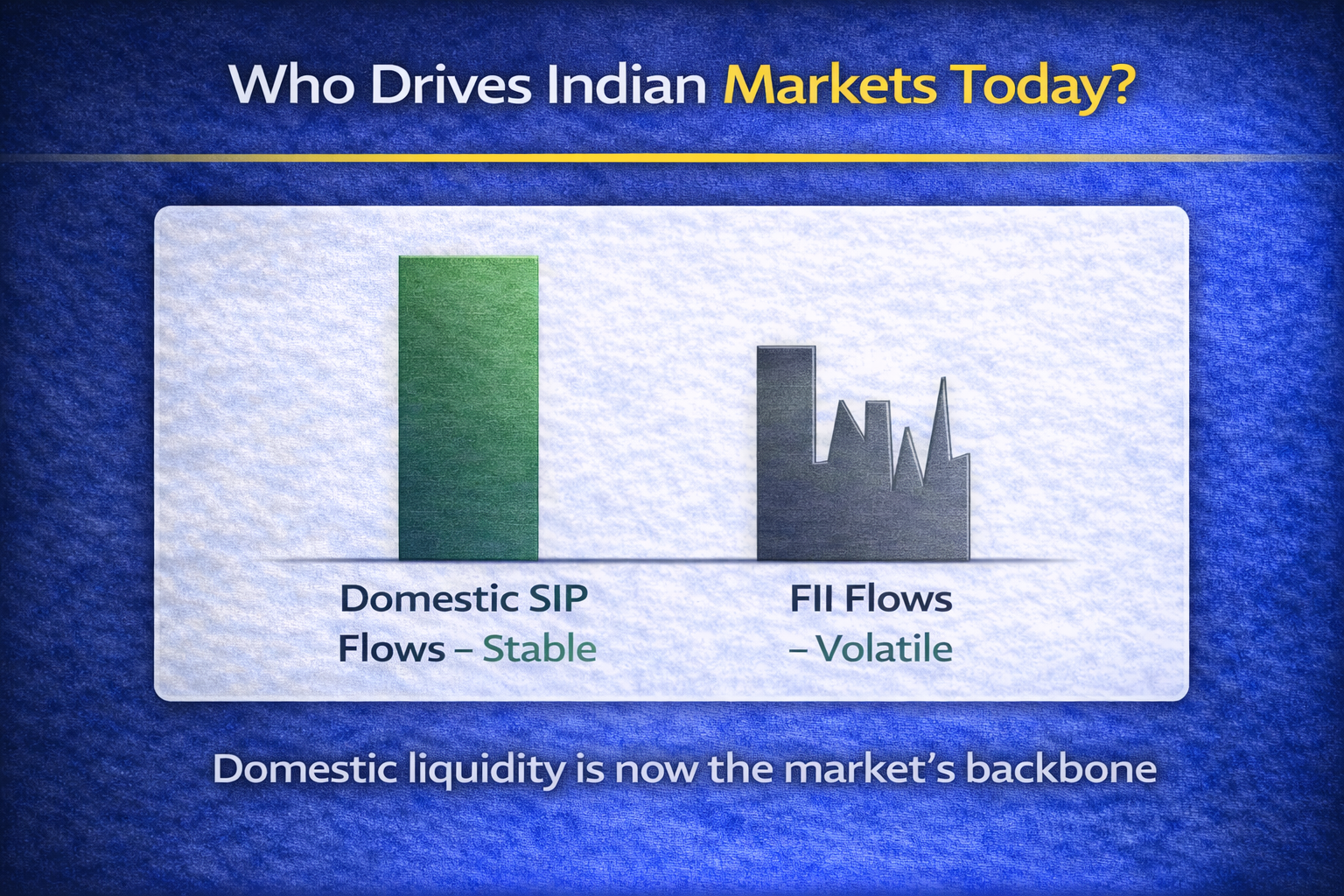
No analysis of India’s asset management industry is complete without looking at the broader policy and geopolitical backdrop. One of the most important shifts in recent years has been the rise of domestic liquidity as the primary driver of Indian markets. While Foreign Institutional Investors (FIIs) have remained volatile due to global interest rate cycles and geopolitical uncertainty, domestic flows have shown remarkable resilience.
Monthly SIP inflows have consistently crossed ₹18,000–20,000 crore in recent quarters, creating a stable base of long-term capital. This domestic participation has reduced India’s dependence on fickle global flows and provided a cushion during periods of external stress.
Policy expectations also play a role. Market participants are closely watching potential changes in mutual fund expense ratio norms. Any tightening by SEBI would affect the entire industry, but large players like HDFC AMC are best positioned to absorb such changes due to their scale.
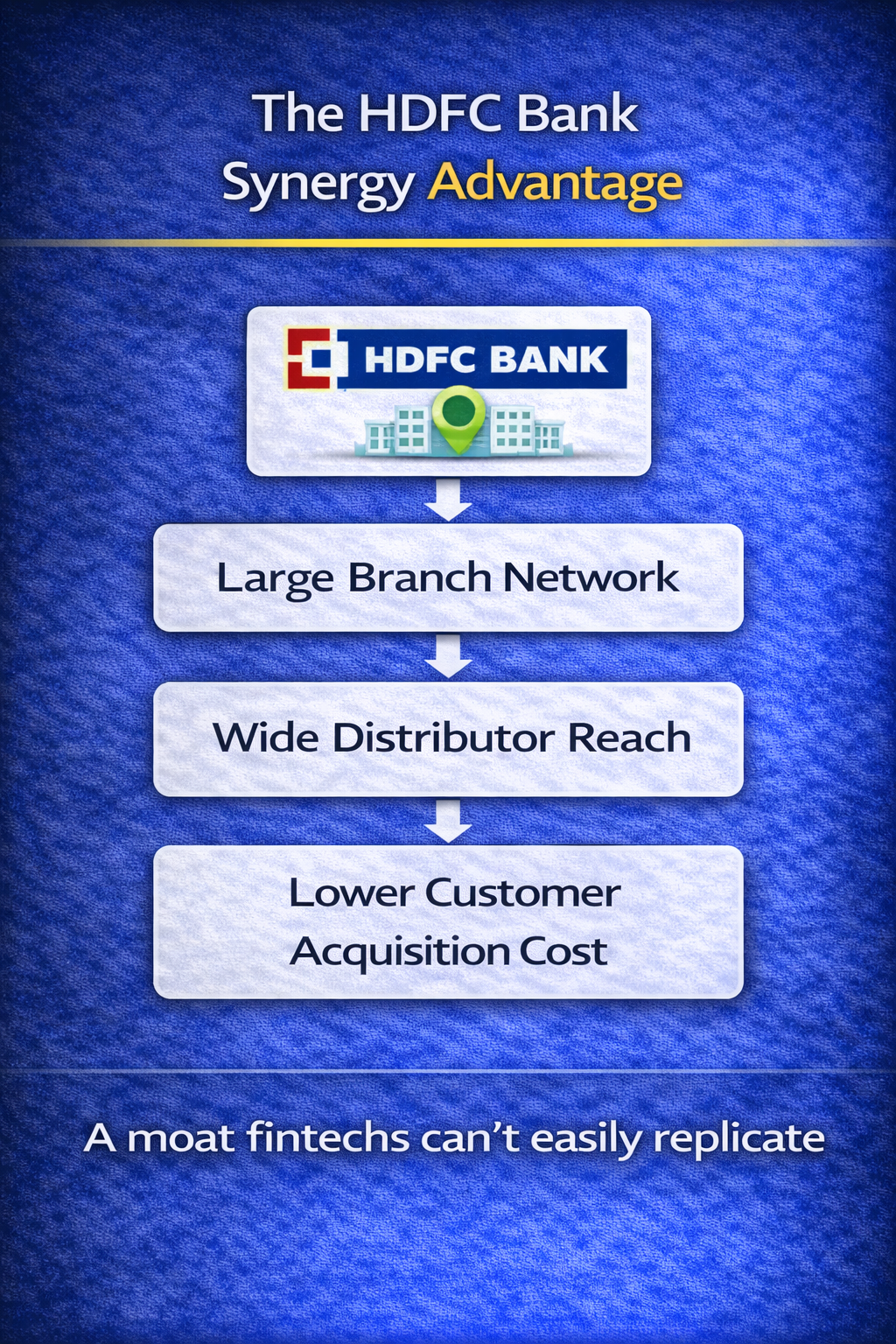
Another critical factor is the HDFC Bank synergy. With the bank holding around 52% stake in the AMC, the cross-selling potential remains unmatched. In a market where fintech platforms like Groww and Zerodha are aggressively acquiring users, traditional distribution backed by trust and physical presence continues to be a powerful moat.
6. Valuation & Market Sentiment
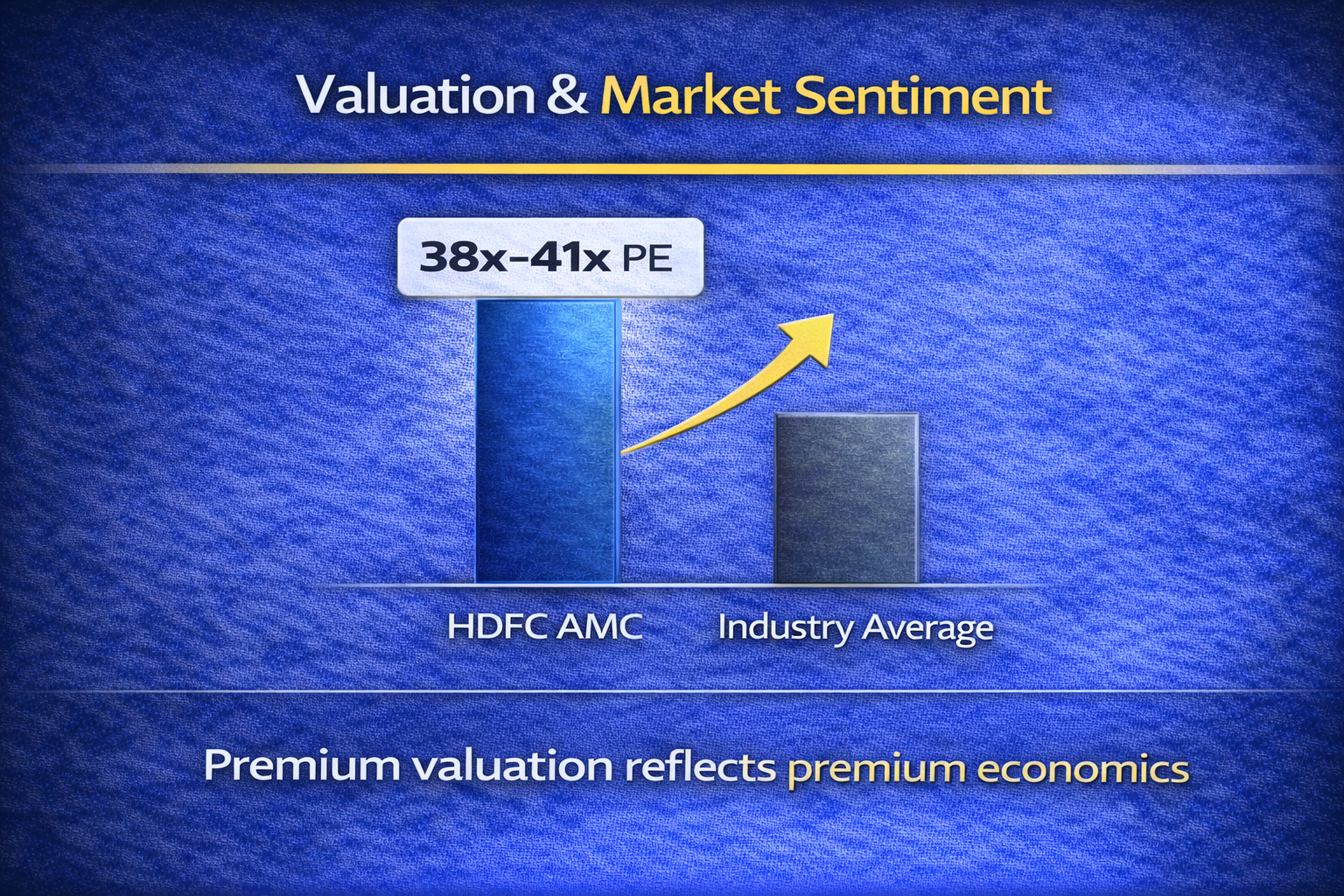
From a valuation standpoint, HDFC AMC trades at around 38x–41x forward earnings, reflecting its premium status in the sector. This valuation assumes that the company can continue delivering double-digit profit growth despite regulatory and competitive pressures.
Brokerage opinions remain mixed but largely constructive. Motilal Oswal Financial Services has reiterated a “Buy” rating with a target price of around ₹5,200, citing strong cash flows, market leadership, and strategic diversification. More cautious analysts point to rising acquisition costs in B-30 (beyond top 30) cities, where financial literacy is still evolving and distribution costs can be higher.
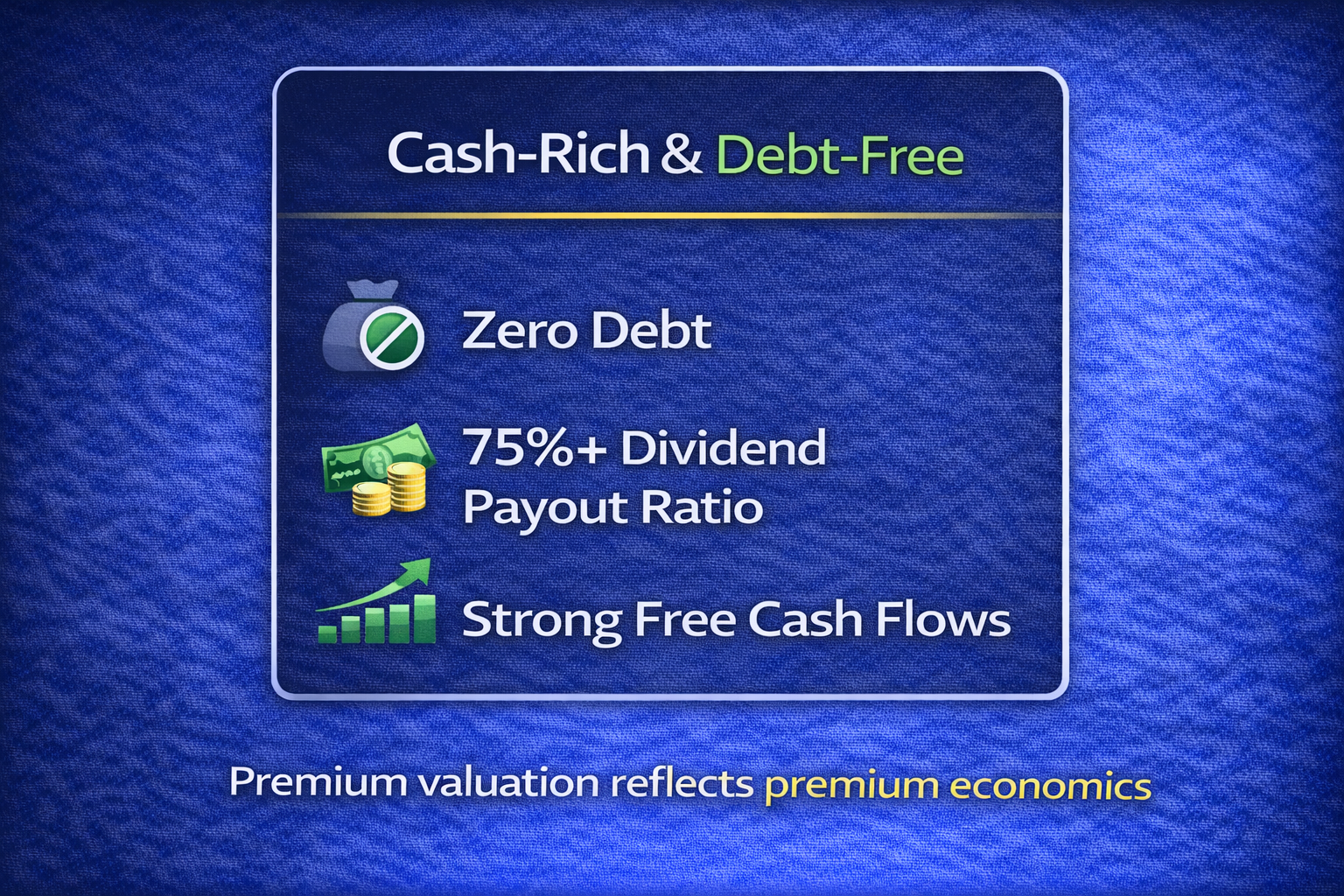
One factor that consistently supports valuation is HDFC AMC’s zero-debt balance sheet. The company is a cash-generating machine, with a dividend payout ratio exceeding 75% over time. For long-term investors, this combination of growth, stability, and income is rare.
7. Conclusion: The Analyst’s Verdict
The Q3 FY26 results of HDFC AMC confirm what many long-term observers have believed for some time: this is not just a fund house, but a proxy for India’s formalizing economy. As household savings move steadily from physical assets to financial instruments, asset managers stand to benefit disproportionately.
Even at a massive scale, HDFC AMC has shown that double-digit profit growth is sustainable. Its ability to manage yield compression, control costs, and diversify into new asset classes sets it apart from smaller peers. The strategic moves announced in recent quarters suggest that management is thinking well beyond the next market cycle.
That said, there are watch-outs. The success of the private credit business will depend on execution and risk management. Regulatory changes around sponsor roles and expense ratios could also influence margins. These are not red flags, but they are variables worth monitoring.
In my view, HDFC AMC’s Q3 FY26 performance represents a masterclass in scalability and strategic pivoting. For investors looking to participate in India’s long-term financialization story, this company remains one of the most credible and resilient vehicles in the market.
❓ FAQs
1. Why did HDFC AMC’s profit grow in Q3 FY26?
HDFC AMC’s profit rose by 20% YoY due to strong AUM growth, disciplined cost control, and the benefits of scale, despite regulatory fee pressure.
2. What was HDFC AMC’s AUM in Q3 FY26?
HDFC AMC reported ₹9.25 lakh crore in quarterly average AUM, reflecting strong equity inflows and rising domestic SIP participation.
3. What is telescopic pricing and how does it affect HDFC AMC?
Telescopic pricing is a SEBI rule where management fees decline as AUM rises. While it compresses yields, HDFC AMC offsets this through scale and efficiency.
4. Why is HDFC AMC entering private credit?
Private credit allows HDFC AMC to diversify revenue, serve institutional investors, and benefit from India’s growing demand for non-bank funding.
5. Is HDFC AMC financially strong?
Yes. HDFC AMC is debt-free, highly profitable, and maintains operating margins close to 80%, making it one of India’s strongest AMCs.
6. Does HDFC AMC pay dividends?
HDFC AMC has a consistent track record of 75%+ dividend payout, making it attractive for long-term income-focused investors.
7. What are the risks for HDFC AMC investors?
Key risks include regulatory changes to expense ratios, rising distributor costs in smaller cities, and execution risk in new businesses like private credit.
🔍 PEOPLE ALSO ASK (PAA)
(Use these exactly as sub-headings or FAQ schema)
Is HDFC AMC a good long-term investment?
HDFC AMC suits long-term investors seeking exposure to India’s financialisation story, stable cash flows, and high operating margins.
How does AUM growth impact AMC profitability?
Higher AUM increases revenue scale but lowers fee yield. Large AMCs like HDFC AMC benefit because costs don’t rise proportionately.
What drives HDFC AMC’s valuation premium?
Its market leadership, strong distribution moat, high margins, zero debt, and consistent dividend payouts justify a valuation premium.
How are domestic SIP flows helping HDFC AMC?
Stable SIP inflows provide predictable long-term capital, reducing dependence on volatile foreign investor flows.
What is the future growth outlook for HDFC AMC?
Growth is expected from rising retail participation, alternative assets like private credit, and continued household shift toward financial products.