Beyond $4,400 Gold and $75 Silver — Why the “Debasement Trade” Is the New Geopolitical Reality
1. The Hook: A New Dawn for Real Assets
As the world entered January 1, 2026, global finance quietly crossed an important line. Stock markets were still open. Currencies were still trading. Governments were still borrowing. But confidence in the system beneath it all had visibly cracked. Investors, central banks, and even governments were no longer asking if the system was stressed — they were asking how long it could last.
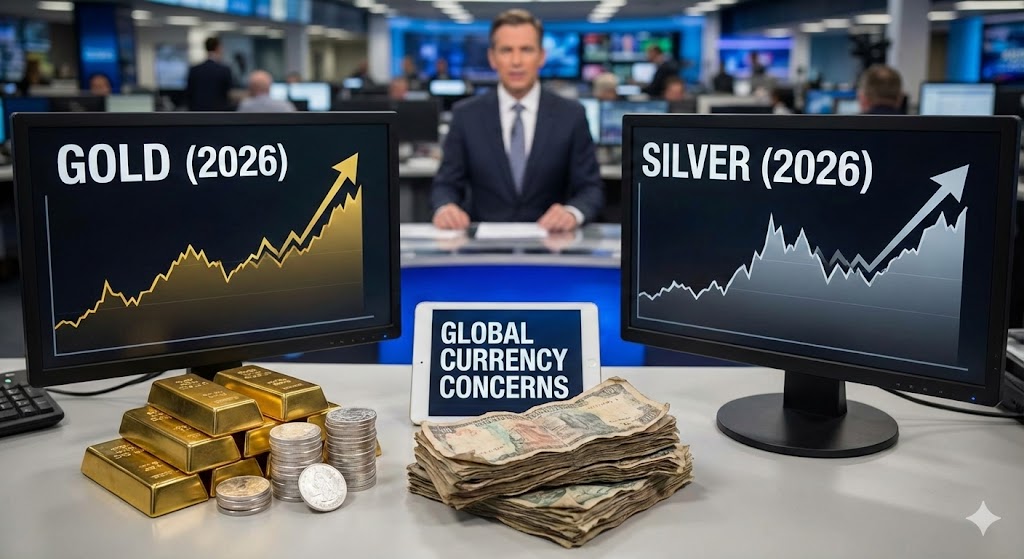
The numbers tell the story clearly. Gold crossed $4,410 per ounce, while silver broke above $82 per ounce, smashing levels that once seemed impossible. This was not a short-term rally driven by excitement or fear. It was a long, steady move driven by something deeper.
This is what many analysts now call the “Debasement Trade.” It reflects a growing belief that debt-based fiat money — especially a dollar-centric system built after 1971 — is losing trust. Gold and silver are not rising because they are becoming more valuable. They are rising because paper money is becoming less reliable.
2. Section I: The “Sanction-Proofing” of Global Reserves
The modern gold rush did not begin in 2026. Its roots trace back to 2022, when Western nations froze hundreds of billions of dollars of Russian foreign exchange reserves. That moment shocked governments around the world.
For decades, central banks believed that reserves held in major currencies were safe under all circumstances. The freeze proved otherwise. It sent a clear message: foreign reserves can be weaponized.
By 2026, this risk is no longer theoretical. Central banks are acting on it. Global central bank gold purchases have risen to around 755 tonnes per year, nearly four times the average annual buying seen before 2022. This is one of the largest structural shifts in reserve management in modern history.
Two examples stand out. The National Bank of Poland sharply increased its gold holdings in 2025 to reduce exposure to external pressure. At the same time, the Reserve Bank of India continued aggressive accumulation, quietly converting foreign assets into physical gold stored domestically. These are not speculative bets — they are insurance policies.
Another factor accelerating this shift is the increasing use of sanctions and naval pressure in global politics. Recent actions, such as U.S. pressure on Venezuela’s shipping routes, have reinforced the idea that neutral countries need neutral assets. Gold has no issuer, no counterparty, and no political allegiance. That is its power.
3. Section II: The BRICS “Unit” — From Theory to Trade
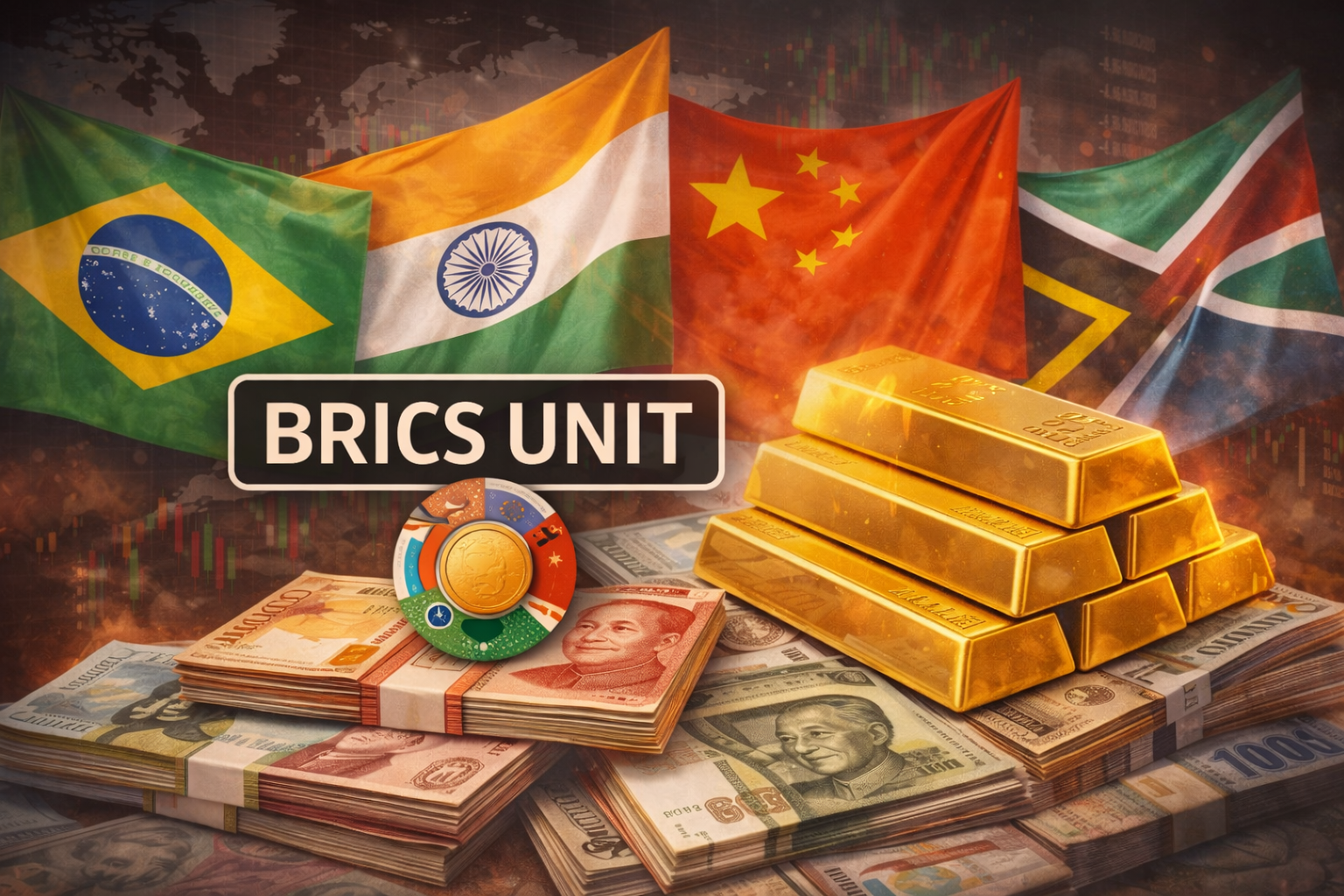
For years, talk of alternatives to the dollar sounded academic. In October 2025, that changed. The BRICS group launched a pilot settlement mechanism informally known as the BRICS “Unit.”
This system is not a new global currency in the traditional sense. Instead, it is a trade settlement tool backed by a 40% gold component and 60% local currencies. The design is deliberate. Gold provides trust and stability, while local currencies allow flexibility.
What makes this important is not symbolism but usage. In 2026, gold is no longer just sitting in vaults as a passive reserve. It is actively used to settle cross-border trade, especially for energy, metals, and large industrial contracts.
This system bypasses traditional dollar-based clearing channels and reduces reliance on SWIFT. As a result, the effectiveness of financial sanctions weakens. Countries trading within this framework are less exposed to external pressure.
This does not mean the dollar disappears overnight. But it does mean the dollar’s role as a geopolitical weapon is being challenged in a practical way — not just in speeches, but in real trade flows.
4. Section III: The Silver Supercycle — The “Dual Engine” Effect
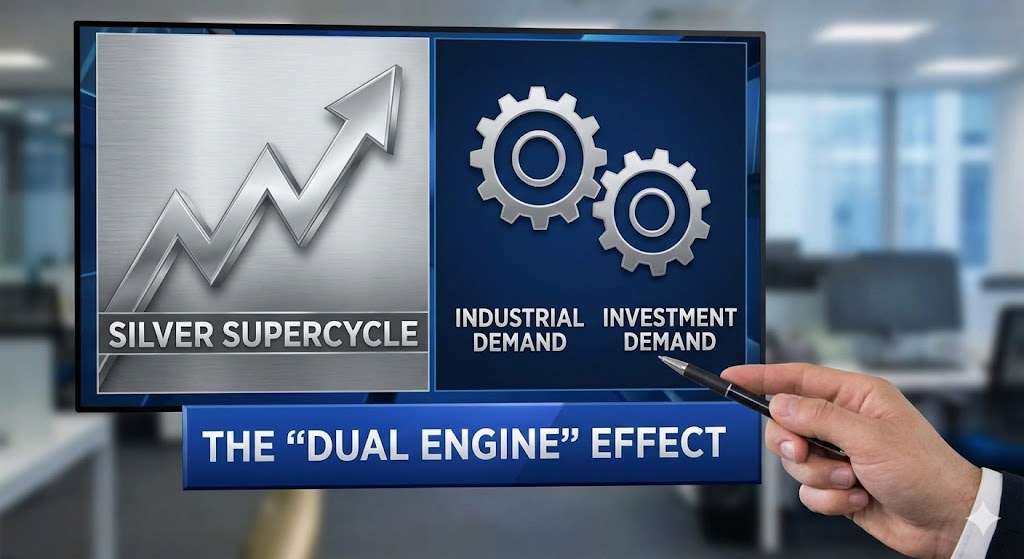
While gold reflects fear and caution, silver reflects necessity. Silver is outperforming gold in this cycle for one simple reason: it has two engines driving demand.
First, silver is a safe-haven metal. When confidence in currencies falls, investors buy silver alongside gold. Second — and more importantly in 2026 — silver is a critical industrial metal.
The world is facing its fifth consecutive year of structural silver deficits. Demand is rising faster than supply, and mining output cannot quickly respond.
The biggest driver is solar energy. Each solar panel requires silver-based conductive paste. In 2026, solar installations are consuming over 180 million ounces of silver annually. Electric vehicles are another major force. EVs use silver in batteries, wiring, and electronic controls, pushing demand 35% higher than 2023 levels.
Then there is artificial intelligence. Data centers, advanced chips, and high-speed connectivity all rely on silver. Many analysts now call silver “the new oil” of the AI era. Add rising defence demand due to West Asia and Eastern Europe tensions, and the pressure becomes relentless.
Silver is not just an investment asset anymore. It is a strategic input — and that changes everything.
Silver Institute – Official Silver Market Reports
5. Section IV: Macroeconomic Evaluation — The Debasement Trade
To understand why gold and silver keep rising, one must look at government finances. The United States, the anchor of the global system, is trapped.
U.S. debt-to-GDP has crossed 120%, and interest payments are one of the largest budget items. This creates what economists call a fiscal trap. If interest rates stay high for too long, debt servicing becomes unmanageable. If rates are cut, currencies weaken.
By early 2026, the policy direction is clear. Interest rates have been cut to around 3.50%, while inflation remains sticky near 2.9%. This creates negative real yields, where savers lose purchasing power over time.
Negative real yields are rocket fuel for precious metals. Investors are not chasing returns — they are avoiding guaranteed losses.
This cycle strongly resembles the 1976–1980 period, when gold surged after years of debt and inflation pressure. The key difference today is scale. The world is more indebted, more fragmented, and more geopolitically tense than it was then.
International Monetary Fund (IMF) – World Economic Outlook & Country Reports
6. Expert Analysis: Risks to the Thesis
No market moves in a straight line, and this supercycle has risks. One risk is a hawkish surprise from central banks. If inflation spikes again and interest rates return to 5% or higher, precious metals could face short-term pressure.
Another risk is the resilience of the U.S. dollar. Despite all the talk of de-dollarization, the dollar still accounts for around 47% of global payments. It remains deeply embedded in trade, finance, and debt markets.
However, these risks are best viewed as speed bumps, not roadblocks. The underlying trend is not about replacing the dollar tomorrow. It is about diversifying away from dependence. Multipolar finance is a slow process — but it is irreversible.
7. The Outlook for 2026 & Beyond
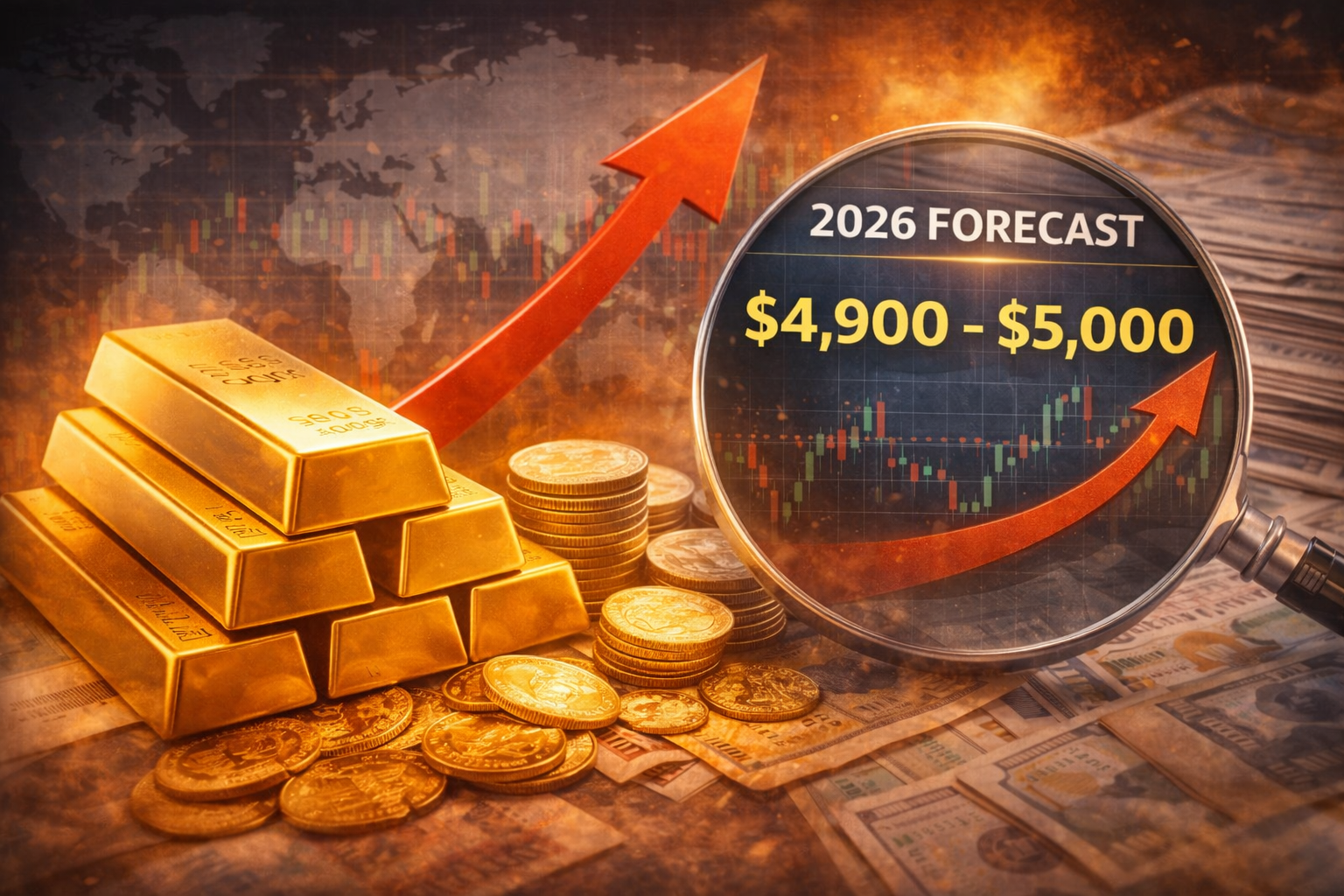
Looking ahead, major institutions have raised their forecasts. Goldman Sachs and J.P. Morgan both see gold reaching $4,900 to $5,000 per ounce by the end of 2026 under current conditions.
Silver is harder to model because supply is tight and demand is explosive. If the gold-to-silver ratio, currently elevated, moves back toward its historical average of 1:45, silver could enter price discovery territory. Under such conditions, $100 per ounce is no longer unrealistic.
The key takeaway is simple. Gold protects against monetary disorder. Silver benefits from both disorder and industrial growth. Together, they form the core of the modern debasement trade.
World Gold Council – Official Market Data
8. Conclusion: Holding Value in an Uncertain World
The great metal pivot is not about fear. It is about clarity. Governments are borrowing more. Politics is fragmenting. Sanctions are spreading. Technology is accelerating resource demand.
In such a world, investors are rediscovering an old truth. Real assets do not need promises. They do not depend on policy credibility. They simply exist.
As the saying goes: In a world of digital bits and paper promises, the ultimate insurance is the metal you can hold.
Frequently Asked Questions (FAQ)
Why are gold and silver prices rising so sharply in 2026?
Gold and silver prices are rising because global debt levels are high, interest rates are lower than inflation, and trust in fiat currencies is weakening. Investors and central banks are moving toward real assets that hold value over time.
What is the “gold and silver supercycle”?
A supercycle is a long-term price trend driven by structural factors, not short-term speculation. In 2026, the gold and silver supercycle is driven by de-dollarization, central bank buying, geopolitical risk, and rising industrial demand.
What does “debasement trade” mean?
The debasement trade refers to investing in assets like gold and silver to protect against the loss of purchasing power caused by excessive money printing, high government debt, and negative real interest rates.
Why are central banks buying so much gold?
Central banks are buying gold to reduce dependence on foreign currencies, protect reserves from sanctions, and diversify away from the US dollar. Gold is a neutral asset with no political or credit risk.
How is silver different from gold as an investment?
Gold is mainly a store of value and safe-haven asset. Silver has a dual role: it is both a precious metal and an essential industrial metal used in solar panels, electric vehicles, electronics, and defence equipment.
Why is silver demand rising faster than supply?
Silver demand is growing due to clean energy projects, electric vehicles, AI data centers, and defence needs. Mining supply cannot increase quickly, leading to repeated supply deficits and upward pressure on prices.
What role do BRICS countries play in the gold rally?
BRICS nations are increasing gold use in trade settlements and reserves. Their move toward gold-backed mechanisms reduces reliance on the US dollar and strengthens long-term demand for gold.
Can gold really reach $5,000 in 2026?
Many large financial institutions forecast gold prices between $4,900 and $5,000 if current conditions continue. These projections depend on interest rates, inflation, and geopolitical stability.
Is silver likely to reach $100 per ounce?
Silver could approach $100 if industrial demand remains strong and the gold-to-silver price ratio returns closer to historical averages. Tight supply makes silver more volatile than gold.
How do interest rates affect gold and silver prices?
When interest rates are lower than inflation, real yields become negative. This makes holding cash unattractive and increases demand for gold and silver as value-preserving assets.
Is investing in gold and silver risky?
Like all assets, gold and silver prices can be volatile in the short term. However, they are generally seen as long-term hedges against inflation, currency risk, and geopolitical uncertainty.
Are gold and silver still relevant in a digital economy?
Yes. Even in a digital world, physical metals remain important because they do not depend on technology, governments, or financial systems to retain value.
What is the main takeaway for investors in 2026?
The key lesson is that gold protects wealth during monetary instability, while silver benefits from both economic growth and industrial transformation. Together, they reflect a global shift toward real assets.
People Also Ask (PAA)
Why is gold so expensive in 2026?
Gold is expensive in 2026 because governments carry high debt, real interest rates are low or negative, and geopolitical risks are rising. Central banks and investors are buying gold to protect against currency weakness and financial uncertainty.
Why is silver outperforming gold in this cycle?
Silver is rising faster because it has two sources of demand: it is a safe-haven metal like gold and a critical industrial metal. Solar energy, electric vehicles, AI data centers, and defence manufacturing are driving strong industrial demand.
What is meant by a “gold and silver supercycle”?
A supercycle is a long-term trend driven by structural changes, not short-term speculation. In 2026, the supercycle is driven by de-dollarization, central bank gold buying, supply shortages, and geopolitical fragmentation.
What is the “debasement trade” in simple terms?
The debasement trade means buying real assets like gold and silver because paper money is losing value over time due to high debt, money creation, and inflation.
Are central banks really buying more gold now?
Yes. Central banks are buying gold at the fastest pace in decades. Many countries want to reduce reliance on foreign currencies and protect their reserves from sanctions or financial pressure.
How does the BRICS “Unit” affect gold prices?
The BRICS trade mechanism uses gold as part of cross-border settlement. This increases real demand for gold and reduces dependence on the US dollar, supporting higher long-term gold prices.
Why is silver supply unable to meet demand?
Silver mining grows slowly, while demand from clean energy, electronics, and AI is rising quickly. This has created multi-year supply deficits, putting upward pressure on prices.
Can gold really reach $5,000 per ounce?
Gold could reach $5,000 if inflation stays elevated, interest rates remain below inflation, and geopolitical tensions continue. Many forecasts depend on monetary policy and global stability.
Is silver likely to reach $100 per ounce?
Silver could approach $100 if industrial demand remains strong and the gold-to-silver ratio moves closer to historical averages. Silver prices are more volatile than gold.
How do interest rate cuts affect gold and silver?
When interest rates fall while inflation stays high, real yields turn negative. This makes holding cash less attractive and increases demand for gold and silver.
Is the US dollar losing its global dominance?
The dollar remains important, but its dominance is slowly declining. More countries are diversifying trade and reserves, which supports demand for gold over the long term.
Are gold and silver safe investments during global uncertainty?
Gold and silver are often used as hedges during inflation, currency risk, and geopolitical stress. While prices can fluctuate, they tend to hold value over long periods.
Why are geopolitics so important for precious metals?
Sanctions, wars, and trade conflicts increase uncertainty and reduce trust in financial systems. This drives demand for assets like gold and silver that do not depend on governments or institutions.
What is the biggest risk to the gold and silver rally?
The main risk is a sharp rise in interest rates or a sudden improvement in global financial stability. Such changes could slow the rally but are unlikely to reverse the long-term trend.
What is the key takeaway for readers?
The key takeaway is that gold protects wealth in times of monetary stress, while silver benefits from both economic growth and industrial transformation. Together, they reflect a global shift toward real assets.
📊 Infographic 1: Gold & Silver Price Reality Check (2026)
| Asset | 2020 Avg Price | 2023 Avg Price | Jan 2026 Level |
|---|---|---|---|
| Gold | $1,770/oz | $1,940/oz | $4,410/oz |
| Silver | $20/oz | $23/oz | $82+/oz |
📌 Key takeaway: This is not a short rally — it’s a structural repricing of money.
🏦 Infographic 2: Central Bank Gold Buying Explosion
| Period | Annual Gold Purchases |
|---|---|
| Pre-2022 Average | ~180 tonnes |
| 2022–2023 | ~450 tonnes |
| 2024–2025 | ~650 tonnes |
| 2026 (Est.) | ~755 tonnes |
📌 Key takeaway: Central banks trust gold more than currencies.
🌍 Infographic 3: Why Countries Are “Sanction-Proofing” Reserves
| Trigger Event | Global Impact |
|---|---|
| 2022 Russian reserves freeze | Confidence shock |
| Rising US sanctions | Asset risk |
| Naval & trade blockades | Supply chain fear |
| Geopolitical polarization | Neutral asset demand |
📌 Key takeaway: Gold has no issuer, no sanctions, no politics.
🌐 Infographic 4: BRICS “Unit” – How It Works
| Component | Share |
|---|---|
| Gold backing | 40% |
| Local currencies | 60% |
| Usage | Trade settlement |
| SWIFT dependence | Reduced |
📌 Key takeaway: Gold is returning as a settlement tool, not just a reserve.
⚡ Infographic 5: The Silver Supercycle – Demand Drivers
| Sector | Role of Silver | 2026 Impact |
|---|---|---|
| Solar / PV | Conductive paste | 180M oz+ demand |
| Electric Vehicles | Wiring & batteries | +35% vs 2023 |
| AI & Data Centers | Chips & cooling | “New oil” |
| Defence | Precision weapons | Rising sharply |
📌 Key takeaway: Silver demand is industrial, strategic, and unavoidable.
⛏️ Infographic 6: Global Silver Supply Gap
| Year | Supply vs Demand |
|---|---|
| 2022 | Deficit |
| 2023 | Deficit |
| 2024 | Deficit |
| 2025 | Deficit |
| 2026 | 5th year deficit |
📌 Key takeaway: Mining supply cannot catch up quickly.
💸 Infographic 7: The Debasement Trade Explained
| Factor | Current Reality |
|---|---|
| US Debt-to-GDP | ~120% |
| Policy Rates | ~3.50% |
| Inflation | ~2.9% |
| Real Yield | Negative |
📌 Key takeaway: Cash loses value → metals gain value.
📉 Infographic 8: Gold vs Inflation Cycles (Historical Parallel)
| Cycle | Gold Performance |
|---|---|
| 1976–1980 | +800% |
| 2001–2011 | +650% |
| 2020–2026 | Ongoing supercycle |
📌 Key takeaway: Today’s cycle has higher debt + more geopolitics.
📈 Infographic 9: 2026–27 Price Outlook (Institutional)
| Asset | Forecast Range |
|---|---|
| Gold | $4,900 – $5,000 |
| Silver | $90 – $100 |
| Gold/Silver Ratio | Target ~45:1 |
📌 Key takeaway: Silver has more upside if ratio compresses.