
From Sanctions to Supplication: Why the U.S. Is Now Asking India for Help Against China’s Rare Earth Monopoly

 n
n
 n
nA Turn of the Wheel
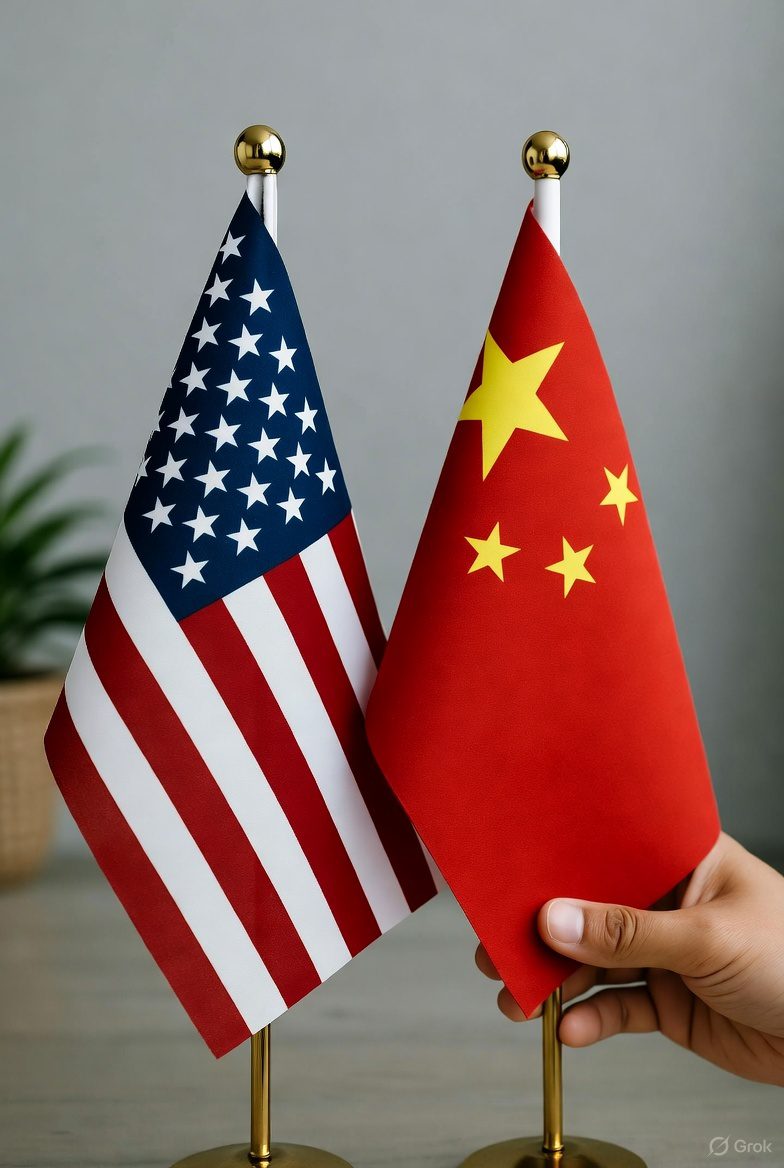
U.S. Treasury Secretary Scott Bessent, one of former President Donald Trump’s key financial allies, recently went live on Fox News, urging India to “stand shoulder to shoulder” with the United States against China’s rare earth monopoly.
“We expect to have support from India and the Europeans,” said Bessent.
(Source: India Today, Oct 15, 2025)[Google AdSense Responsive Inject]
The irony is unmistakable — the same U.S. administration that once accused India of “unfair trade” and imposed tariffs is now publicly asking for cooperation.
🔸 Rare Earths: China’s Most Powerful Economic Weapon
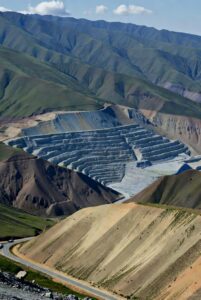
China’s control over rare earth elements — the core materials used in electronics, EVs, satellites, and defense — is no secret. These minerals are as critical to modern economies as oil was in the 20th century.
Below is a snapshot of global rare earth production (based on U.S. Geological Survey & industry data, 2025 estimates):
| Country | Share of Global Production (%) | Key Role |
|---|---|---|
| 🇨🇳 China | 77% | Dominant producer, controls magnet refining and export licensing |
| 🇺🇸 United States | 12% | Mining presence but limited refining capacity |
| 🇦🇺 Australia | 8% | Key alternative source, especially for Japan and Korea |
| 🇮🇳 India | 2% | Emerging producer; potential to expand processing capacity |
| 🌍 Others (Myanmar, Malaysia, Africa) | 1% | Small but growing role in global supply |
(Sources: USGS 2025, Reuters, Bloomberg, China Rare Earth Industry Association)
This monopoly allows Beijing to dictate global pricing and — as we now see — to use supply restrictions as a geopolitical lever.
🔸 The Tariff Timeline: When Washington Blinked
| Date | Event | Impact |
|---|---|---|
| July 2025 | U.S. announces new 100% tariff on Chinese goods | Escalates trade tensions |
| Aug 2025 | China halts rare earth magnet exports temporarily | Global electronics sector panics |
| Sept 2025 | China introduces new export licensing rule | Requires written assurance: no re-export to U.S. |
| Oct 2025 | U.S. Treasury Secretary Scott Bessent appeals to India on Fox News | Public plea for support marks policy reversal |
| Nov 1, 2025 (expected) | Tariff enforcement begins | Global markets brace for supply disruptions |
🔸 “China vs. The World”
In his Fox News interview, Bessent warned of a “China versus the world” scenario. The concern is clear: if nations like India, Japan, and the EU accept China’s new conditions, America could find itself completely cut off from critical supplies.
China’s new rule means any country buying its rare earth materials must guarantee in writing that none of it will end up in the U.S.
(Reuters, Oct 14, 2025)
This bold move is isolating Washington diplomatically and economically. Even U.S. allies are considering compliance rather than confrontation.
🔸 India’s Strategic Dilemma
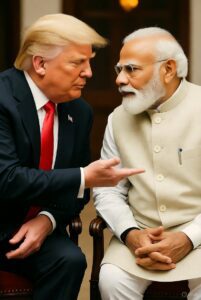
Beijing has made its offer to India clear:
China will continue supplying rare earth elements and magnets to India at stable prices — provided India ensures none are re-exported to the U.S.
(Times of India)
This places India at a geopolitical crossroads.
Accepting China’s offer could strengthen domestic manufacturing and lower costs.
But supporting the U.S. may cement India’s position as a strategic partner in a new global supply chain alliance.
India must walk the fine line between economic opportunity and diplomatic independence — maintaining its cherished strategic autonomy.
🔸 The Bigger Picture
This isn’t merely a trade war — it’s a global power transition.
China is leveraging its mineral dominance to challenge Western supply chains, while the U.S. is rediscovering that sanctions and tariffs can backfire when resource control lies elsewhere.
For India, this is a moment of validation and opportunity. It’s no longer a “secondary player” but a pivotal power capable of influencing both camps.
🧭 Conclusion: The Wheel Has Truly Turned
The same platform that once mocked India — Fox News — now broadcasts a U.S. official pleading for India’s help.
From being sanctioned to being sought after, India’s rise as a balancing power is undeniable.
As Washington scrambles to secure its industries and Beijing flexes its mineral might, New Delhi holds a crucial card in the 21st-century economic chess game — and how it plays it could redefine global geopolitics for years to come.

About Anant Jha
Anant Jha is the Editor-in-Chief of SRVISHWA.com, where he writes on geopolitics, geoeconomics, and global financial trends. As a geopolitical and geoeconomic analyst (and continuous learner), he focuses on decoding global power shifts, currency dynamics, and economic strategies shaping the modern world.He is also a stock market fundamental analyst and learner, exploring how macroeconomic events influence businesses and long-term investment opportunities. Through his work, he aims to simplify complex global issues and connect them with real-world economic impact for readers.