1) FII & DII Net Buying Turns Markets Positive — A Rare Alignment That Boosted Sentiment
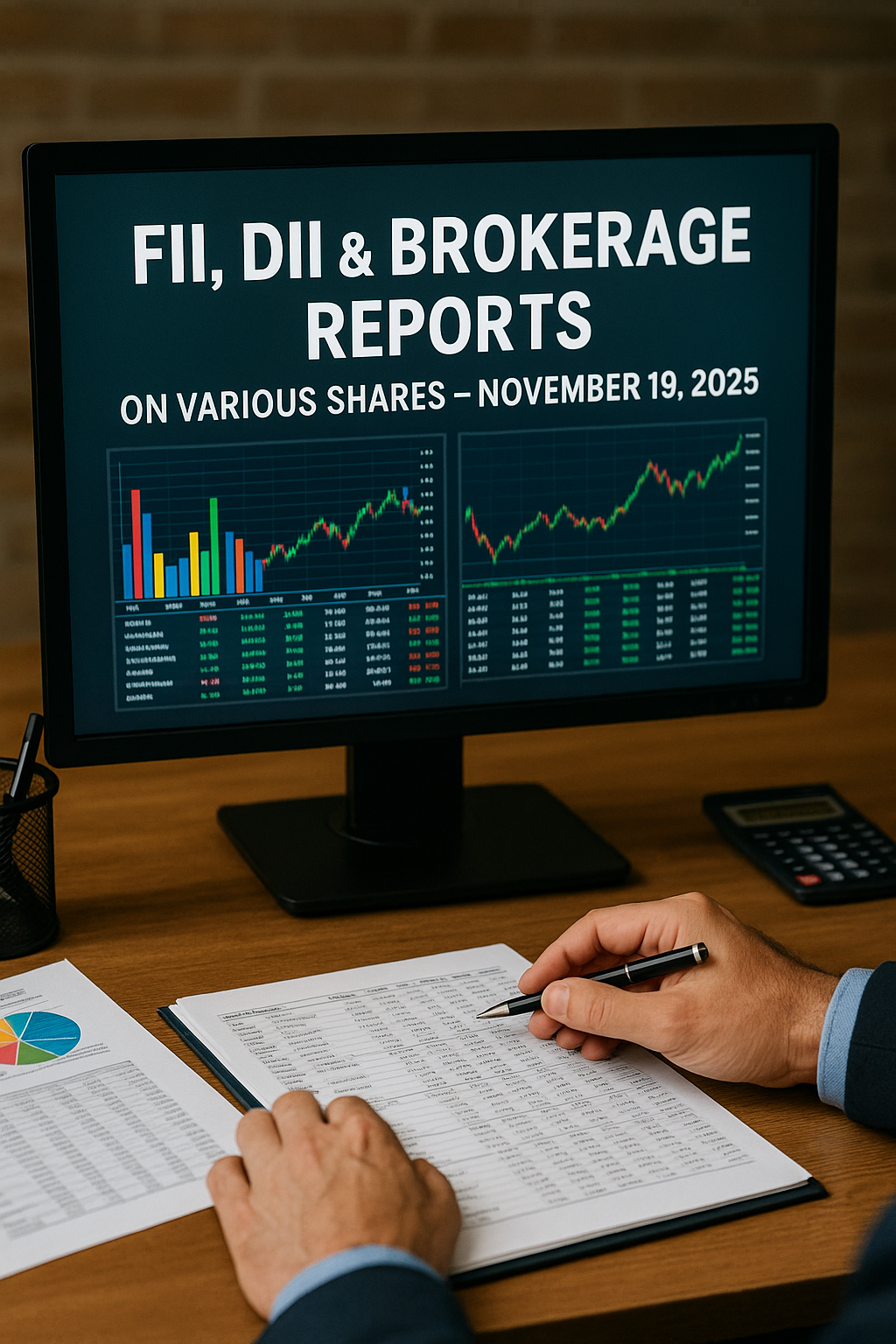
On November 19, 2025, the Indian stock market witnessed a rare and encouraging development: both FIIs (Foreign Institutional Investors) and DIIs (Domestic Institutional Investors) were net buyers on the same trading day. This dual inflow sent a positive undertone across large-cap counters and helped stabilise indices after a volatile week. According to provisional exchange data, FIIs recorded net buying of ~₹1,580 crore, while DIIs added around ₹1,360 crore, creating a combined liquidity push that helped markets sustain higher levels.
This kind of alignment matters because FIIs influence index-heavy stocks, while DIIs provide depth by supporting mid- and small-cap names. Strategically, this showed that both global and domestic institutions found Indian valuations fair and risk-reward attractive. For traders and analysts, November 19 became a template for studying how liquidity, institutional alignment and market psychology work together to support broader stability—making this one of the most important flow-based signals of the month.
2) Adani Group Developments Dominate Market Action — Rights, Stake Sales & Bid Approvals Drive Volatility
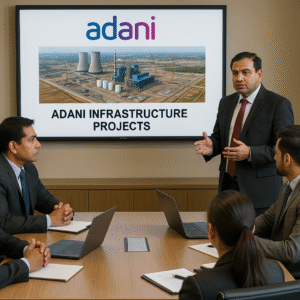
The Adani Group was once again the center of attention on November 19, 2025, thanks to multiple high-impact announcements. From progress in insolvency proceedings involving Jaiprakash Associates to updates on internal stake restructuring, the group’s broad presence across infrastructure and energy ensured these headlines had marketwide implications.
Both FIIs and DIIs monitored developments closely. For FIIs, the primary question was clarity on leverage, cash flows and potential dilution. Positive updates often act as de-risking signals, encouraging selective institutional buying. DIIs, meanwhile, focused on execution visibility and long-term value creation. Brokerage houses updated coverage on various Adani stocks, with several maintaining “accumulate” or “neutral” positions due to long-term project pipelines. For retail traders, high volumes and sharp intraday moves created exciting—but risky—short-term trading opportunities. The Adani news cycle once again illustrated how large conglomerates can influence not just their own stock but also broader sector sentiment in infra, construction and power.
3) TCS Gains Attention as Brokerage Reports Highlight Stability, Brand Strength & Digital Revenue Growth
Among large-cap IT names, Tata Consultancy Services (TCS) was one of the big highlights on November 19. Positive media recognition combined with multiple brokerage notes reaffirming the company’s strong deal pipeline, stable leadership and AI-driven service demand. FIIs often treat TCS as a low-volatility, high-quality exposure to India’s tech ecosystem, and the alignment of positive PR and bullish brokerage commentary strengthened this perception.
Brokerage reports praised TCS for its consistent order inflow, cloud transformation work and resilience in uncertain global IT spending cycles. DIIs selectively added exposure too, focusing on valuation comfort and predictable cash flows. With India’s IT sector often acting as a defensive pillar during volatility, TCS’s upward bias created a supportive base for the Nifty IT Index. This convergence of brand visibility, analyst confidence and institutional flows made TCS one of the most notable stocks to watch on November 19.
4) HDFC Bank Shows Mixed Price Action as Derivatives Activity Surges — A Day of Caution for Traders

HDFC Bank remained in the spotlight on November 19 due to its relatively muted cash-market movement but unusually high activity in the derivatives segment. Traders observed significant open interest in put options around the ₹980–₹990 levels, which acted as strong technical zones for intraday support.
This is a classic reminder that derivatives often reveal hidden market intentions—market makers, FIIs and proprietary desks frequently hedge positions around key strikes, creating artificial floors or ceilings. Despite modest cash volumes, HDFC Bank’s options activity shaped much of the day’s volatility. DIIs maintained confidence in long-term fundamentals, but the short-term reaction remained firmly influenced by the derivatives market. For retail traders, this underscores the importance of tracking option-chain behavior in addition to corporate news and price-action charts.
5) IT Sector as a Whole Benefits from Bullish Brokerage Sentiment — Sector Rotation Gains Momentum
IT stocks across the board saw positive sentiment thanks to a string of broker reports published on November 19. Analysts highlighted steady recovery in global digital spending, stabilising U.S. macro signals and improved visibility in large deal closures—especially for top-tier IT companies.
FIIs responded by adding exposure to large caps like TCS and Infosys, which offer liquidity and predictable earnings cycles. DIIs focused on select mid-tier IT companies that offer margin expansion opportunities. This sector rotation helped the Nifty IT Index outperform the broader market, even though midcap breadth remained mixed. For investors, the message was simple: when brokerage houses converge on positive guidance for a sector, institutional flows often follow—and November 19 was testament to this pattern.
6) Energy & Commodity Stocks Benefit from Positive Brokerage Calls and FII Rotation
The energy and commodity segment showed relative strength driven by global oil cues and domestic brokerage upgrades. Analysts pointed out improving refining margins, stabilizing crude prices and favorable inventory positions for specific refiners.
FIIs selectively bought into energy majors, especially those with integrated upstream and downstream operations. DIIs, meanwhile, leaned into fuel retail and domestic gas distribution plays. Brokerage research highlighted medium-term margin tailwinds, prompting increased retail interest as well. While commodity plays often carry higher volatility, November 19 demonstrated how quickly they can regain investor attention when both global cues and brokerage sentiment align.
7) Midcaps See Sharp Intraday Moves Due to Watchlists — But Lack of Institutional Support Limits Follow-Through
Brokerage watchlists pushed several midcap names higher intraday, resulting in quick momentum spikes. However, FIIs largely remained focused on large caps, limiting sustained moves in the midcap universe.
This divergence is common in the Indian market: retail volumes surge on news triggers, but without institutional accumulation, gains often fade. DIIs were selective, adding exposure only in fundamentally strong names. The lesson for traders is straightforward—momentum-driven midcap rallies need confirmation through institutional flows. Without FIIs or large DIIs stepping in, rallies can reverse quickly, especially around key resistance zones.
8) Derivatives Market Plays a Big Role in Amplifying Intraday Volatility Across Index Stocks
On November 19, derivatives positioning significantly influenced the trading environment. High open interest at specific Nifty and Bank Nifty strikes created price magnets, pulling the index toward certain levels. Market-makers hedging positions amplified intraday swings, especially near large OI clusters.
FIIs also added to index futures, while reducing aggressive option selling—both actions signaling improved sentiment. Traders relying purely on cash-market news missed the deeper story: derivatives flow was the hidden engine behind day-long volatility. Understanding these setups is critical for day traders, as even the best stock-specific news can be overridden by index-level options activity.
9) Brokerage Recommendations: Which Calls Mattered Most on Nov 19 and Why
Not all brokerage calls influence markets equally. On November 19, the reports that moved stocks contained major updates—earnings model revisions, valuation upgrades, sectoral thesis upgrades and detailed channel checks.
Brokerages were particularly active in publishing reports on infrastructure, financials, consumer discretionary and IT. Stocks with repeated mentions across multiple brokerages saw increased institutional interest as well. For serious investors, this highlights the importance of tracking conviction research rather than click-driven buy/sell headlines. Institutional-grade reports tend to lead to real FII or DII flows, which are what actually move stock prices sustainably.
10) Key Takeaways for Investors & Traders — How To Use These Reports Going Forward
The biggest lesson from November 19 is that institutional alignment + strong brokerage research + supportive derivatives flow create the most reliable trading signals.
Retail investors must avoid overreacting to single-day moves. Instead, they should look for consistent FII buying, improving sector fundamentals, and high-conviction brokerage upgrades. For traders, monitoring open interest, block deals and repeated brokerage commentary helps identify where the real strength lies.
In short, November 19 was not a one-off event but a useful case study in how professional money shapes the Indian market.