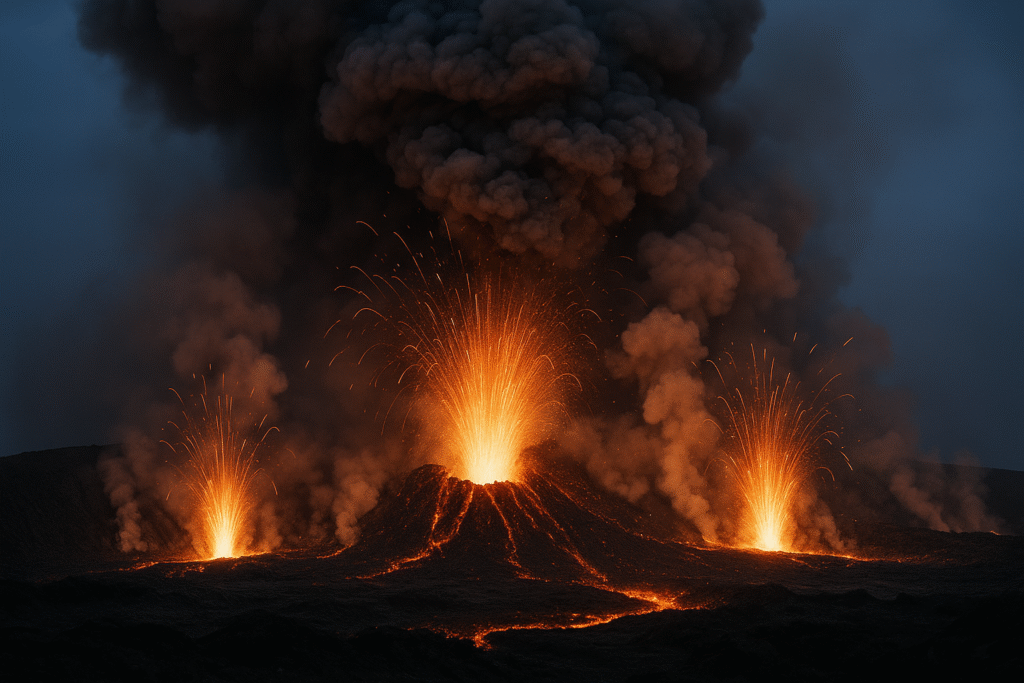
Ethiopian Volcanic Eruption After 12,000 Years: Causes, Impact, History and Future Possibilities
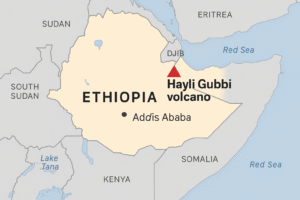
A volcanic eruption in Ethiopia has captured the world’s attention because it occurred after nearly 12,000 years of dormancy. The ash cloud travelled across long distances, disrupted flights, and raised questions about what triggers such rare eruptions. Many people are curious to understand what a volcanic eruption actually is, why volcanoes erupt, what compounds they release, and how such events can affect Earth’s atmosphere. This article explains all these points in simple language while maintaining accuracy and a clear structure suitable for SEO and Google AdSense.
What Is a Volcanic Eruption?
A volcanic eruption is a natural process where magma, gases, and ash rise from deep inside the Earth and escape through openings called volcanoes.
Magma is molten rock stored beneath Earth’s crust. When it reaches the surface, it becomes lava.
Eruptions occur in different ways—some are quiet lava flows, while others are explosive and release huge clouds of volcanic ash and gases. The speed, power, and style of an eruption depend on the composition of magma, the amount of gas trapped inside, and the structure of the volcano.
Volcanic eruptions have shaped mountains, plateaus, and islands across the world. They are an essential part of how Earth recycles its internal heat and minerals.
Why Do Volcanoes Erupt?

Volcanoes erupt because of pressure build-up inside the Earth.
Here is a simple explanation:
Deep beneath the surface, rocks melt due to high temperature and pressure.
This creates magma, which contains dissolved gases.
Magma is lighter than the surrounding solid rock, so it starts rising.
When too much gas pressure builds up, the rock above cracks.
The magma escapes forcefully, causing an eruption.
Other factors that trigger eruptions include:
Movement of tectonic plates
Fresh magma entering the chamber
Crustal stress due to rifting or earthquakes
Interaction of magma with groundwater, which can cause steam explosions
In regions where plates are pulling apart—like Ethiopia’s Afar region—volcanoes are more common because the crust is thinner and magma has an easier path to the surface.
Why Did Ethiopia’s Volcano Erupt After 12,000 Years?
The Ethiopian volcanic eruption became major news because the volcano had been quiet for thousands of years. When a volcano erupts after such a long time, it raises many geological and scientific questions.
Experts point out that long dormancy does not mean extinction. A volcano can stay quiet for thousands of years and still erupt under the right conditions.
The primary reasons behind the Ethiopian eruption include:
1. Tectonic Rifting
Ethiopia lies in a zone where three tectonic plates—African, Arabian, and Somali plates—are slowly pulling away from each other. This creates cracks in Earth’s crust, allowing magma to rise.
2. Fresh Magma Intrusion
A new supply of hot magma may have entered the chamber below the volcano. As the magma pushed upward, it created pressure that eventually broke open the surface.
3. Geological Weak Zones
Old volcanoes usually have deep cracks from previous eruptions. When pressure builds, these cracks can reopen even after thousands of years.
4. Natural Long Cycles
Some volcanoes simply have very long eruption cycles. Human records span only a few thousand years, but Earth operates on much longer timescales.
In simple terms, even if a volcano last erupted 12,000 years ago, its geological “clock” may still be active.
What Compounds Are Present in the Ethiopian Volcanic Eruption?
Volcanic eruptions release a mix of gases, ash, and minerals. Although measurements continue, the typical compounds seen in such eruptions include:
Gases
Water vapor (H₂O) – the most abundant
Carbon dioxide (CO₂)
Sulfur dioxide (SO₂)
Hydrogen sulfide (H₂S)
Hydrogen chloride (HCl)
Hydrogen fluoride (HF)
Solids
Volcanic ash – tiny fragments of rock and glass
Pumice
Basaltic lava (common in East African Rift eruptions)
These gases and ash particles travel with wind and can spread across large distances, as seen during this Ethiopian eruption.
How Can This Eruption Affect Earth’s Atmosphere?
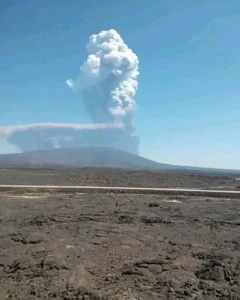
The atmosphere can be affected in several ways depending on the strength and height of the eruption.
1. Local Air Quality
Volcanic ash can reduce visibility and irritate the eyes and lungs.
Sulfur dioxide can form volcanic smog (vog), which can affect people downwind.
2. Aviation Disruption
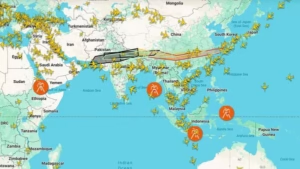
Ash clouds can damage aircraft engines. This is why several flights were diverted or cancelled after the Ethiopian eruption.
3. Climate Influence (Short-Term)
If sulfur dioxide reaches high altitudes, it can form sulfate aerosols which reflect sunlight.
This may cause:
Slight temporary cooling
Hazy skies
Altered weather patterns in nearby regions
However, only very large eruptions cause significant global climate effects. Current data suggests the Ethiopian eruption has regional impact, not global.
Historical Data on Similar Volcanic Eruptions
Volcanic eruptions are part of Earth’s natural cycle. History provides many examples:
1. Mount Tambora (1815)
One of the most powerful eruptions ever recorded.
It caused global cooling and the famous “Year Without a Summer.”
2. Krakatoa (1883)
Created shockwaves heard thousands of kilometres away and affected global weather.
3. Mount Pinatubo (1991)
Released massive amounts of sulfur dioxide into the stratosphere, reducing global temperatures temporarily.
4. Erta Ale – Ethiopia
A continuously active volcano in the same regional system as the current Ethiopian eruption.
5. Long-Dormant Rift Volcanoes
Many rift-zone volcanoes erupt after long gaps because the tectonic plates are constantly shifting.
The new Ethiopian eruption fits into a long geological pattern of African Rift activity.
Possible Future Impact and What Scientists Expect
Predicting exact future eruptions is impossible, but scientific observation can reduce uncertainty.
What Scientists Are Monitoring Now
Seismic activity (earthquakes beneath the volcano)
Ground deformation (surface swelling or sinking)
Gas emissions
Satellite images of ash distribution
Possible Scenarios
The eruption might stop soon as pressure releases.
Intermittent activity could continue in waves over weeks.
New vents may open if magma moves below the surface.
Future eruptions remain possible because the region is geologically active.
What Is Most Likely?
Most experts believe similar eruptions may occur occasionally due to the active rift system in Ethiopia. However, major long-term global effects are unlikely unless a much larger eruption happens.
Conclusion
The Ethiopian volcanic eruption after 12,000 years highlights how dynamic our planet truly is. Volcanoes follow geological timelines that extend far beyond human history.
Understanding why eruptions happen, what compounds they release, and how they affect Earth’s atmosphere helps us stay informed without panic.
While this eruption caused regional disruptions—especially to aviation—and reminders about natural hazards, it also provides valuable scientific information about the East African Rift. Continuous monitoring will help researchers better predict future activity and protect communities living near these volcanic systems.
Volcanic eruptions are powerful, natural events, and learning about them helps us better understand Earth’s inner processes and long-term evolution.