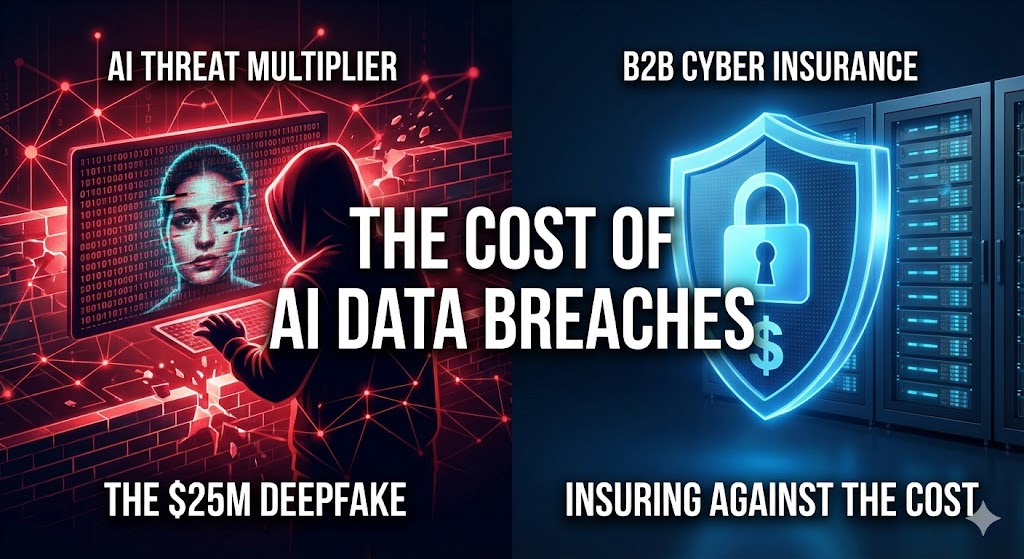
I. Introduction: The AI Threat Multiplier
Cybercrime in 2026 does not look like what most people imagine. It is no longer a lone hacker sitting in a dark room trying random passwords. Today, cybercrime is organized, automated, and powered by artificial intelligence. It operates like a business. There are teams, investors, infrastructure, and even customer support for ransomware victims. The scale is staggering.
According to global cybersecurity estimates, the total cost of cybercrime worldwide is projected to exceed $10.5 trillion annually. To understand how large that number is, compare it to the GDP of major countries. If cybercrime were a country, it would rank among the largest economies in the world. It is more profitable than the global trade of most illegal drugs combined. That tells you this is no longer a small IT problem. It is an economic threat.
Artificial intelligence has become the threat multiplier. Generative AI tools can now write convincing emails, clone voices, generate fake videos, and even scan a company’s digital footprint to find weaknesses. What once required weeks of manual effort can now be done in minutes.
For corporate boards and CEOs, this has created a new reality. Cyber insurance is no longer optional. It is not a “good to have” risk cover. It is a mandatory governance requirement. Directors can face personal liability if a major breach occurs and the company was not properly protected. That fear alone is driving demand for enterprise cyber insurance policies in 2026.
Global Cybercrime Cost Data
II. The Anatomy and Cost of an AI-Powered Breach

To understand why cyber insurance premiums are rising, we need to understand how modern breaches work.
In the past, spear-phishing required human effort. A hacker would research a senior executive, study their communication style, and craft a targeted email. It was time-consuming. Now AI agents can scrape LinkedIn profiles, company websites, earnings transcripts, and social media posts in seconds. They can generate thousands of highly personalized emails that sound completely authentic.
Imagine receiving an email that references your recent board meeting, mentions your CFO by name, and includes real details from your last earnings call. That is no longer science fiction. AI makes it possible.
One of the most shocking real-world examples happened in early 2024 in Hong Kong. A finance employee at a multinational firm joined a video conference call with what appeared to be the company’s CFO and colleagues. The faces and voices looked real. They were deepfake recreations. During the call, the employee was instructed to transfer $25 million. He did. The money was gone before anyone realized the meeting was fake.
That single incident became a turning point for global risk managers.
But the stolen money is only part of the story. The true cost of a breach goes far beyond the ransom or fraudulent transfer.
First, there is business interruption. If a company’s systems are down for 24 or 48 hours, revenue stops. For a large enterprise, that can mean millions of dollars per hour in lost sales.
Second, there are regulatory fines. If customer data is exposed, governments can impose heavy penalties.
Third, there are lawsuits. Customers, partners, and shareholders may sue for negligence.
Fourth, there is reputational damage. A single data breach can reduce a company’s market value overnight.
When you combine all of this, the average cost of a major corporate breach can easily run into tens of millions of dollars. That is why cyber insurance coverage limits are rising — and so are premiums.
CERT-In Breach Reporting Guidelines (India)
III. Geopolitical Compliance: The US & Indian Market Pressures
Cybersecurity is no longer just a technical issue. It is now deeply linked to regulatory compliance and geopolitics.
In the United States, the Securities and Exchange Commission (SEC) has introduced stricter cybersecurity disclosure rules. Publicly traded companies must report material cybersecurity incidents within four business days. Four days. That is an extremely short window. Companies must already have forensic experts, legal advisors, and insurance response teams lined up before a breach even happens.
Without a cyber insurance policy, organizing this response in real time would be chaotic and financially devastating.
India has taken an even stricter approach. Under the Computer Emergency Response Team (CERT-In) guidelines, organizations must report certain types of cyber incidents within six hours of noticing them. Six hours leaves no room for delay. If a multinational company operates in both the US and India, it must comply with both regulatory systems.
Failure to comply can result in penalties, public scrutiny, and even stock price crashes. Investors react quickly to cyber incidents. In many cases, share prices drop sharply immediately after disclosure.
This regulatory squeeze is one of the biggest reasons enterprise cyber insurance policies are becoming standard for global companies. Insurance now includes not just financial protection, but access to legal teams, digital forensic investigators, and crisis communication experts.
In simple terms, cyber insurance has become a compliance tool.
US SEC Cybersecurity Disclosure Rules
IV. The “Insurability” Crisis: How Carriers Are Pushing Back
Here is where the story becomes even more interesting.
Insurance companies are also under pressure. As claims rise due to AI-powered attacks, insurers are losing money. That means they are becoming more selective. Getting a cyber insurance policy in 2026 is no longer as simple as filling out a basic questionnaire.
In the past, underwriting relied on static annual forms. A company would answer questions about firewalls and antivirus software. Today, insurers use their own AI tools to scan a company’s digital exposure in real time before issuing a quote.
Instead of basic antivirus, companies are now expected to implement Zero-Trust architecture. This means no user or device is automatically trusted, even inside the corporate network.
Multi-Factor Authentication is mandatory, but SMS-based codes are no longer considered secure enough. Hardware security keys are increasingly becoming the baseline requirement.
Insurers are also placing strict sub-limits on social engineering and deepfake fraud. Some policies now exclude certain AI-driven attacks unless companies meet very specific security controls.
This is creating what many call an “insurability crisis.” Some companies are finding it difficult to qualify for coverage at all. Others are seeing premiums double or triple.
From the insurer’s perspective, it is an AI versus AI battle. Attackers use AI to break in. Insurers use AI to assess risk. And corporations are caught in the middle.
NIST Zero Trust Architecture Framework
V. Actionable Corporate Strategy: How to Get Covered
So what should companies do?
First, implement phishing-resistant multi-factor authentication. Hardware security keys dramatically reduce the risk of account takeover.
Second, audit your supply chain. Many breaches now occur through third-party vendors. If your web developer, cloud hosting provider, or payment gateway partner is weak, your company is exposed. Supply chain attacks account for a large percentage of modern breaches.
Third, create executive verification protocols. Any wire transfer above a certain threshold should require secondary verification through a secure, offline channel. A simple phone call to a pre-approved number can prevent millions in losses.
Fourth, invest in Endpoint Detection and Response (EDR) systems powered by AI. These tools monitor devices continuously and detect unusual behavior in real time.
Fifth, conduct regular tabletop exercises. Simulate a breach scenario and test your internal response. The faster your response time, the lower the damage.
Finally, engage a specialized cyber insurance broker early. Do not wait until after an incident. The underwriting process can take time, especially for large enterprises.
These steps not only improve security but also make your organization more attractive to insurers. Better security posture often translates into better premiums.
VI. Conclusion: The New Reality of Corporate Risk
The rise of AI-powered cybercrime has changed the rules of corporate risk management. We are entering an era where automated systems can launch thousands of personalized attacks at scale. Deepfakes can mimic trusted executives. AI tools can identify vulnerabilities faster than human teams can patch them.
At the same time, governments are tightening disclosure rules. Boards face growing accountability. Investors demand transparency.
In this environment, B2B cyber insurance is no longer a simple financial product. It is a strategic shield. It provides capital protection, regulatory compliance support, and access to crisis management expertise.
But coverage will only become more expensive as attacks grow more sophisticated. The companies that act early — by upgrading their cybersecurity architecture and strengthening internal controls — will be better positioned to negotiate coverage on favorable terms.
The real lesson is simple. AI is transforming both offense and defense in cybersecurity. Businesses that ignore this shift are gambling with their balance sheets.
The question is no longer “Will we be targeted?”
The real question is:
“Are we prepared when it happens?”
And in 2026, preparation means security, compliance, and the right cyber insurance policy — working together as one integrated defense strategy.
CISA (Cybersecurity & Infrastructure Security Agency)
Frequently Asked Questions (FAQ)
1. Why are enterprise cyber insurance premiums increasing in 2026?
Enterprise cyber insurance premiums are rising because AI-powered cyberattacks are increasing in frequency, scale, and sophistication. Deepfake fraud, automated ransomware, and AI-driven phishing campaigns have dramatically raised claim payouts for insurers. At the same time, regulatory requirements such as SEC cybersecurity disclosures in the US and CERT-In reporting rules in India are increasing corporate liability. As claims rise and compliance pressure grows, insurers are adjusting premiums to reflect higher risk exposure.
2. What does a B2B cyber insurance policy typically cover?
A corporate cyber insurance policy usually covers ransomware payments, business interruption losses, forensic investigation costs, regulatory fines, legal defense expenses, and customer notification costs. Some policies also include coverage for social engineering fraud and deepfake wire transfer scams. However, many insurers now apply strict sub-limits or exclusions for AI-related fraud unless companies meet advanced cybersecurity standards.
3. Is deepfake fraud covered under cyber insurance?
Deepfake fraud coverage depends on the policy structure. In 2026, many insurers require companies to implement phishing-resistant multi-factor authentication and executive verification protocols before offering coverage for deepfake-related financial losses. Some policies cap coverage for social engineering fraud, so it is important for CFOs and risk officers to review sub-limits carefully.
4. What security controls do insurers require before issuing coverage?
Most enterprise insurers now require:
Zero-Trust network architecture
Phishing-resistant multi-factor authentication (hardware security keys)
AI-driven Endpoint Detection and Response (EDR)
Regular penetration testing
Secure cloud configuration audits
Without these controls, premiums may increase significantly — or coverage may be denied entirely.
5. How do SEC and CERT-In rules affect cyber insurance decisions?
In the US, public companies must disclose material cybersecurity incidents within four business days under SEC rules. In India, CERT-In mandates reporting certain breaches within six hours. These strict timelines make it essential for companies to have cyber insurance that includes forensic experts and legal advisors on standby. Insurance is now a key compliance safeguard, not just financial protection.
6. What is the average cost of a major corporate cyber breach?
While costs vary by industry, large enterprise breaches often result in total losses ranging from $5 million to $50 million or more. This includes ransom payments, operational downtime, regulatory fines, legal fees, and reputational damage. AI-powered attacks can increase both the speed and financial scale of incidents.
7. Can small and mid-sized businesses get cyber insurance in 2026?
Yes, but underwriting is becoming stricter. Even mid-sized companies must demonstrate strong cybersecurity controls to qualify for affordable premiums. Insurers are using automated AI scanning tools to assess external vulnerabilities before issuing policies.
8. How can companies reduce cyber insurance premiums?
Businesses can reduce premiums by:
Implementing hardware-based MFA
Conducting regular cybersecurity audits
Training employees against phishing
Securing supply chain vendors
Maintaining documented incident response plans
Strong risk posture directly improves insurability and pricing.
People Also Ask (PAA)
Is cyber insurance mandatory for corporations in 2026?
Cyber insurance is not legally mandatory in most countries, but it has effectively become a board-level necessity for medium and large enterprises. Regulatory disclosure rules in the US and India, combined with rising AI-driven ransomware attacks, make cyber insurance a critical part of corporate risk management. Many enterprise clients and global partners now require proof of cyber insurance before signing contracts.
How much does enterprise cyber insurance cost in 2026?
Premiums vary based on company size, industry, and security posture. Large enterprises can pay anywhere from hundreds of thousands to several million dollars annually for comprehensive coverage. AI-driven attack frequency and deepfake fraud risks have significantly increased underwriting scrutiny, leading to higher premiums and stricter qualification standards.
What is AI-powered ransomware?
AI-powered ransomware uses machine learning tools to automate network scanning, identify high-value targets, personalize phishing emails, and adapt attack methods in real time. Unlike traditional ransomware, AI-enhanced attacks can scale rapidly and bypass basic security systems, increasing both speed and financial damage.
Does cyber insurance cover ransomware payments?
Many enterprise cyber policies include ransomware coverage, including negotiation and payment assistance. However, insurers may impose limits, require law enforcement notification, or deny payment if the company failed to maintain required security controls. Some jurisdictions are also considering restrictions on ransom payments, which can affect coverage terms.
How do deepfake scams affect corporate cybersecurity?
Deepfake scams use AI-generated audio or video to impersonate executives, often requesting urgent wire transfers or confidential information. These attacks exploit human trust rather than technical vulnerabilities. Companies now implement multi-layer executive verification protocols to reduce deepfake fraud risk.
Why are insurers tightening cyber underwriting requirements?
Insurers have experienced rising claim payouts due to AI-driven attacks and coordinated ransomware groups. To manage risk exposure, carriers now require stronger cybersecurity measures, including Zero-Trust architecture, hardware-based MFA, and continuous network monitoring before offering coverage.
Can cyber insurance prevent reputational damage?
Cyber insurance cannot fully prevent reputational harm, but it can mitigate its impact. Policies often include crisis communication services, public relations support, forensic investigations, and legal defense resources to manage stakeholder confidence after a breach.
Is cyber insurance enough to protect against AI threats?
No. Cyber insurance is a financial safety net, not a replacement for strong cybersecurity controls. Companies must combine insurance with proactive threat detection, employee training, and compliance monitoring to reduce overall risk exposure.