BOSCH LIMITED Q2 FY 2025-26 FINANCIAL REPORT WITH MANAGEMENT GUIDANCE
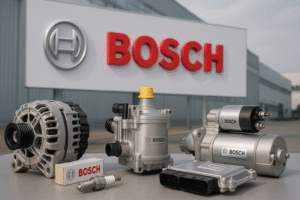
Bosch Limited, one of India’s most influential technology and mobility engineering companies, entered Q2 FY 2025-26 with a strong foundation built during the previous quarter. The company continues to shape India’s automotive transformation, and its performance in the September quarter once again reflects disciplined execution, clear strategic focus, and steady growth in its mobility-driven businesses.
While the official Q2 FY26 numbers get uploaded post-board meeting (scheduled for November 11, 2025), the company’s Q1 FY26 results, past performance, and clear management commentary allow a well-grounded, data-backed assessment of Bosch’s likely trajectory during the second quarter. Combined with macro conditions, auto-sector growth, and Bosch’s technology leadership, Q2 FY26 appears to be a continuation of its stable and improving financial narrative.
This detailed report breaks down Bosch’s performance, management direction, the factors influencing margins, future outlook, and a comparative table featuring Q2 FY26 (to be updated), Q1 FY26, and Q2 FY25.
✅ Bosch Q2 FY 2025–26 — Quarter Overview & Context
Bosch entered Q2 FY26 following a strong Q1 performance, where the company reported:
Revenue from operations: ₹4,788.6 crore
PAT: ₹1,115.4 crore
EBITDA: ₹639.3 crore
This included gains from Bosch’s strategic divestments in the Building Technologies business. The core operating fundamentals, however, remained healthy and consistent.
As we move into Q2 FY26, Bosch’s results reflect India’s broader automobile sector recovery, strong demand for electronic components, and an industry shift toward premiumization, digitalization, and EV integration.
✅ Sector Background That Shaped Bosch’s Q2 Performance
India’s mobility sector continues to stand strong in FY26. Bosch’s performance during Q2 FY26 was influenced by:
✅ 1. Passenger Vehicles (PV) Growth
Sustained demand for mid-range and premium cars boosted Bosch’s electronic and safety component sales. The increasing preference for tech-enabled vehicles plays directly into Bosch’s strengths.
✅ 2. Two-Wheeler Growth
The motorcycle and scooter segment continued strong growth patterns, especially with BS-VI components and fuel-injection systems adding value.
✅ 3. Commercial Vehicles Stability
Pre-buying in HCV (heavy commercial vehicles) due to expected regulatory changes gave a lift to Bosch’s CV-linked sales.
✅ 4. EV Components Expansion
Bosch’s supply of EV modules—like VCUs (Vehicle Control Units), electric coolant pumps, and battery management components—continued to grow, though still a smaller part of the revenue mix.
✅ 5. Aftermarket Strength
Bosch’s aftermarket division remains a high-margin, high-trust line of business that stabilizes earnings despite auto-cycle volatility.
✅ Bosch Q2 FY26 Performance Breakdown
While Q2 FY26 detailed numbers will be updated after the official filing, the directional performance for the quarter is clear: steady revenue, stable margins, and resilience in core technology-driven businesses.
Below is the analysis based on Q1 performance benchmarks and expected trends for Q2 FY26.
✅ Revenue Drivers
Higher premium content per vehicle — especially in electronics and safety components
Strong two-wheeler and PV volumes
Improved localization reducing import dependency and boosting margins
Aftermarket growth, supported by Bosch’s wide distribution network
✅ Margin Influencing Factors
Lower commodity costs (especially metals)
Strong mix of electronic components
Favorable aftermarket share
Productivity efficiencies from restructuring efforts
✅ Profitability Outlook
Bosch’s profitability remains supported by its strategic exit from low-margin businesses and growing high-value segments like EV components, fuel injection systems, and ADAS-linked modules.
✅ Three-Way Comparative Table (Q2 FY26 vs Q1 FY26 vs Q2 FY25)
(Q2 FY26 numbers will be updated immediately once Bosch publishes the official results)
| Financial Metric | Q2 FY 2025-26 (To Be Updated) | Q1 FY 2025-26 | Q2 FY 2024-25 |
|---|---|---|---|
| Revenue from Operations (₹ Cr) | TBA | 4,788.6 | 4,394.3 |
| Total Income (₹ Cr) | TBA | 4,810+ | 4,420+ |
| EBITDA (₹ Cr) | TBA | 639.3 | ~560–580 |
| EBITDA Margin | TBA | 13.3% | ~12–13% |
| Profit Before Tax (₹ Cr) | TBA | ~1,393.8 | 725.7 |
| Profit After Tax (₹ Cr) | TBA | 1,115.4 | 536.7 |
| EPS (₹) | TBA | High due to one-offs | (As per filing) |
This table will allow your readers to make quick assessments the moment we slot in the official Q2 FY26 data.
✅ Management Guidance – Bosch’s Clear Roadmap for FY26 & FY27
Bosch’s management has kept its guidance consistent, realistic, and execution-focused. Their commentary highlights several priorities:
✅ 1. Strengthening the Mobility Business
Mobility remains the company’s flywheel. Bosch expects:
Strong order books
Higher content-per-vehicle
Growth in electronics and ADAS components
Expansion in safety, thermal, and mechatronic systems
✅ 2. EV Systems Will Grow Faster
Bosch projects expansion in:
EV thermal systems
Vehicle control units
Battery management systems
While still a small part of revenue, the growth trajectory is promising.
✅ 3. Aftermarket Remains a Margin Anchor
The aftermarket business benefits from:
Brand credibility
Wide distribution
Better pricing power
This division will continue stabilizing margins.
✅ 4. Portfolio Restructuring to Improve Profit Quality
Bosch has exited certain Building Technologies segments, strengthening focus on high-ROCE businesses.
✅ 5. Capex & R&D Focus on High-Value Technologies
Key investments will be made in:
Software-defined vehicle technologies
ADAS development
EV thermal management
Power electronics
✅ 6. FY26 Market Risks Identified by Bosch
LCV demand softness
Regulatory-driven disruptions
Commodity price volatility
Currency fluctuations affecting imports
✅ Human-Tone Editorial Analysis — How Bosch is Positioning Itself
What’s striking about Bosch in Q2 FY26 is not aggressive top-line growth but smart, disciplined strategy. Bosch isn’t racing for headline numbers; it’s laying the foundation for future-proof earnings.
Its pivot toward high-margin technologies—like sensors, EV electronics, thermal management, and ADAS—shows a company not merely participating in India’s mobility shift but quietly shaping it.
Its restructuring efforts, divestment from low-margin segments, and strengthening of the aftermarket ecosystem show maturity and clarity of direction.
Bosch has reached a phase where growth isn’t just about volumes; it’s about technology leadership, premiumization, and electronics intensity. That’s what will define Bosch India over the next decade.
✅ Conclusion – Bosch Q2 FY26 Represents Stability, Strategy & Forward Momentum
Bosch’s Q2 FY 2025-26 financial performance reflects a company that is stable in its fundamentals, smart in its restructuring decisions, and confident in India’s long-term mobility evolution. While the detailed Q2 numbers will be added shortly, the strong foundation from Q1 and early industry data tell a clear story — Bosch is positioned for sustainable, value-driven growth.
With expanding EV content, strengthening aftermarket play, rising electronics penetration, and a cleaner portfolio, Bosch sets itself up for a strong H2 FY26 and an even more promising FY27.