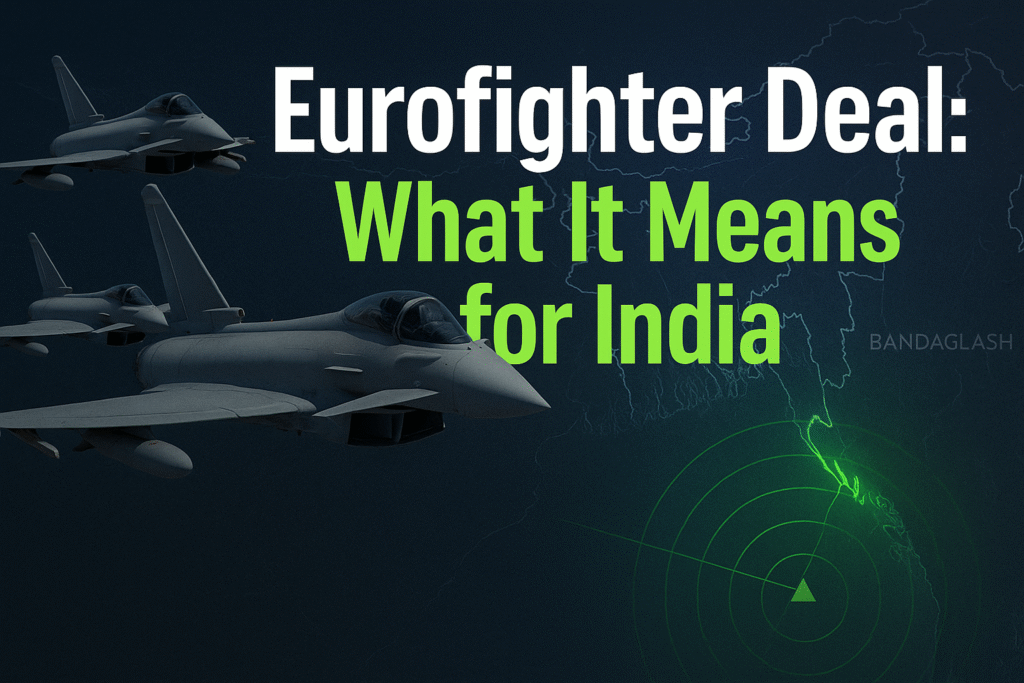
Bangladesh Signs Eurofighter Typhoon Deal: What It Really Means for India — Is This Good News or Bad News?
Sometimes a piece of international defence news sounds confusing — you don’t know whether to feel relieved or worried. This story is exactly like that. So before we judge whether this development is good or bad for India, let’s break it down in simple, human language.
Bangladesh has now received a commitment from Italy to supply 12 Eurofighter Typhoon fighter jets to its air force. Not only that, the deal also includes fast-tracked delivery and the construction of local maintenance and support infrastructure inside Bangladesh. In straightforward terms, Bangladesh won’t only buy the jets — it will also get a dedicated system to keep these aircraft flying for years. This turns a normal purchase into a long-term defence partnership.
To understand the importance of this deal, we must first understand what the Eurofighter Typhoon is, why Bangladesh suddenly has the money for such an expensive platform, and how this affects India politically, strategically, and militarily.
What Exactly Is the Eurofighter Typhoon? A Simple Explanation
The Eurofighter Typhoon is not made by any one country. It is built jointly by Germany, Italy, Spain and the UK, making it one of Europe’s most advanced, collaborative defence projects. It is a twin-engine, high-performance, multi-role fighter jet that can go beyond Mach 2, carry advanced sensors, and dominate both air-to-air and air-to-ground missions.
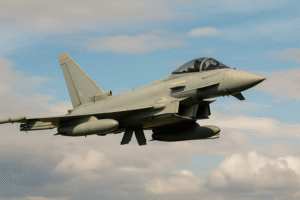
In simple words:
It is one of the most capable Western fighter jets available today.
This is not a basic aircraft. It is expensive, heavy, and technologically sophisticated — a completely different league compared to the lighter, cheaper JF-17 fighters made by China and Pakistan.
Why Didn’t India Want a Jet Like This? Why Did India Choose Rafale Instead?
Here’s an interesting detail. A jet like the Eurofighter is built with parts from multiple countries. That means multiple supply chains, multiple political approvals, and multiple dependencies. If India were to buy such a jet, any disagreement with even one partner country could affect spare parts, weapons supply, or upgrades.
India did not want to take that risk.
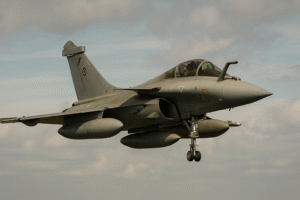
That is why India chose the French Rafale, a fully French-built fighter jet with a single-source supply chain. France alone controls its production, its weapons, its spare parts, and its after-sales support. This gives India predictability and independence, especially during conflict or geopolitical pressure.
Where Did Bangladesh Get the Money for 12 Eurofighters?
Here’s the surprising part.
Buying Eurofighters is extremely expensive. Neither the United States nor China would provide Bangladesh financial assistance to buy a European fighter jet. America would want Bangladesh to buy American aircraft. China would want Bangladesh to buy Chinese aircraft. So Bangladesh turning to Europe means the money has come through special financing arrangements, essentially installment-based payments spread over years.
This is similar to taking a loan or long-term credit arrangement. Bangladesh gets the jets sooner, and pays back gradually.
This also explains why the deal includes infrastructure support — Bangladesh will rely heavily on European countries to maintain the jets they are financing.
Now the Big Question: Is This Good News or Bad News for India?
Let’s simplify this into two parts:
Why it’s good news for India, and
Why it’s also something to worry about.
Why This Is Good News for India
There are several reasons why India should be relieved.
1. Bangladesh Did NOT Choose the Chinese–Pakistani JF-17
Bangladesh was earlier expected to buy the JF-17, a fighter jointly developed by China and Pakistan. If that had happened, China’s military footprint could have expanded near India’s sensitive regions. Even reports of Chinese-built airfields near India’s “chicken neck” had raised security concerns.
Had Bangladesh bought the JF-17:
Chinese technicians would be stationed in Bangladesh
Chinese air force support may have become routine
Pakistan would gain strategic influence
India’s eastern front would come under new pressure
Bangladesh choosing a Western fighter instead directly weakens Chinese and Pakistani influence.
2. The JF-17’s Poor Global Track Record Saved Bangladesh From Trouble
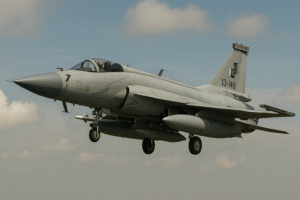
In Nigeria, JF-17s have suffered from maintenance issues and limited availability.
In Myanmar, reports emerged of JF-17 fleets being grounded due to technical faults, spare-parts shortages, and structural concerns.
These failures convinced Bangladesh that the JF-17 might not be worth the risk. If Dhaka bought it, it would end up wasting money and becoming dependent on unreliable supply chains.
So by choosing the Eurofighter Typhoon, Bangladesh indirectly validates India’s long-standing concerns about Chinese-origin platforms.
3. China and Pakistan Miscalculated — Their Claims Are Now Exposed
After Operation Sindoor and other events, China and Pakistan had been loudly promoting the JF-17 globally. They claimed Bangladesh was “certain” to buy the jet and framed this as proof that India’s neighbours preferred Chinese technology.
This deal with Europe completely contradicts those claims.
It is a diplomatic embarrassment for both Beijing and Islamabad.
In that sense, it is strategically positive for India.
But Now the Bad News: What India Must Worry About
Now let’s be practical. Eurofighter Typhoons are extremely capable jets. From a pure military perspective, they can challenge even the Rafale in certain combat scenarios.
Here’s why this becomes a concern for India.
1. A High-End Fighter Jet Will Now Operate Near India’s ‘Chicken Neck’
The Siliguri Corridor — famously called India’s “chicken neck” — is one of the most sensitive geographical choke points in the country. If a strong air platform like the Eurofighter is stationed close to this area, it automatically shifts India’s defence planning.
Even though Bangladesh is not hostile, military capability near a sensitive region always matters.
2. The Eurofighter May Carry Modern European Weapons Systems
This includes:
Meteor missile (long-range air dominance)
Advanced electronic warfare suites
Precision-guided munitions
These capabilities will force India to continually strengthen its eastern air command.
3. This Deal Deepens Bangladesh–Europe Defence Relations
Today it is jets.
Tomorrow it could be radars, missiles, or surveillance systems.
Any long-term shift in Bangladesh’s defence posture affects India’s regional calculations.
Eurofighter vs Rafale vs JF-17: A Simple Comparison
| Feature | Eurofighter Typhoon | Rafale | JF-17 |
|---|---|---|---|
| Engine | Twin-engine | Twin-engine | Single-engine |
| Speed | Mach 2+ | Mach 1.8+ | Mach 1.6 |
| Range | Long | Long | Medium |
| Weapons | Western (very advanced) | Western (very advanced) | Chinese weapons (mixed performance) |
| Track record | Strong | Strong | Mixed / problematic |
| Cost | Very high | High | Low |
In simple words:
Eurofighter and Rafale are premium, powerful jets.
JF-17 is a budget fighter jet with reliability problems.
India’s Geopolitical View: How New Delhi Is Seeing This Move
India will look at this development with a balanced, strategic mindset.
1. Diplomatically: India Will Engage Bangladesh More Deeply
India knows this is a long-term defence shift. So expect:
More high-level visits
More defence dialogues
Joint training offers
Upgraded intelligence sharing
India will ensure Dhaka doesn’t drift into a strategic sphere that harms Indian interests.
2. Militarily: India Will Strengthen Its Eastern Air Capabilities
With Eurofighters operating next door, India may:
Deploy more Rafales or upgraded Su-30MKIs
Improve surveillance along the corridor
Enhance air defence installations
Increase joint drills in the region
India won’t react aggressively — but it will quietly adjust its posture.
3. Strategically: India Sees a Mixed Outcome
Good: Bangladesh avoided Chinese jets, reducing China’s regional influence.
Bad: Bangladesh will now operate an advanced Western jet that India must track closely.
This is why the news feels both reassuring and concerning at the same time.
To visit official website of Ministry of Defence of Bangladesh click here
Final Verdict: Good News or Bad News for India?
After understanding all sides:
👍 Good News Because:
China and Pakistan failed to push the JF-17
Bangladesh is diversifying away from Chinese influence
Western defence partnerships are more transparent
Regional Chinese footprint is reduced
⚠ Worrying Because:
Eurofighter Typhoon is a powerful jet
It will operate near a sensitive region of India
Bangladesh’s long-term strategic tilt may change
👉 Final Answer:
This news is good for India geopolitically, but it brings new military challenges that India cannot ignore.
India will welcome the reduction of Chinese influence, but will also enhance vigilance and strengthen its air power in the east.