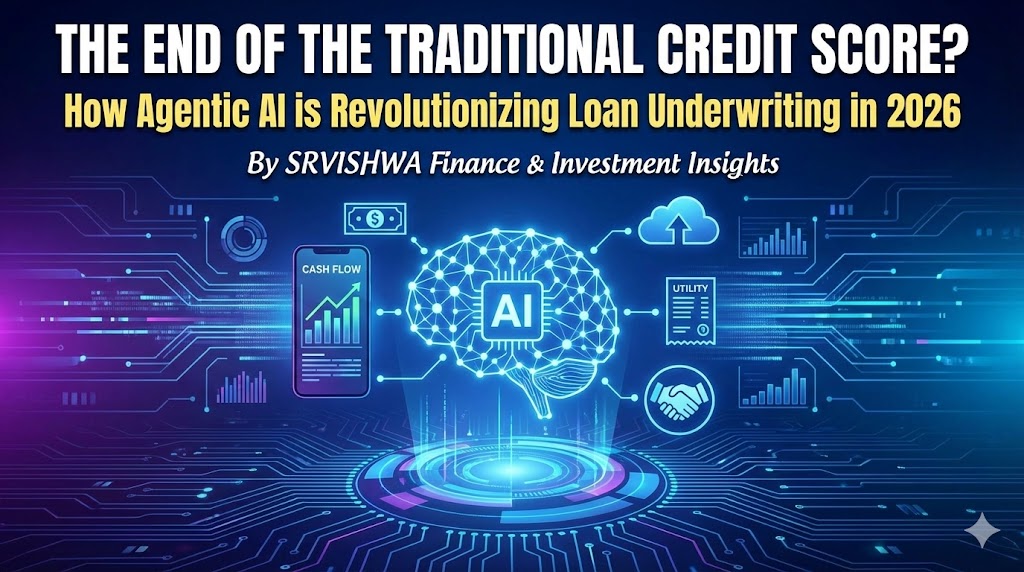
For decades, a simple three-digit number has held ultimate power over the financial sector. Traditional credit scores like CIBIL and FICO have been the gatekeepers of capital, dictating who gets a loan and who gets left behind. But in 2026, the landscape is shifting dramatically.
The global AI fintech market has swelled to a staggering $26.6 billion, and at the forefront of this financial revolution is a technology that is rendering static credit scores obsolete: Agentic AI.
For mid-sized Non-Banking Financial Companies (NBFCs) and digital lenders, Agentic AI isn’t just an operational upgrade; it is a critical survival mechanism. By moving beyond conventional credit bureau data and autonomously analyzing alternative behavioral data, Agentic AI is approving loans faster, unlocking new borrower segments (like MSMEs), and drastically reducing default rates.
Here is a deep dive into how Agentic AI is fundamentally rewriting the rules of loan underwriting in 2026.
The Broken Mechanics of Legacy Credit Scoring
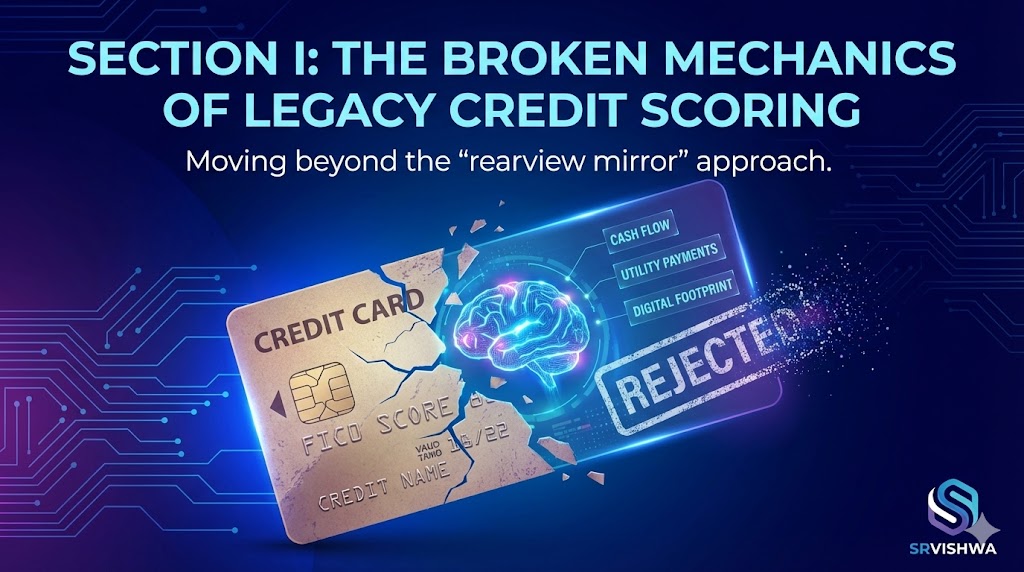
To understand why Agentic AI is necessary, we must look at the flaws of the traditional model. Conventional credit scoring is inherently a “rearview mirror” approach. It relies almost exclusively on historical borrowing behavior—past loans, credit card utilization, and repayment history.
However, this model creates a massive “credit invisible” demographic. Millions of responsible gig-economy workers, freelancers, and growing MSMEs (Micro, Small, and Medium Enterprises) are routinely rejected simply because they lack a thick credit file.
Furthermore, traditional underwriting is painfully slow. Human underwriters are burdened with manually validating PDFs, bank statements, and KYC documents, resulting in approval times that can stretch from 7 to 10 days. In today’s instant-gratification economy, a delayed approval is a lost customer.
Account Aggregator framework
Enter Agentic AI: From Automation to Autonomous Reasoning
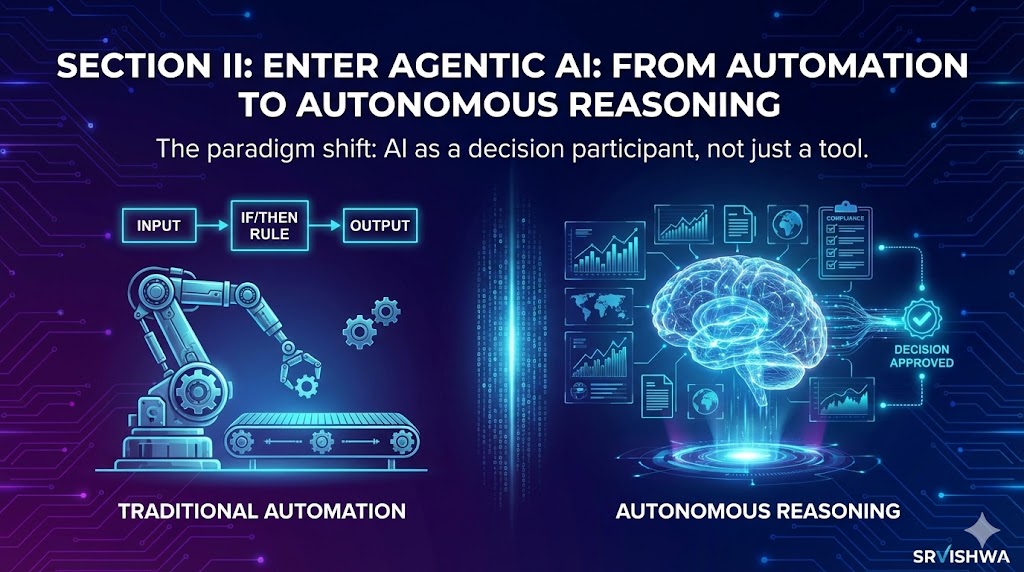
While traditional AI and Machine Learning have been used in banking for years to flag fraud or automate simple rules, Agentic AI represents a paradigm shift.
Agentic systems do not just follow predefined “if/then” rules. They are autonomous agents capable of independent reasoning. When a loan application enters the system, an AI Agent takes charge of the entire orchestration process. It can independently query APIs, validate documents using optical character recognition (OCR), cross-reference compliance checklists, and dynamically adjust risk models in real-time.
For banking executives, the difference is clear: Traditional AI is a tool. Agentic AI is a decision participant.
Reserve Bank of India (RBI)
The Alternative Data Advantage: Scoring Financial Behavior
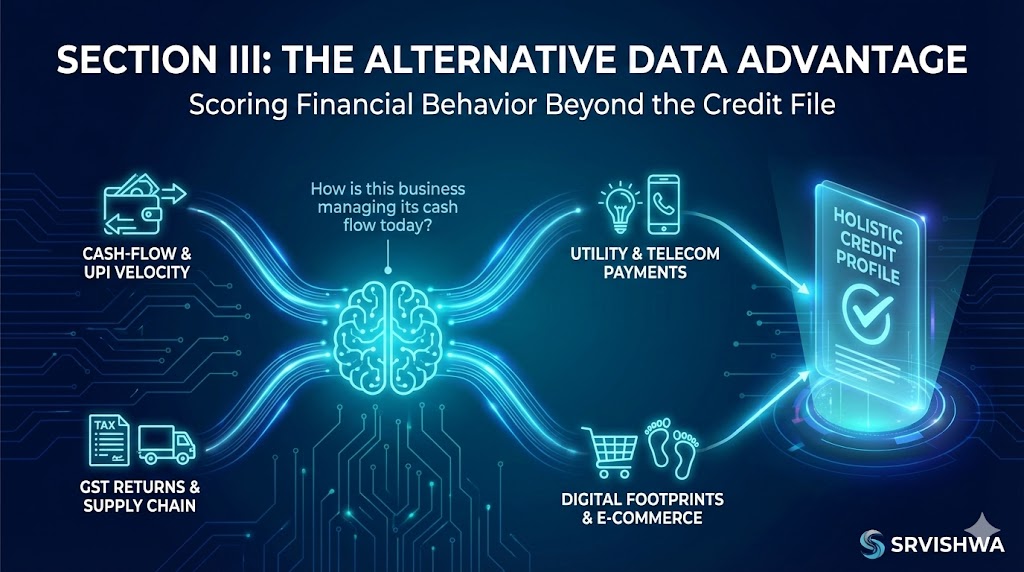
The true alpha for mid-sized NBFCs lies in Agentic AI’s ability to process Alternative Data. Instead of asking, “How did this business handle a credit card five years ago?” Agentic AI asks, “How is this business managing its cash flow today?”
By integrating with unified data fabrics (like India’s Account Aggregator framework or Open Banking APIs), AI agents can instantly analyze vast, non-traditional data points to build a holistic credit profile:
Cash-Flow & UPI Velocity: AI models analyze the frequency and volume of digital wallet and UPI transactions. A steady, daily inflow of small digital payments is a strong indicator of business stability for an MSME, even if they have no formal loan history.
Utility & Telecom Payments: Consistent, on-time payments for electricity, internet, and mobile services serve as a highly reliable proxy for financial responsibility.
GST Returns & Supply Chain Data: By ingesting live GST data and invoicing patterns, AI agents can assess the real-time health of a business’s supply chain, verifying actual revenue rather than relying on audited statements that may be months out of date.
Digital Footprints & E-commerce Behavior: Behavioral data, such as whether a business routinely pays suppliers via prepaid methods versus Cash-on-Delivery (COD), offers deep psychological insights into financial planning and risk propensity.
Explainable AI (XAI)
The Quantifiable ROI for Mid-Sized NBFCs
For mid-sized NBFCs looking to scale without proportionally increasing headcount, Agentic AI delivers immediate, measurable impact:
Accelerated Turnaround Times: Case studies from early 2026 show that Agentic AI can reduce underwriting turnaround time by up to 85%. Complex SME loan applications that previously took a week are now being decisioned in a matter of hours, or even minutes.
Doubling Operational Capacity: By automating the data-gathering and initial risk-assessment phases, a typical NBFC processing 1,000 loan applications monthly can seamlessly scale to 2,000 applications using the exact same underwriting workforce.
Reducing Default Rates (NPAs): Because AI models assess real-time financial health rather than static history, they are significantly better at predicting true risk. Financial institutions deploying AI-driven alternative credit models have reported lowering their default rates in higher-risk segments by up to 20%.
CIBIL
The Compliance Moat: Navigating Explainable AI (XAI)
The transition to Agentic AI is not without regulatory hurdles. The Reserve Bank of India (RBI) and other global regulators strictly mandate that lending decisions cannot be hidden inside a “black box.” Lenders must be able to explain exactly why a loan was approved or denied.
To remain compliant, successful NBFCs are adopting Explainable AI (XAI) frameworks. These systems deconstruct the AI’s autonomous decisions into interpretable factors—ensuring that the use of alternative data does not inadvertently introduce algorithmic bias or violate fair lending practices.
The Bottom Line for Banking Leaders
The era of being “credit invisible” is coming to an end. In 2026, your digital life and behavioral data are your most valuable financial assets.
For banking executives and NBFC leaders, the mandate is clear: The financial institutions that will capture the lion’s share of the $26.6 billion AI fintech market are those that transition from rigid, rule-based underwriting to dynamic, Agentic AI-driven credit scoring. It is no longer just about mitigating risk—it is about intelligently uncovering the hidden potential in every borrower.
📌 Disclaimer: The information provided in this article is for educational and informational purposes only and does not constitute financial, investment, or legal advice. AI market projections and technology capabilities are based on industry trends as of 2026. Financial institutions should conduct their own due diligence and consult with regulatory compliance experts before implementing automated underwriting technologies.