1. Executive Summary: A Landmark Quarter for Mahindra & Mahindra
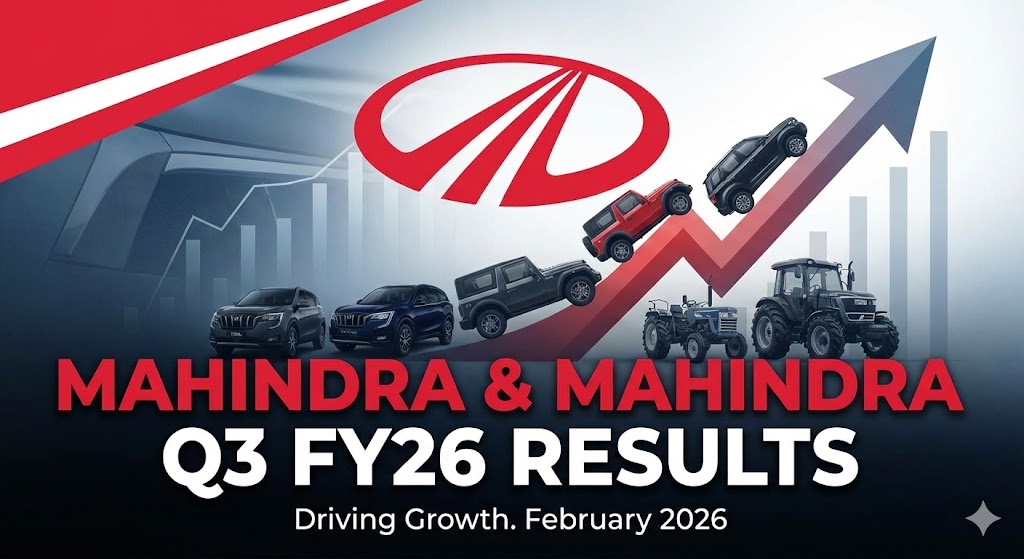
The Q3 FY26 results of Mahindra & Mahindra, released on February 11, 2026, mark a historic milestone in the company’s journey. For the first time ever, M&M crossed the ₹50,000 crore quarterly revenue mark, reporting consolidated revenue of ₹52,100 crore, up 26% year-on-year. Net profit surged 47% to ₹4,675 crore. But beyond the headline numbers, the deeper story lies in the structure of earnings. This quarter shows that M&M’s three major engines — automotive, farm equipment, and services — are firing together. The farm business is generating strong margins, the SUV segment continues to gain market share, and the services arms like finance and tech have stabilized. For investors, this is not just growth; it is balanced growth. It reflects operational strength across rural and urban India at the same time.
Mahindra & Mahindra Limited
2. Financial Dashboard: Scale, Growth, and Efficiency
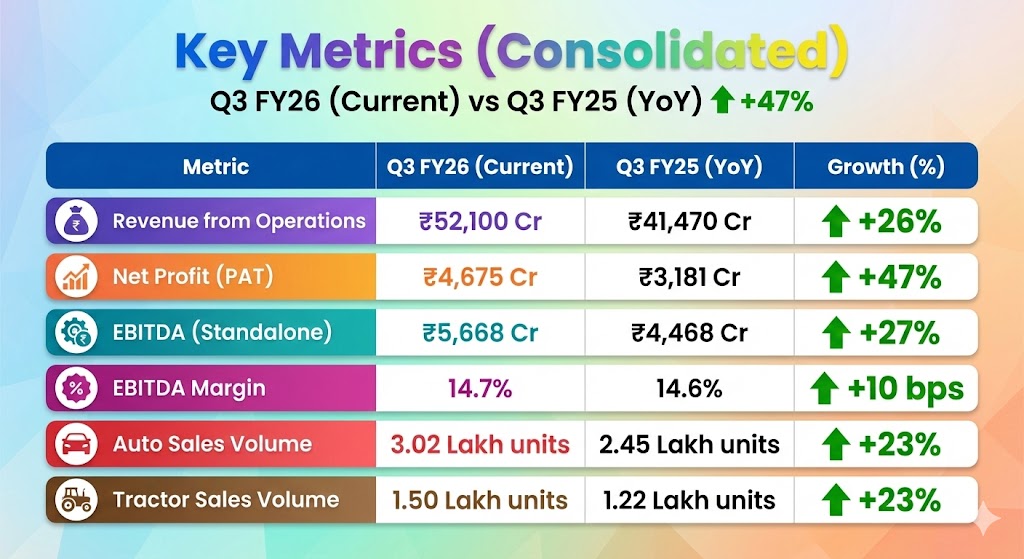
The numbers reflect both scale and discipline. Revenue jumped from ₹41,470 crore last year to ₹52,100 crore, a 26% increase. Net profit rose from ₹3,181 crore to ₹4,675 crore, growing 47%. Standalone EBITDA stood at ₹5,668 crore, up 27%, while EBITDA margins held steady at 14.7%. Auto sales volumes reached 3.02 lakh units, up 23%, and tractor sales volumes grew 23% to 1.50 lakh units. What stands out here is not just volume growth but profitability improvement in key segments. In a period when many auto companies struggled with input cost volatility and demand uncertainty, M&M delivered both top-line and bottom-line expansion. The revenue milestone of ₹50,000 crore is symbolic, but the profit surge makes it meaningful.
M&M share price on NSE
3. Farm Equipment Sector: The Cash Machine of Rural India
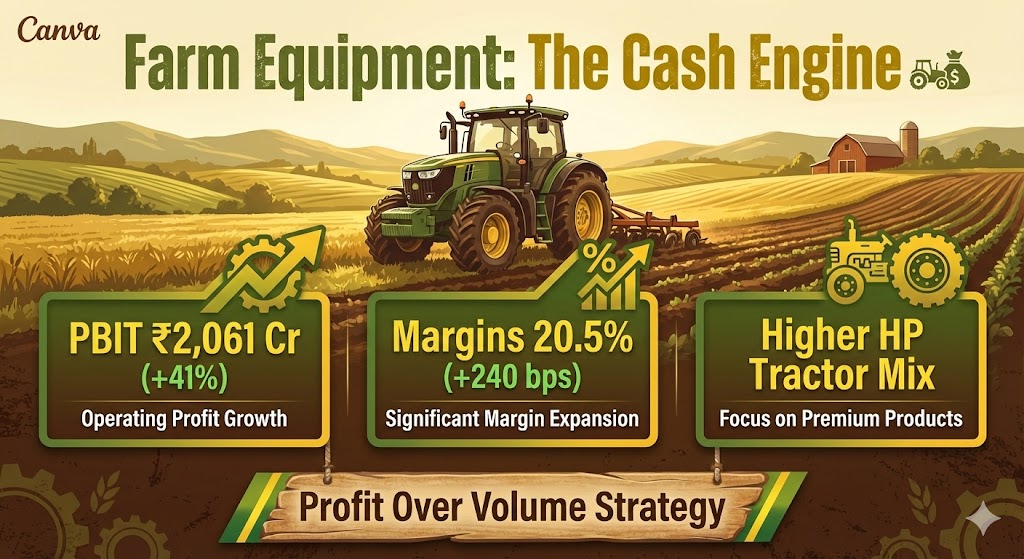
The Farm Equipment Sector (FES) delivered the biggest positive surprise. Standalone Profit Before Interest and Tax (PBIT) surged 41% to ₹2,061 crore. More importantly, PBIT margins expanded by 240 basis points to 20.5%. This margin expansion is the real story of Q3 FY26. Even though tractor market share slightly dipped to around 44%, M&M prioritized profitability over aggressive discounting. The company benefited from lower commodity prices, especially steel, and a richer product mix, with higher horsepower tractors gaining traction. These premium tractors offer better margins compared to entry-level models. The 23% growth in tractor volumes reflects strong rural demand, supported by good Rabi sowing and timely Minimum Support Price (MSP) payments by the government. For decades, tractors have been M&M’s defensive backbone. This quarter proves they are also a profit powerhouse.
India tractor industry sales data
4. Automotive Business: The SUV King Strengthens Its Crown
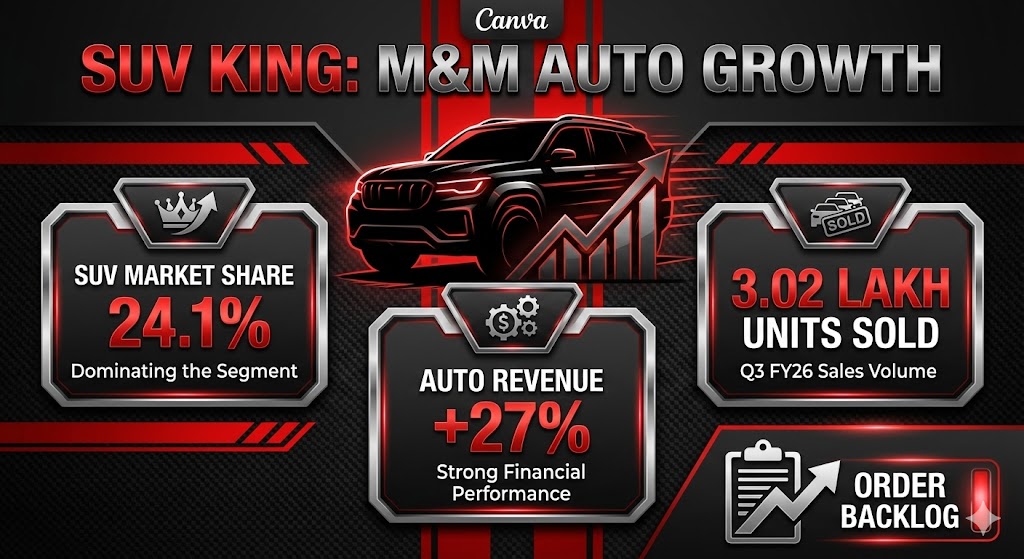
M&M’s automotive division continues to dominate India’s fast-growing SUV segment. SUV revenue market share increased by 90 basis points to 24.1%, reinforcing its leadership position. Revenue in the auto segment grew 27%, driven by strong demand for models like the XUV 7XO and Scorpio-N. The order backlog remains healthy, showing sustained demand momentum. Indian consumers increasingly prefer SUVs over small cars, and M&M has positioned itself as a premium yet rugged brand. Unlike some competitors who depend heavily on small hatchbacks, M&M benefits from higher average selling prices in SUVs. The brand strength and consistent product refresh strategy have helped maintain pricing power even in a competitive market.
Minimum Support Price announcements
5. Electric Vehicle Strategy: Late Entry, Strong Impact
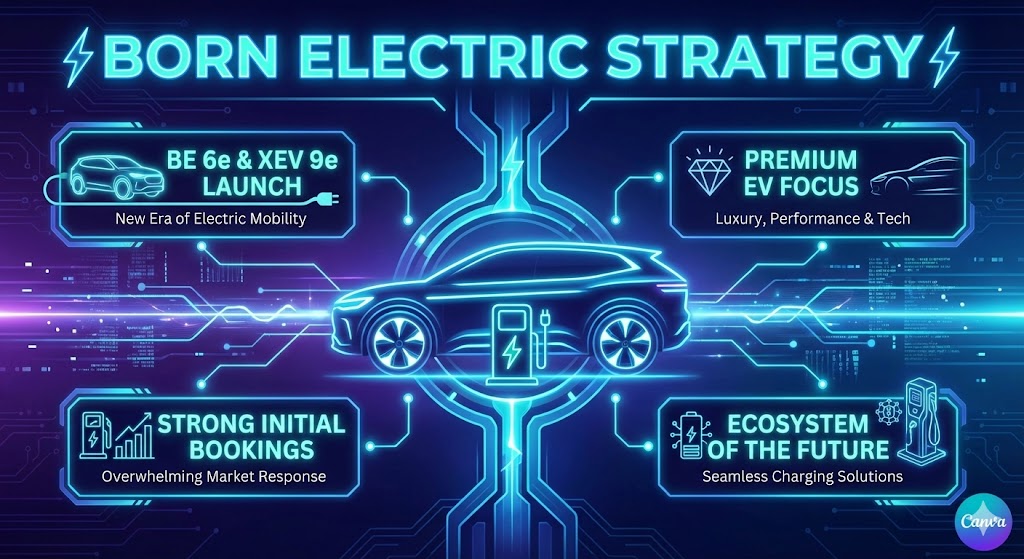
In the electric vehicle (EV) segment, M&M has adopted a cautious but confident approach. The new “Born Electric” platform, including models like BE 6e and XEV 9e, has received encouraging booking numbers in its initial launch phase. While competitors like Tata Motors have an early lead in EVs, M&M is focusing on premium electric SUVs rather than entry-level electric cars. This strategy aligns with its brand positioning. India’s EV penetration is still below 3% of total passenger vehicle sales, but policy incentives and charging infrastructure expansion are expected to accelerate growth over the next five years. M&M’s late entry allows it to learn from early movers and avoid costly mistakes. If executed well, EVs could become the next growth pillar.
India passenger vehicle market data
6. Services Segment: The Silent Turnaround Story
One of the most underappreciated aspects of this quarter is the turnaround in M&M’s services subsidiaries. Mahindra Finance reported a 97% rise in profit after tax, with gross stage-3 assets stabilizing below 4%. This indicates improved asset quality and better loan recovery in rural and semi-urban areas. Mahindra Logistics returned to profitability after nearly 11 challenging quarters, benefiting from improved supply chain demand. Meanwhile, Tech Mahindra expanded its EBIT margins by 290 basis points to 13.1%, signaling operational restructuring success. Historically, conglomerates face a “conglomerate discount” because weaker subsidiaries drag down overall returns. This quarter shows that M&M’s subsidiaries are no longer liabilities; they are contributors. That reduces valuation discount concerns.
7. Rural Tailwinds: The Bharat Growth Story
The strong tractor growth correlates with positive rural indicators. The government’s increased MSP payouts and favorable crop output have improved farm incomes. A good Rabi sowing season boosted confidence among farmers. M&M, being India’s largest tractor manufacturer, becomes a direct proxy for rural economic health. When tractor volumes grow above 20%, it often signals rising agricultural investment and credit flow. The 2026 Union Budget also emphasized rural infrastructure and farm mechanization, creating supportive policy conditions. For investors seeking exposure to rural recovery, M&M offers a clear channel.
8. Labor Code Adjustment: Underlying Strength Even Higher
This quarter included a one-time provision related to the new labor codes. If this exceptional expense were excluded, net profit growth would have been closer to 54% instead of 47%. That means operational strength is even better than reported. Labor reforms increase compliance costs initially, but they also bring long-term clarity and workforce stability. Investors should view this as a temporary accounting adjustment rather than structural weakness.
9. Risk Factors: Cyclicality and Competition
Despite strong results, risks remain. Tractor demand is cyclical and heavily dependent on monsoon performance. The 23% growth this quarter partly reflects a lower base from last year. Sustaining double-digit growth in FY27 will require favorable weather and continued rural support. In the EV segment, competition is intensifying. Maruti Suzuki plans to launch its eVX, and Hyundai Motor India is preparing the Creta EV. These launches will test M&M’s dominance in electric SUVs. Commodity price volatility also remains a factor, especially if steel prices rise again.
10. Conclusion: A Core Portfolio Industrial Champion
M&M’s Q3 FY26 performance highlights its unique strength. It combines defensive stability from tractors with aggressive growth from SUVs and EVs. At around ₹3,700 per share and trading at roughly 29 times earnings, valuation appears reasonable for a company delivering 40% plus profit growth. The ₹50,000 crore revenue milestone is symbolic, but the deeper story is about operational quality and margin strength. Few companies in India offer such diversified exposure to rural demand, urban aspiration, and technology services under one umbrella. This quarter confirms that M&M is not just growing — it is maturing into India’s strongest industrial conglomerate.