Scope Outline
The Greenland Request: Why the U.S. Wants to Buy Greenland and What It Really Means
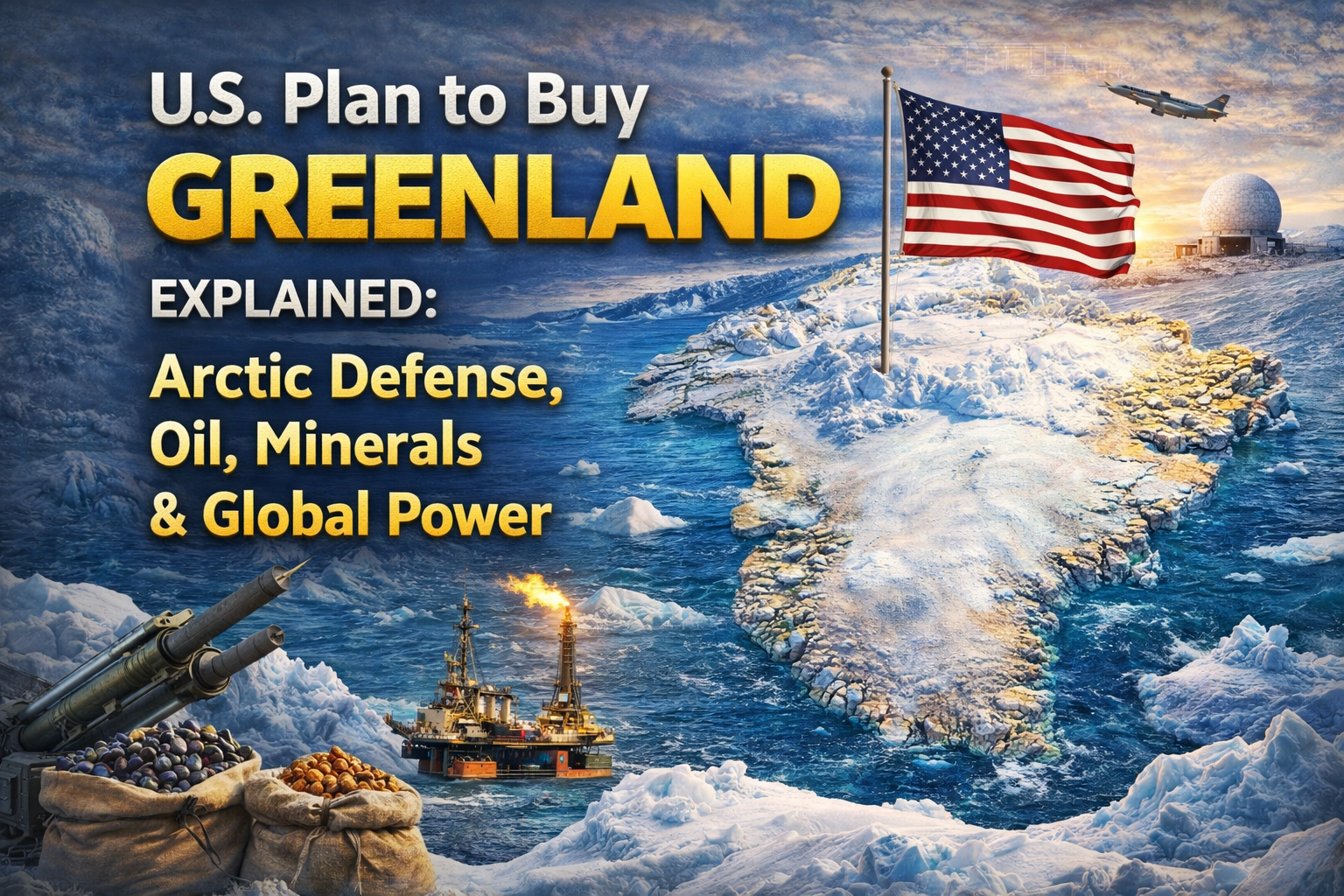
In early 2026, the world was startled by a curious yet serious announcement: the United States, under President Donald Trump’s second administration, is actively pursuing a deal to purchase Greenland from Denmark. This idea — to buy an island nation — may sound unusual, like something out of history books. But in this case, the reasons go far beyond real estate. They reflect strategic interests tied to global security, natural resources, and shifting geopolitics.
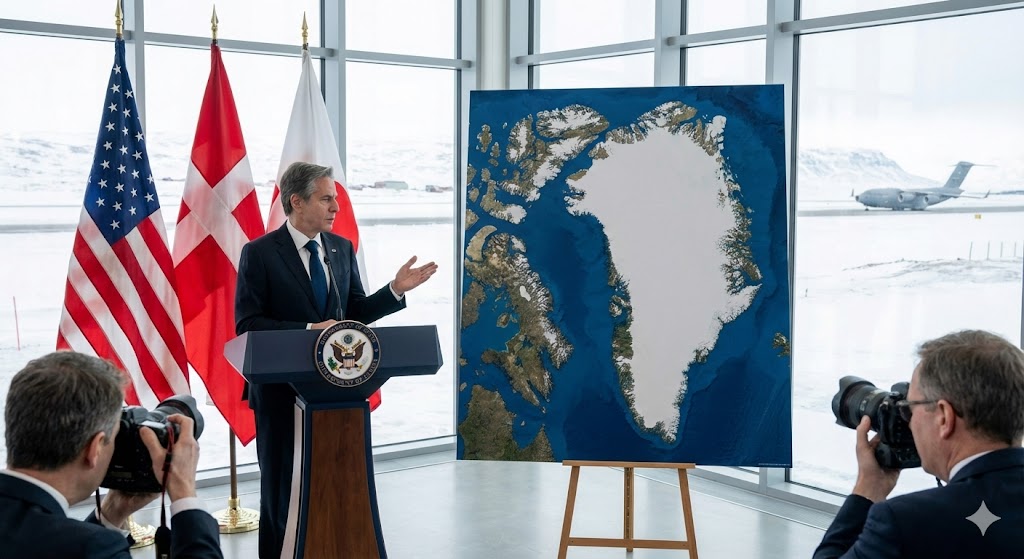
Before we dig into the details, it’s important to understand who Greenland is. Greenland is the world’s largest island, located far to the north between North America and Europe. Although Greenland has a small population of roughly 56,000 people, it plays an outsized role in global strategy because of where it sits: just above the Arctic Circle.
Why the United States Is Interested
The main voice behind this push has been Secretary of State Marco Rubio, who has publicly confirmed that Washington sees Greenland as strategically valuable and is looking into a possible purchase from Denmark. Rubio insists this effort is serious and not a joke.
1. Strategic Defense Location
Greenland’s location is its strongest asset. From its northern ice-covered lands, it’s possible to monitor the Arctic, North Atlantic shipping routes, and even parts of Russia and China’s northern military movements. One reason this matters is the defence treaty structure of NATO, of which Denmark — and by extension Greenland — is a member. Having greater control over Greenland gives the U.S. a more solid position in Arctic defence planning.
The U.S. already runs Pituffik Space Base (formerly known as Thule Air Base) in northwest Greenland. This base is critically important for missile warning systems and space surveillance, giving the U.S. early detection of potential threats from across the globe.
2. Access to Minerals and Resources
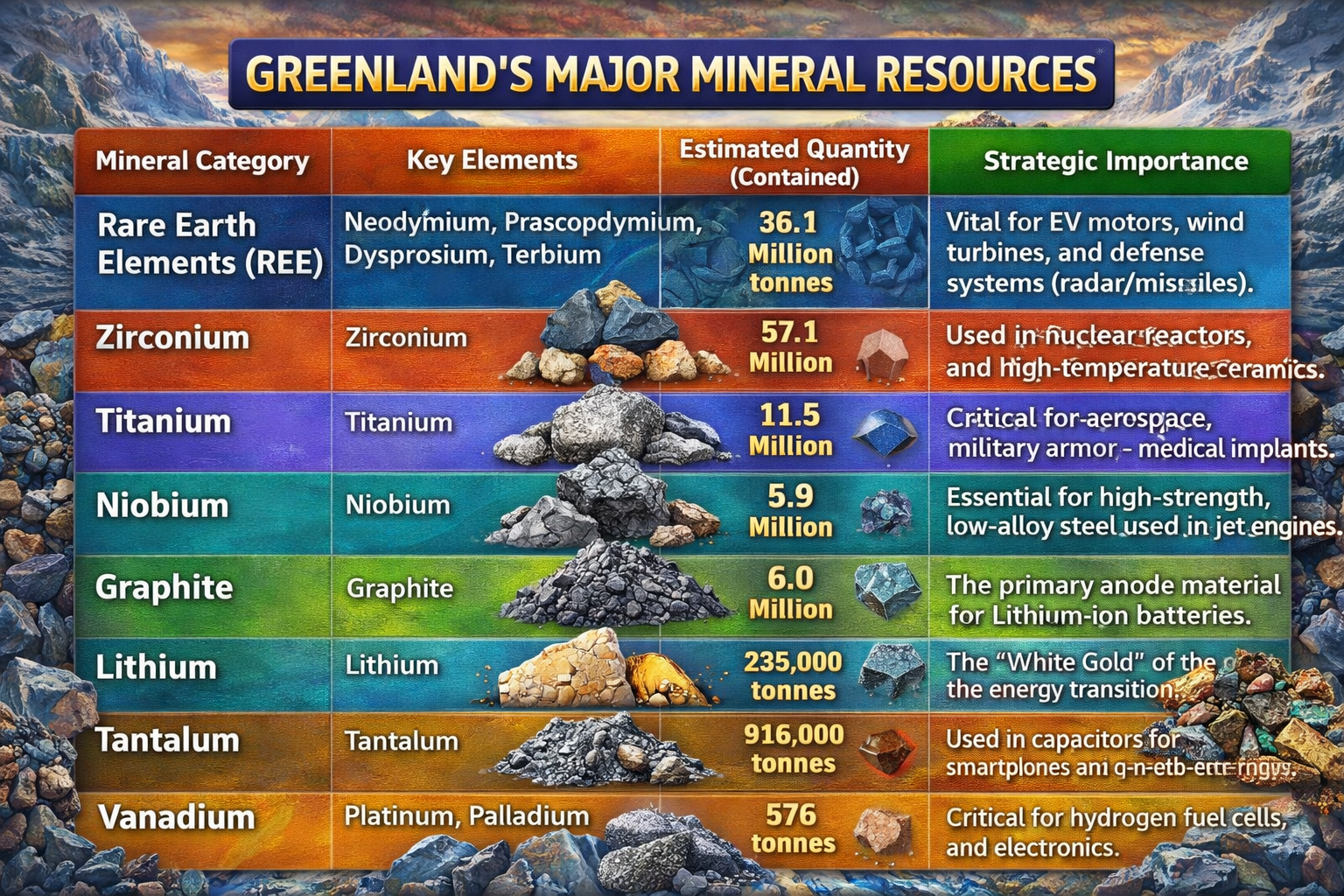
Greenland’s landmass is rich in rare earth minerals and other valuable metals. These resources are key ingredients in many modern technologies: from smartphones and electric vehicle batteries to renewable energy equipment. The global race for rare earths has intensified in recent years, especially as countries try to reduce dependence on China’s supply.
Furthermore, geological surveys estimate Greenland may hold large offshore deposits of oil and natural gas — potentially in the billions of barrels. If these estimates are correct, future energy competition in the Arctic could be fierce.
USGS – Rare Earth Minerals & Strategic Materials
3. Arctic Trade Routes and Climate Change

Climate change is melting Arctic ice faster than many expected. Scientists predict that by the 2030s, parts of the Northwest Passage — a series of sea routes north of Canada — could become navigable for large shipping vessels. These routes cut thousands of miles from traditional passages like the Panama Canal. For global trade, this is a massive shift in transport costs and travel time. For military planning and surveillance, it’s a strategic geopolitical shift.
Countries like Russia and China are already expanding their presence in the Arctic. China’s so-called Polar Silk Road initiative reflects its interest in using Arctic sea lanes for trade and influence. In this context, having Greenland under U.S. control could allow Washington to better influence Arctic trade policy and security.
Arctic Council – Arctic Trade Routes & Climate Impact
Why This Proposal Has Sparked Controversy
At its core, Greenland is not a blank piece of land. It is a self-governing territory under the Kingdom of Denmark. Greenland’s own government has publicly stated it is not for sale and does not want to be owned by the United States. Danish leaders, including the prime minister, have repeatedly defended their sovereignty and rejected any idea of selling Greenland.
European leaders, especially Denmark and France, have criticized the U.S. push. Denmark has even increased its military spending in the North Atlantic to protect its territory against any form of coercion. These reactions underline how serious this matter is for international relations.
Denmark’s prime minister warned that if the U.S. were to use force against a NATO ally, it could undermine and possibly even end the alliance altogether — a dramatic outcome given NATO’s role in international security since World War II.
ATO – Arctic Security & Collective Defense
Is the U.S. Planning a Military Takeover?
One of the most alarming parts of this story is a recent White House statement that hinted the U.S. military could be considered as an option for acquiring Greenland. While not a direct order, the mere suggestion of military involvement is raising alarms in capitals around the world.
However, Rubio himself has tried to calm fears about an outright invasion, emphasizing that the current goal remains negotiating a purchase rather than employing force. Still, the rhetoric has made European leaders uneasy, given how sensitive territorial integrity is under international law.
In addition, U.S. politicians on both sides of the aisle — Democrats and Republicans — have expressed discomfort with the idea of military action being used to take control of foreign land, especially if it involves a NATO ally.
U.S. Department of Defense – Pituffik (Thule) Space Base
Where Public Opinion Stands
Surveys on this issue show mixed responses. In a January 2025 poll of U.S. adults, roughly 31% supported the United States pursuing ownership of Greenland, 47% opposed it, and 25% were unsure. This suggests more Americans are skeptical or cautious about such a bold move.
Meanwhile, local opinion in Greenland tends to oppose American ownership. Many Greenlanders favor greater autonomy or eventual full independence from Denmark rather than being part of the United States.
Possible Outcomes and What It Means for the World
So, what does this mean for global geopolitics? If the United States ultimately succeeds in acquiring Greenland through diplomatic purchase, it could dramatically reshape Arctic strategy, resource competition, and military planning. It could also signal a shift in how nations negotiate territorial influence in the age of climate change and new shipping routes.
If the U.S. fails, or if Denmark and Greenland maintain strict sovereignty, it could reaffirm international norms about national self-determination and territorial integrity.
In either scenario, this debate is far more than an odd headline. It’s about the future of the Arctic, global power competition, natural resource access, and the evolving landscape of 21st-century geopolitics.
In Simple Terms: Why You Should Care
Even if you live far from the Arctic, the Greenland request affects:
Global security alliances (like NATO)
Energy and mineral markets
Shipping and trade dynamics
Diplomatic relations among major world powers
In a world where geography, economy, and military priorities intersect, Greenland sits at a crossroads — literally and metaphorically — of 21st-century geopolitics.