I. The Hook: The 2:00 AM Shadow Raid
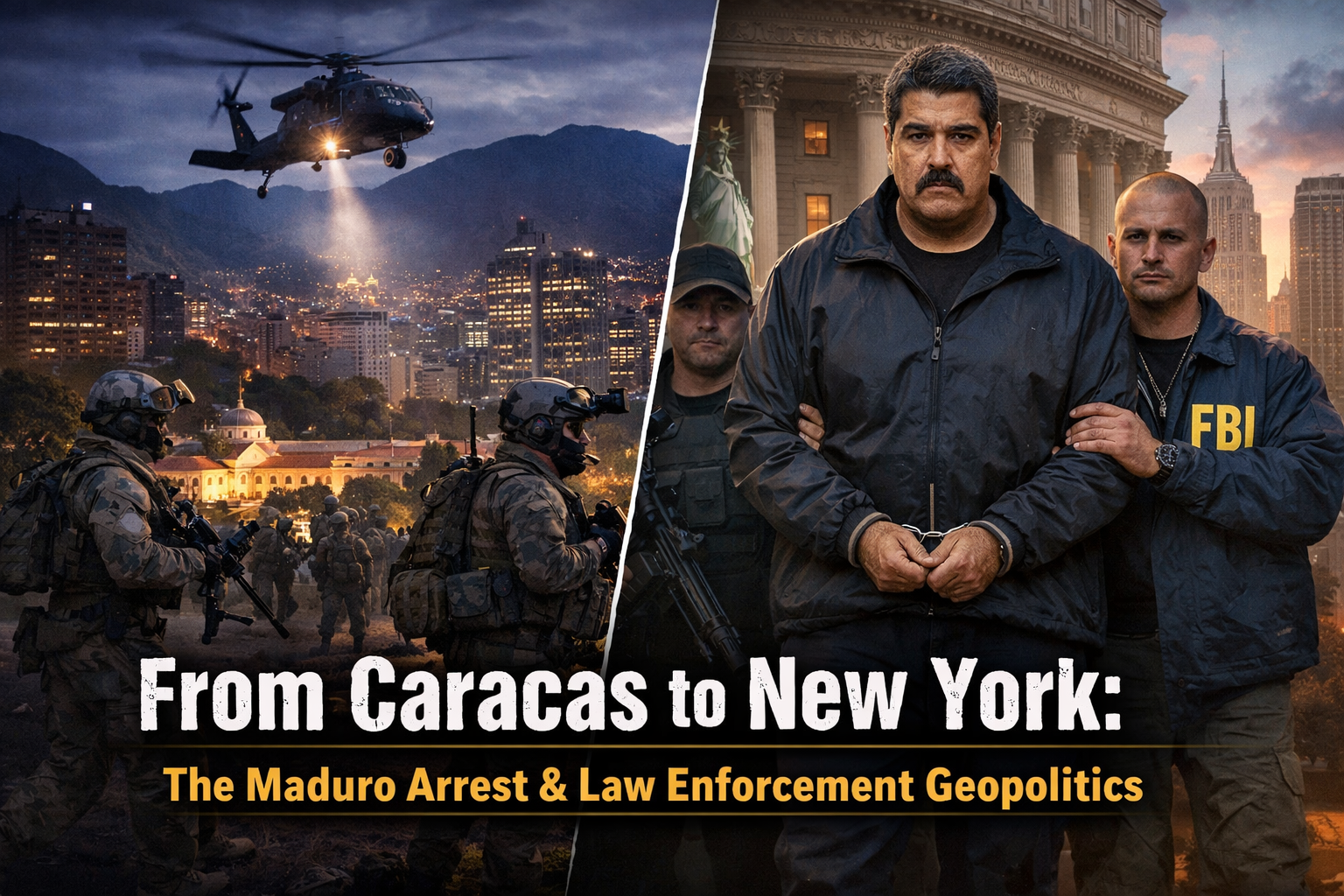
At 2:00 AM on January 3, 2026, the world entered unfamiliar territory. In a swift, tightly controlled operation later confirmed by U.S. officials, roughly 200 U.S. personnel carried out what Washington described as a law-enforcement action inside a foreign capital. Nicolás Maduro and his spouse Cilia Flores were removed from the presidential palace in Caracas and flown to the United States.
Two days later, the visual that followed was as deliberate as it was dramatic: Maduro standing before a judge at the Daniel Patrick Moynihan Courthouse in New York, pleading “not guilty” to charges including narco-terrorism and conspiracy. The image travelled instantly across social media and newsrooms, signaling something larger than a single arrest.
The logic behind the move matters more than the spectacle. This was not presented as a war, nor as a covert operation. It was framed as domestic law enforcement applied internationally. In simple terms, the United States treated a sitting foreign head of state as a fugitive under U.S. law. For many analysts, this moment marks the birth of “law enforcement geopolitics”—a precedent where indictments replace invasions and courtrooms replace battlefields.
U.S. Department of Justice (DOJ)
II. Geopolitical Impact: The Death of Sovereignty?

The immediate global response revealed deep fractures in the international system. At the United Nations Security Council, emergency consultations exposed sharp divisions. Russia and China described the operation as “aggression” and a violation of sovereignty. Brazil’s president Luiz Inácio Lula da Silva called it an “unacceptable line”, warning that such actions could destabilize Latin America.
Washington’s justification rested on a controversial claim: “inherent constitutional authority.” The argument, advanced by the Trump administration, is that when U.S. courts indict an individual for serious crimes tied to U.S. security, citizenship and office do not grant immunity. Critics counter that this logic erodes the core principle of international relations—state sovereignty.
On the ground in Venezuela, power did not vanish overnight. Vice President Delcy Rodríguez stepped in as an interim leader, presenting a conciliatory tone to avoid chaos. U.S. forces maintained a limited presence, officially to secure diplomatic and energy assets. The risk, however, is clear. Venezuela could slide into unrest—or into a quieter transition some are calling “Madurismo without Maduro,” where the system survives even if the leader does not.
United Nations (UN)
III. Geoeconomic Strategy: The “30% Oil Hegemony”
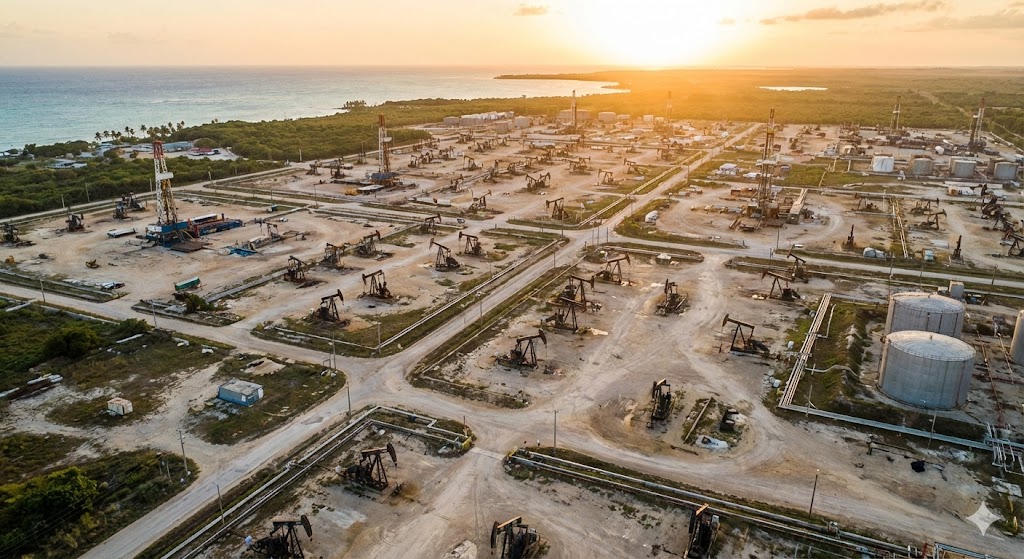
Beyond politics lies the hard math of energy. Venezuela sits atop 303 billion barrels of proven oil reserves, the largest on Earth. For years, sanctions, mismanagement, and underinvestment kept this treasure locked away. Now, control over Caracas has reopened the question of who ultimately shapes global oil markets.
Analysts at major banks, including J.P. Morgan, have outlined a stark thesis: if the United States and its allies gain effective influence over Venezuelan production, Washington could indirectly shape access to nearly 30% of global oil reserves. Such leverage would weaken OPEC+, reduce the pricing power of rivals, and stabilize supply on Western terms.
OPEC (Organization of the Petroleum Exporting Countries)
Today’s reality is modest. Venezuela produces only about 1.1 million barrels per day (bpd), far below its potential. The stated goal is to double or even triple output over the next five years through investments by U.S. firms like Chevron and Valero. Pipelines, refineries, and export terminals need massive upgrades—something only global majors can fund quickly.
Interestingly, oil prices did not spike. Brent crude hovered near $60 per barrel in the weeks after the raid. The reason is simple: markets expect higher future supply. The long-standing “Venezuela risk premium” is already being priced out, offsetting geopolitical fear with expectations of oversupply.
U.S. Energy Information Administration (EIA)
IV. The India Angle: Strategic Neutrality Under Fire
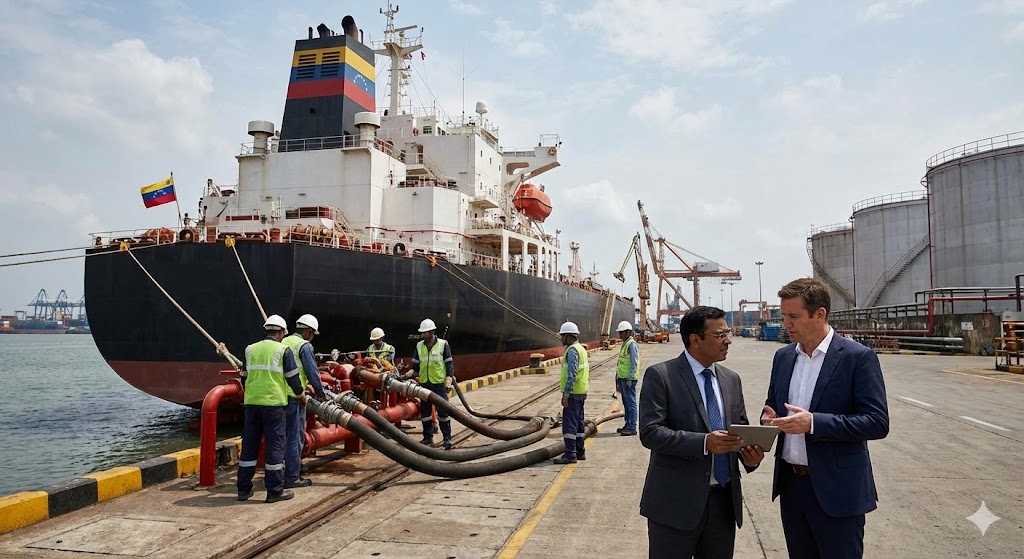
For India, the episode presents a delicate test. In 2024, India imported roughly $1 billion worth of Venezuelan crude, mainly heavy grades suited to complex refineries like Jamnagar. New Delhi has always framed its energy policy around diversification, not alignment.
The official response from the Ministry of External Affairs was carefully worded, expressing “deep concern”—diplomatic language that signals discomfort without confrontation. India’s challenge is balancing a growing strategic partnership with the United States against its long-standing commitment to strategic autonomy and respect for international law.
There is also a practical question. If U.S. companies gain operational control over PDVSA, Venezuela’s state oil firm, will buyers like India receive more stable supplies and better terms—or will they face a new kind of energy monopoly? Indian refiners prefer competition. A single dominant supplier, even a friendly one, can squeeze margins.
So far, India has hedged its bets. Heavy reliance on discounted Russian oil since 2022 has reduced exposure to Venezuela. But a destabilized Caribbean remains a risk for shipping routes, insurance costs, and long-term energy planning.
V. Future Forecast: What Happens Next?
The legal clock is already ticking. A key hearing is scheduled for March 17, when U.S. prosecutors are expected to outline the full case against Maduro. Some observers believe the trial could become a bargaining chip, linking legal outcomes to a broader political transition in Venezuela. Others warn that turning courts into negotiating tools undermines justice itself.
Security risks have not disappeared. Reports that 32 Cuban personnel were killed during the raid point to a wider regional entanglement. Cuba has long been Venezuela’s security partner. Retaliation may not be immediate, but low-intensity conflict—cyber operations, proxy pressure, or sabotage—remains possible.
Finally, there is the historical echo of the Monroe Doctrine. Many in Latin America see this as its modern revival—a signal that Washington is willing to act decisively against regimes it deems hostile. The question now extends beyond Caracas: could similar tactics be applied to other non-aligned states, from Iran to parts of Africa?
VI. Conclusion: The Logic of the “Snatch”
The United States frames Operation Absolute Resolve as part of a War on Drugs and a defense of its legal system. Much of the world, however, sees a war for resources and regional order playing out through new tools. By using domestic indictments to justify international action, Washington has blurred the line between law and power.
For non-aligned leaders, the message is unsettling. In 2026, sovereignty alone may no longer be a shield. Economic value, strategic location, and legal exposure now matter as much as borders and flags. The “Maduro Snatch” is not just about one man or one country. It is a signal that geopolitics has entered a phase where courtrooms, not coalitions, may decide the fate of states.
Whether this new model brings stability or deeper fragmentation will shape the next decade of global order.
❓ Frequently Asked Questions (FAQ)
1. What happened to Nicolás Maduro in January 2026?
In January 2026, Nicolás Maduro was detained during a U.S.-led operation in Caracas and later presented before a court in New York. The U.S. described the action as a law-enforcement operation based on criminal indictments.
2. Why is the Maduro arrest considered geopolitically significant?
The arrest is significant because it involved applying domestic law enforcement beyond national borders. Many analysts see it as a shift from traditional military intervention to legal and judicial tools in geopolitics.
3. Was this action approved by the United Nations?
No formal UN Security Council approval was granted. The move exposed divisions within the UN, with some countries condemning the action and others remaining cautious or neutral.
4. Does international law allow the arrest of a sitting head of state?
International law traditionally protects sitting heads of state through sovereign immunity. The Maduro case challenges this principle by prioritising criminal indictments over diplomatic norms.
5. How did global powers react to the Maduro arrest?
Russia and China criticised the move as a violation of sovereignty. Some Latin American leaders also expressed concern, while the U.S. defended the action as necessary for security and justice.
6. Why is Venezuela’s oil central to this crisis?
Venezuela holds the world’s largest proven oil reserves. Control or influence over its energy sector can significantly affect global oil supply, prices, and geopolitical power balances.
7. Did oil prices rise after the operation?
No major spike occurred. Oil prices remained relatively stable as markets expected increased supply if Venezuelan production expands under new management.
8. How does this affect India?
India has historically imported Venezuelan oil and follows a policy of strategic autonomy. The situation raises questions about energy security, supply diversification, and adherence to international law.
9. What is “law enforcement geopolitics”?
Law enforcement geopolitics refers to the use of criminal law, indictments, and courts as tools to achieve geopolitical objectives, rather than relying solely on diplomacy or military force.
10. Could similar actions happen in other countries?
Many experts believe the precedent increases risk for other resource-rich or politically isolated states. Future actions may increasingly use legal frameworks to justify intervention.
11. What happens next in the Maduro case?
The case is expected to move through the U.S. legal system, with hearings scheduled in early 2026. Political negotiations may also influence outcomes behind the scenes.
12. Does this mark the end of sovereignty as a global norm?
Sovereignty is not ending, but it is being reshaped. The Maduro arrest shows that power, resources, and legal reach can sometimes override traditional protections.
13. Is this more about drugs or oil?
Officially, the case is about criminal charges. However, many analysts argue that energy security and regional control are equally important drivers.
14. How does this change global geopolitics?
It signals a move toward a power-based order where legal tools are used strategically. This may increase instability but also reshape how states manage risk and alignment.
15. Why does this matter beyond Venezuela?
Because it sets a precedent. If accepted, it could redefine how powerful states deal with adversaries, especially those controlling critical resources.
🔍 People Also Ask
What is law enforcement geopolitics?
Law enforcement geopolitics is the use of criminal indictments, arrests, and courts as tools of foreign policy. Instead of military force, legal systems are used to apply pressure or change outcomes in other countries.
Why is the Maduro arrest different from past regime-change actions?
Unlike past interventions, this action was framed as a criminal arrest based on court charges, not a military invasion or coup. This blurs the line between domestic law and international politics.
Does this violate international law?
Many legal experts argue it challenges international norms, especially sovereign immunity. Supporters say national security and criminal law can override traditional protections in extreme cases.
How did the UN Security Council respond?
The UN Security Council was divided. Some countries condemned the move as illegal, while others avoided taking a strong position, highlighting deep global disagreements.
Why is Venezuela so strategically important?
Venezuela holds the world’s largest proven oil reserves. Control or influence over these resources affects global energy supply, prices, and geopolitical power.
Why didn’t oil prices surge after the arrest?
Markets expected higher future oil supply if production expands under new management. This expectation offset geopolitical fear, keeping prices relatively stable.
What role do US oil companies play now?
US energy companies may help restore production and infrastructure. Their involvement could significantly increase Venezuela’s oil output over the next few years.
How does this affect Latin America?
Many Latin American countries fear this sets a precedent that weakens sovereignty. It may increase regional instability or push countries to seek new alliances.
What is India’s position on the Maduro arrest?
India expressed concern while maintaining strategic neutrality. The focus remains on energy security, international law, and avoiding alignment in great-power conflicts.
Could this happen to other leaders?
Experts believe the precedent raises risk for leaders in resource-rich or politically isolated countries, especially where criminal indictments already exist.
Is this about drugs or oil?
Officially, it is about criminal charges. However, many analysts believe oil, energy security, and regional influence are equally important drivers.
What is the Monroe Doctrine and why is it relevant now?
The Monroe Doctrine refers to US dominance in the Western Hemisphere. Critics say the Maduro arrest signals a modern revival of this approach.
Will the Maduro case affect global diplomacy?
Yes. It may make leaders more cautious, reduce trust in international norms, and encourage countries to hedge against legal and economic pressure.
What happens next in the case?
The case will proceed through US courts, with hearings scheduled in 2026. Political negotiations may also influence Venezuela’s internal transition.
Why should ordinary readers care about this event?
Because it shows how power, law, and resources now interact. The outcome could shape future conflicts, energy markets, and the meaning of sovereignty worldwide.