

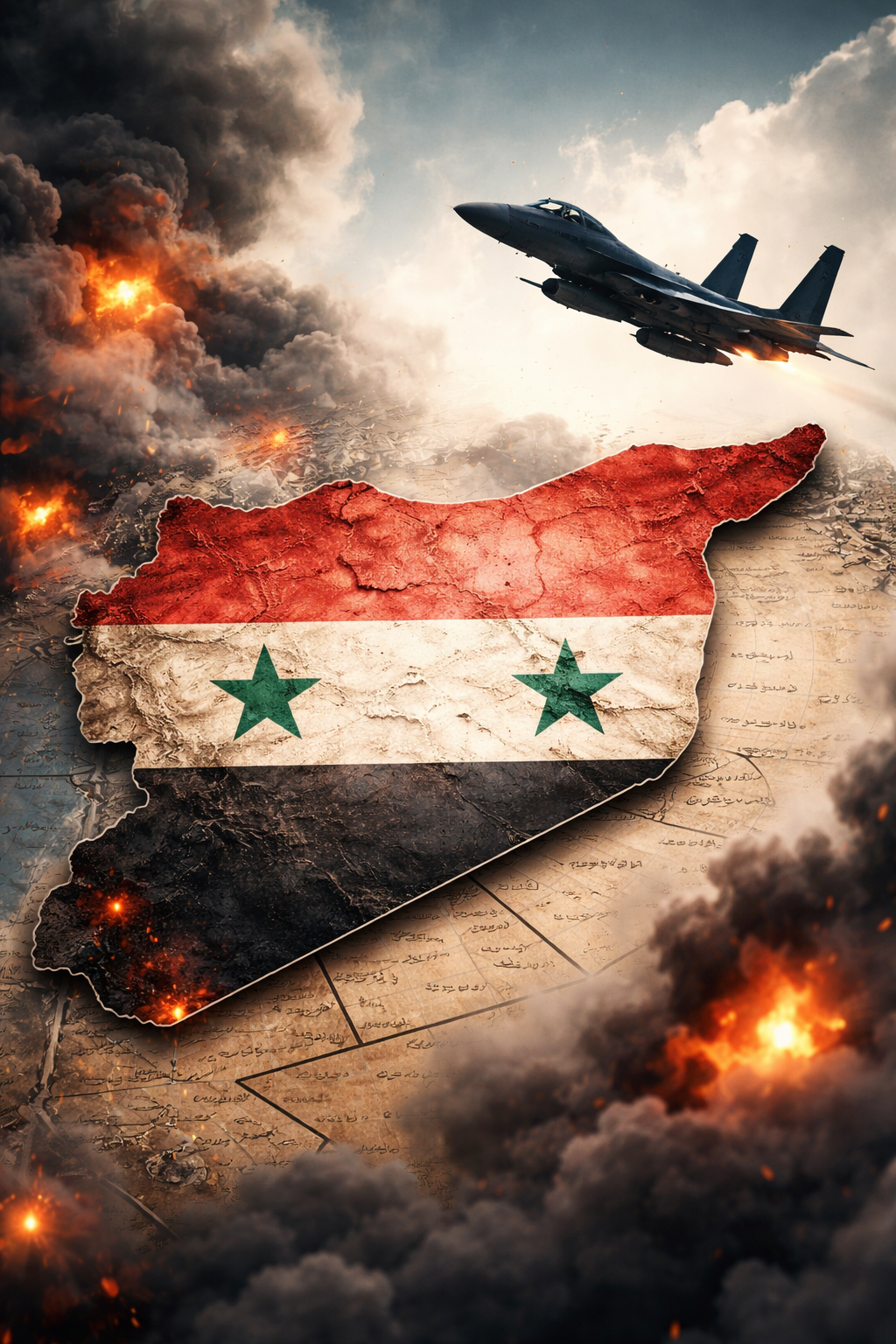
US Airstrikes on 70 Targets in Syria: Why the World Watches — and Why India Must Too
On December 19, 2025, the United States launched an extensive aerial campaign against over 70 Islamic State (ISIS) targets across central Syria. This retaliation, dubbed Operation Hawkeye Strike, was ordered after a December 13 ambush near Palmyra killed two U.S. soldiers — members of the Iowa National Guard — and a civilian interpreter. The strikes involved U.S. fighter jets — including F-15s and A-10s — attack helicopters like the AH-64 Apache, and support from Jordanian F-16 warplanes. According to U.S. Central Command, more than 100 precision-guided munitions were used to hit ISIS infrastructure, weapons sites, and logistics hubs.
This massive show of force was described by U.S. defense officials as “not the start of a new war, but a declaration of vengeance” — a clear signal that the U.S. intends to maintain an active military posture in Syria to prevent the resurgence of terrorism.
But why does this matter to India? And what lessons can New Delhi draw from America’s decades of foreign intervention? These are questions with implications for India’s security doctrine, regional interests, and global strategic posture.
What Triggered the U.S. Strikes? A Multi-Layered Flashpoint
The immediate cause of the U.S. strikes was the December 13 attack in Palmyra, where an individual believed to be affiliated with ISIS killed two American soldiers and a U.S. civilian interpreter. The U.S. responded swiftly, asserting that it would aggressively defend its personnel and assets abroad.
This episode is part of a broader escalation in Middle Eastern conflict dynamics following the October 7, 2023 Hamas attacks on Israel. That event reshaped regional terror activities, increasing rocket and drone engagements across the Middle East — a shift confirmed by terrorism databases tracking hundreds of incidents in Syria alone after October 2023.
Domestically, U.S. political leadership often faces pressure to demonstrate toughness on terrorism and to avoid the perception of leaving Americans vulnerable abroad. Strategically, Washington also seeks to prevent militant groups like ISIS from regaining territory or operational capacity in Syria, where ISIS once controlled large swathes of land before its territorial defeat in 2019.
U.S. Strategic Pattern: Afghanistan → Iraq → Syria — A Continuum of Intervention
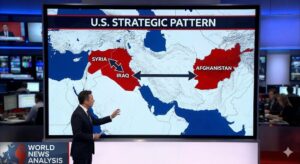
For more than two decades, the U.S. foreign policy has been defined by pre-emptive military interventions. From Afghanistan in 2001, to Iraq in 2003, to prolonged involvement in Syria, Washington has repeatedly turned to force to disrupt terror networks, overthrow hostile regimes, and deter adversaries.
In Afghanistan and Iraq, the initial military victories were followed by protracted insurgencies, huge reconstruction costs, and complex political outcomes. The U.S. spent trillions of dollars on these wars, achieved some tactical gains, but often struggled to achieve long-term political stability. These lessons now inform current debates on the sustainability and effectiveness of military solutions.
In Syria, U.S. forces have remained even though ISIS lost its “caliphate.” The persistent threat of sleeper cells, coupled with Iran-backed militia activity, has kept U.S. troops in the country, roughly around 1,000 personnel, according to recent reports.
Israel’s Strategy Model: Precision Strikes and Deterrence
Israel’s military strategy in the region has often taken a different but related form. Since the start of the Syrian civil war in 2011, the Israeli Air Force has conducted hundreds of airstrikes inside Syria — mainly targeting Iranian proxy forces and weapons shipments bound for Hezbollah in Lebanon. For example, in a 2024 attack near Palmyra, Israeli strikes reportedly killed over 100 Iranian-backed fighters and significantly damaged military infrastructure.
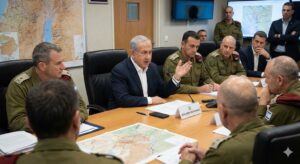
Israel’s doctrine emphasizes precision strikes, robust intelligence, and rapid retaliation against actions it deems threats to its sovereignty. This approach reinforces deterrence by signaling that attacks — or perceived future threats — will be met with force.
The Iran Factor: A Regional Chessmaster
Iran remains one of the most consequential geopolitical players in West Asia. Through a network of proxy militias in Iraq, Syria, Yemen, and Lebanon, Tehran extends its influence across the region — often in opposition to U.S. interests. Its support for groups such as Hezbollah, Kata’ib Hezbollah, and other Shia militias creates persistent flashpoints that pull global powers into localized conflicts.
Although talks between the U.S. and Iran over nuclear issues have occurred, tensions remain high, and Iranian proxies continue to engage in asymmetric warfare. This dynamic elevates the risk that regional conflicts — as reflected in Syria — can draw in global powers with broader strategic consequences.
Why the Middle East Matters to India: Beyond Geography
For India, the Middle East is not distant. It’s central to multiple strategic interests:
🔹 Energy Security: India imports around 65% of its crude oil from the Gulf region — including Saudi Arabia, Iraq, and the UAE. Disruptions in Middle Eastern stability can spike global oil prices, directly impacting India’s economy.

🔹 Indian Diaspora: Millions of Indians work in the Gulf states, and any instability threatens their safety and remittances crucial to the Indian economy.
🔹 Trade Connectivity: India’s participation in corridors like the proposed India–Middle East–Europe Economic Corridor depends on a secure Middle East.
🔹 Terrorism Networks: Groups active in the Middle East influence terror dynamics across South Asia. India must monitor how global proxies adapt and transfer tactics.
These links make India a stakeholder in regional stability, even if it is not directly involved militarily.
India’s Current Doctrine vs. U.S.–Israel Intervention Model
India’s foreign policy has traditionally been non-interventionist. New Delhi rarely projects military power outside its borders except in limited special operations. For instance, India conducted surgical strikes against terror camps in 2016 (after the Uri attack) and the Balakot strike in 2019 — both limited, precise, and defensive in nature. These were not full-scale invasions but calibrated responses with clear strategic goals.
In contrast, U.S. and Israeli models often involve extended military presence and direct force projection over long distances. This divergence reflects India’s strategic culture, which prioritizes sovereignty, international law, and regional diplomatic engagement.
Should India Consider U.S.-Style Cross-Border Military Projection? A Strategic Debate
This question has proponents and critics:
Proponents Argue:
🔹 Pre-emptive deterrence: Striking terror infrastructure abroad may prevent attacks at home.
🔹 Deterring Pakistan-based militias: A strong message could discourage cross-border terrorism.
🔹 Indian Ocean dominance: Active naval and aerial presence may counter China’s expanding footprint.
Critics Counter:
🔹 India’s biggest neighbours — Pakistan and China — are nuclear powers, making escalation risk severe.
🔹 Interventionist actions could strain international law and diplomatic norms.
🔹 Domestic priorities — infrastructure, poverty alleviation — may suffer from foreign military expenditure.
🔹 India’s soft power and non-aligned brand might weaken if it adopts interventionist strategies similar to the U.S.
Lessons From U.S. in Afghanistan & Iraq
The U.S. has shown that tactical victories can be achieved but strategic nation-building is far harder. In Afghanistan and Iraq, initial successes were followed by insurgencies, political fragmentation, and heavy civilian costs. These examples show that military might alone doesn’t secure lasting peace — governance, local consensus, and long-term commitment are equally essential.
India vs. The Middle East Battlefield Reality
Unlike the U.S., which fought in distant theatres, India’s potential conflicts would likely be much closer — along its borders with Pakistan and China. Geographic proximity adds complexity: logistics, public opinion, and immediate consequences are more intense. Moreover, a conflict with Pakistan or China could quickly escalate given nuclear capabilities and alliance politics.
India’s Future Strategy: A Balanced Path
Rather than full-scale interventions, India’s strengths lie in:
🔹 Cyber and intelligence deterrence
🔹 Maritime security in the Indian Ocean
🔹 Coalition diplomacy (e.g., QUAD, Middle East partnerships)
🔹 Rapid precision response when legally mandated
This balanced approach preserves strategic autonomy while protecting core interests.
What If India Copied U.S. Methods? Scenario Building
If India chose to emulate U.S. interventionism, it could face:
🔹 Diplomatic backlash from neighbours and global South nations
🔹 Energy market shocks if Middle East stability worsened
🔹 Damage to India’s soft power on global platforms like BRICS
🔹 Potential overextension of military and economic resources
These risks argue for caution and calibrated engagement, not wholesale adoption of foreign doctrines.
Conclusion: Study the Model, Don’t Blindly Imitate
The U.S. airstrikes on 70 targets in Syria show how military force remains central to global counterterrorism strategies. But for India, the key takeaway isn’t imitation — it’s strategic adaptation. India’s strength lies in blending diplomacy, deterrence, and selective use of force aligned with legal norms and national interests.
As the world order evolves, India must craft a doctrine that protects its people, economy, and global interests without sacrificing its unique strategic identity.
To visit official website of MEA click here
FAQ
1️⃣ Why did the United States strike 70 targets in Syria?
The United States launched airstrikes on around 70 Syrian targets in response to terror attacks that killed American soldiers stationed near Palmyra. Washington claims the targets were ISIS-linked training camps, storage depots and operational hubs. The U.S. says the aim is to prevent ISIS from rebuilding networks and planning future attacks. The strikes also served as a strategic warning to Iran-backed militias in the region.
2️⃣ Did Syria respond to the US airstrikes?
As of now, Syria has condemned the strikes and accused the U.S. of violating sovereignty. Damascus claims these attacks strengthen extremists instead of defeating them, and demanded that foreign forces leave Syrian soil. However, no direct military retaliation against U.S. assets has been recorded.
3️⃣ How does Iran connect to this US–Syria conflict?
Iran funds and supports multiple militias in Syria, Iraq and Lebanon. These militias frequently clash with US forces. The American strikes indirectly target Iran’s influence network in the Middle East. Tehran fears more such Western military actions could weaken its strategic depth in the region.
4️⃣ Why does this conflict matter to India?
India depends on the Middle East for nearly 65% of its crude oil, and any escalation increases price volatility. India also has over 8.5 million citizens working in the Gulf region, making stability crucial. A conflict may affect trade corridors, remittances, and India’s strategic partnerships with U.S., Israel, Iran and Egypt.
5️⃣ Could the US strikes trigger another war in the Middle East?
Experts warn that repeated U.S. strikes risk expanding into a regional conflict. If Iran-backed militias retaliate or Israel joins operations, the conflict could widen. However, Washington insists the strike was limited and aimed at containing terrorist networks, not regime change.
6️⃣ Can India carry out operations like the US did in Syria?
India currently avoids long-distance foreign military intervention. While it conducts precise cross-border strikes — such as the 2016 surgical strike and 2019 Balakot airstrike — it lacks the doctrinal framework and political appetite for Afghanistan- or Iraq-style operations. Diplomatic costs and nuclear neighbours make such decisions complex.
7️⃣ Will oil prices rise after the Syria airstrikes?
Oil traders are watching closely. U.S.–Iran tension usually pushes global crude up. If conflict spreads through Syria–Iraq pipeline routes or maritime chokepoints like Hormuz, India may face increased oil import costs.
8️⃣ Is ISIS still active in Syria?
Yes. Despite losing territorial control in 2019, ISIS has sleeper cells active in Syria and Iraq. They carry out ambushes, bombings, and raids. The US claims many of the 70 sites hit were ISIS support structures and safehouses.
9️⃣ What does this mean for global terrorism?
The strike reminds terror groups that the US still has strong operational presence in Syria. It may deter ISIS resurgence, but experts believe terror threats evolve quickly; new groups could emerge from chaos if regional politics remain unstable.
🔟 Why didn’t Russia stop the US strikes in Syria?
Russia supports Syria’s Assad government and maintains military presence in the country. However, Moscow has avoided direct confrontation with the U.S. since 2015 despite airspace overlap agreements. With Russia focused heavily on Ukraine, its Middle East leverage is stretched.
To visi official website of War Department of USA click here
PEOPLE ALSO ASK
1️⃣ Why did the US strike 70 targets inside Syria?
The US launched these strikes after an ISIS-linked attack killed American soldiers near Palmyra. Washington says it targeted weapon depots, training sites and command centres used by ISIS militants and Iran-backed groups. The objective was to destroy operational capacity and deter future attacks on US troops in the region.
2️⃣ What did the US use to attack Syria?
The strike involved F-15 and A-10 fighter jets, precision missiles, drones and satellite-guided munitions. According to US defence briefings, more than 100 bombs were dropped across nearly 70 locations. These were high-accuracy, night-time operations to minimise risk to civilians.
3️⃣ Did Syria react to the US airstrikes?
The Syrian government strongly condemned the attack and accused the US of violating its sovereignty. However, Syria did not launch direct military retaliation. Instead, Syrian officials are pushing diplomatic protests and calling for international investigation into US involvement.
4️⃣ Are ISIS militants still active in Syria?
Yes. Although ISIS lost territorial control in 2019, sleeper cells still operate across Syria and Iraq. These groups carry out kidnappings, bomb attacks and ambushes. Analysts believe US strikes are part of an effort to prevent ISIS from rebuilding networks.
5️⃣ How does this conflict affect India?
India imports most of its crude oil from the Middle East, so any conflict can lift fuel prices. Millions of Indians also live in the Gulf region, so escalation impacts worker safety and remittances. Strategically, India studies these events to shape its own counter-terror and foreign policy doctrines.
6️⃣ Could the US attack trigger a bigger Middle East war?
There is a possibility. The region already involves Iran, Syria, Israel, Russia and Turkey. Any counter-strike or miscalculation can widen the conflict. However, the US insists that the strikes are limited in scope and not part of a large war campaign.
7️⃣ Does the US still have troops inside Syria?
Yes. The US maintains a military presence mainly in northern and eastern Syria to assist Kurdish forces and monitor ISIS activity. The presence also helps track Iran-backed militia routes moving weapons through Iraq and Syria.
8️⃣ How is Iran linked to the Syria situation?
Iran supports multiple militias operating inside Syria, including groups aligned with Bashar al-Assad. Tehran uses Syria as a strategic corridor connecting Iran, Iraq and Lebanon. The US believes these militias pose direct risk to American forces stationed in the region.
9️⃣ Will India copy US-style military intervention abroad?
Unlikely. India follows a policy of strategic restraint and rarely carries out deep overseas combat missions. India prefers diplomacy, limited cross-border strikes and intelligence-led operations over foreign military invasions like Afghanistan or Iraq.
🔟 Will oil prices rise after the Syria strike?
Oil markets become highly sensitive when Middle East tensions rise. If Iran or Syria retaliate or if shipping routes face disruption, crude oil prices could increase. Any spike would directly affect India’s domestic fuel prices and inflation.
1️⃣1️⃣ How do these airstrikes affect terrorism worldwide?
Militant groups may face disruption in movement, funding and safehouses. But experts warn terrorism evolves quickly, and ideological networks remain strong. Strikes weaken capabilities but do not eliminate extremist ideology.
1️⃣2️⃣ Is Russia involved in Syria’s defence?
Russia supports the Assad government and has air bases inside Syria. However, Russia avoids direct confrontation with the US. Both nations maintain communication channels to prevent aerial collisions in Syrian airspace.
1️⃣ Why is the US still carrying out strikes in Syria?
The US conducts operations in Syria to prevent ISIS resurgence and protect American troops stationed in the region. Washington says the strikes are defensive and aim to stop terror networks from rebuilding.
2️⃣ Were American soldiers killed before the strike on 70 sites?
Yes. The US confirmed personnel deaths in an ISIS-linked attack near Palmyra, which triggered the retaliation. The Pentagon called the strikes a direct response to that incident.
3️⃣ Did the US coordinate strikes with NATO or allies?
No official confirmation suggests NATO involvement. The US acted under its own military command, though Western partners share intelligence support in Syria.
4️⃣ Is Congress involved in approving Syria operations?
US administrations often rely on post-9/11 military authorizations rather than new congressional voting, but debates continue over legal limits and oversight.
5️⃣ Could US airstrikes increase home-soil terror threats?
Security analysts warn that ISIS propaganda may attempt to exploit these strikes, but law enforcement prioritises preventing retaliatory attacks within the United States.
6️⃣ How much money has the US spent on Syria operations?
Since 2014, US anti-ISIS operations across Syria and Iraq have cost tens of billions of dollars, including air support, training, weapons and troop deployment.
7️⃣ Is this part of a wider US strategy against Iran?
Partly. Iran-backed militias operate inside Syria, and US leaders view them as major threats. Strikes also send deterrence signals to Tehran without formal war escalation.
8️⃣ Will these attacks change Biden/US election politics?
Foreign policy toughness can influence voter perception. Military actions often shape debates around national security, defence spending and overseas commitments.
1️⃣ How will US strikes in Syria affect the UK?
The UK may face indirect consequences like rising oil prices, terror alert monitoring, and diplomatic involvement through NATO and US coordination. London remains cautious.
2️⃣ Could Britain join future operations in Syria?
The UK has previously supported anti-ISIS coalitions, but no current commitment exists to join these specific strikes. Participation would require government and parliamentary approval.
3️⃣ Will oil and energy prices rise in the UK after the Syria conflict?
Possibly. The UK is sensitive to global crude market movement, so Middle East conflict can push fuel and electricity costs higher.
4️⃣ Does the UK have troops in Syria?
British forces were previously deployed for anti-ISIS advisory and intelligence missions. Current troop presence remains classified and limited.
5️⃣ Could Syria airstrikes increase terror threats in Britain?
UK homeland security monitors such risks. Historically, international conflicts have influenced radicalisation patterns, so authorities keep a heightened watch.
6️⃣ What is the UK government’s stance on US action in Syria?
Officially, the UK supports anti-terror operations but has urged caution to avoid civilian casualties and further destabilisation.
7️⃣ How does the Syrian conflict impact UK refugee policies?
Continued instability may influence asylum statistics, humanitarian planning, and debates over migration legislation within the UK.
8️⃣ Will the conflict affect the UK economy?
Defence experts say UK inflation, energy prices, and import costs may feel short-term pressure if Middle East instability widens.


One thought on “70 Syrian Sites Hit by US Jets: Global Shockwaves & India’s Big Geopolitical Lesson”