India’s Silent Diplomacy: Why No Russia Deals Were Announced and How Microsoft’s ₹1.5 Lakh Crore Investment Reveals the Bigger Geopolitical Game
When Vladimir Putin left India without any major public announcement, the silence felt louder than any speech. People wondered why, after a high-stakes visit by one of India’s closest strategic partners, there was no big defence pact, no energy deal, nothing that could shake the global headlines. Social media erupted with theories — some felt India and Russia were hiding deals from the United States, while others believed New Delhi backed out of agreements under pressure. Many Indians wanted a bold, sensational announcement directed right at America’s face. They wanted India to project raw power.
But the truth unfolding today is far more strategic and infinitely more valuable. India did not make noise because something far bigger was in motion — something that would shape India’s future for decades.
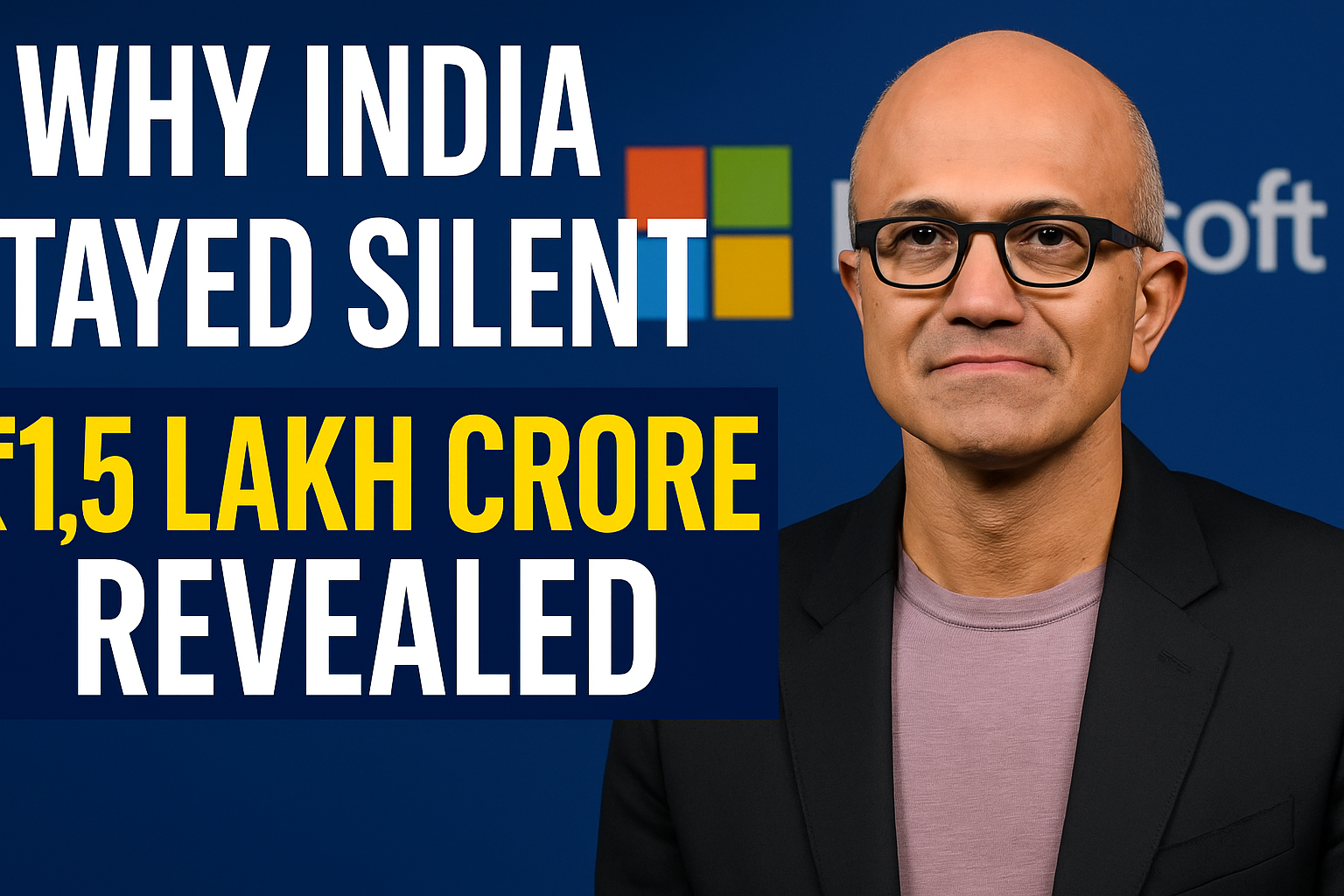
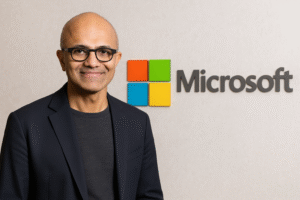
Just hours ago, Microsoft CEO Satya Nadella announced that the company is committing nearly ₹1.5 lakh crore — the largest investment Microsoft has ever made in Asia — exclusively into India. And it is not incremental spending. This monumental investment will fuel hyperscale data centres, artificial intelligence infrastructure, cloud computing systems, and a full-fledged digital ecosystem within India. The scale is so massive that this single investment could buy nearly half of Nepal’s GDP. In dollar terms, Microsoft is preparing to pour nearly $17–18 billion of fresh capital into India’s technological backbone.
Suddenly, the silence after Putin’s visit makes perfect sense. India was not hiding from America. India was preparing the ground for something far more powerful than symbolic announcements — a long-term realignment of global power through technological investment.
This is the new geopolitics.
The Quiet India–Russia–US Triangle: A High-Stakes Balancing Act
India today stands at the centre of one of the most complex geopolitical balancing acts of the 21st century. On one side is Russia, a time-tested defence partner, energy supplier, and a friend in difficult times. On the other side is the United States, the world’s largest economy and home to the most valuable technology companies — companies that can accelerate India’s rise as a future global power.
When Putin visited India, both countries knew that any loud public announcement of weapons deals or energy projects would immediately provoke Washington. In the Trump era, even a minor perception of India tilting too heavily toward Russia could trigger policy restrictions, corporate pressure, or political reactions. The US government may not always articulate it, but American companies — especially in technology and AI — are extremely sensitive to geopolitical optics.
India understood this. Putin understood this. Both sides quietly agreed that the best diplomacy here was silence.
And that silence opened the door for the biggest investment India has ever received from a US tech giant.
This is not weakness.
This is not hesitation.
This is geopolitical maturity — a recognition that today, technology and investment shape power more deeply than military posturing.
Russia understands India’s compulsions too. Moscow knows that while it can offer defence cooperation, energy security, and political alignment, it cannot give India what it urgently needs right now — tens of billions in tech investment, semiconductor opportunities, AI capabilities, and the infrastructure to host the world’s digital future. Russia does not have that capital or that technology. America does.
Thus, Russia quietly respects India’s partnership with the US, just as India respects Russia’s partnership with China. The relationship is practical, not emotional — built on shared needs, not pressure.
Why US Tech Money Is Finally Flowing Into India
For decades, Indian talent powered Silicon Valley, but the core tech infrastructure stayed inside the United States. That model is breaking down. Under Trump’s administration, restrictions on hiring foreign workers, tightening of H-1B visas, and growing anti-immigrant sentiment have made Indian engineers rethink the American dream. Attacks on Indian workers, violent incidents, and cultural disconnect are pushing many to stay home.
American companies cannot function without Indian talent — so instead of importing Indians, they are exporting the work itself.
India has become the new Silicon Valley base, with cheaper land, world-class engineers, political stability, and regional access to Asia-Pacific markets.
Microsoft sees it.
Nvidia sees it.
Google sees it.
OpenAI sees it.
Even Trump’s own tech-linked investment groups see it.
This is why Trump’s administration has encouraged data centre expansion, AI infrastructure, and massive private-sector investments abroad — with India as the prime destination. Reports indicate even private Trump-affiliated firms are exploring billion-dollar digital infrastructure projects in India. Whether he personally invests money or not isn’t the point — the strategic intent is clear. America wants India to be the counterweight to China. And American companies want Indian talent to build the next era of global technology.
Data Centres: The New Oil Fields of the World
To understand why India is suddenly being flooded with tech investments, you need to understand what data centres really are. A data centre is not just a building full of servers — it is the digital heart of every modern economy. Every AI model, UPI transaction, WhatsApp message, online purchase, IPL streaming event, and ChatGPT query runs on these massive server farms. Without data centres, the digital economy collapses.
The United States leads the world with over 5,400 data centres — around 45% of global capacity. Germany, the UK, and China follow far behind. India today is still a small player, but it is the fastest-growing data centre market in the world.
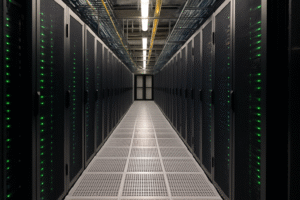
Microsoft’s ₹1.5 lakh crore investment is aimed directly at transforming India into the next global data hub. OpenAI and Google are expected to follow. The logic is simple: if India hosts the servers of the future, India controls the data of the future. And in a world where data is power, having data at home means economic independence, national security, and geopolitical leverage.
India Rising: Google Bets $6 Billion on Indian Growth While Trump Calls It “Dead read about
How Data Centres Create Millions of Jobs and Transform the Economy
The arrival of data centres does not just create a handful of software jobs. It unleashes a job tsunami across all layers of society. Engineers, cloud architects, cybersecurity experts, and AI developers get high-paying jobs. But millions more are created indirectly — electricians, cooling technicians, construction workers, facility managers, fibre-optic teams, logistics firms, and manufacturing companies that produce server racks, cooling systems, transformers, and hardware components.
When a data centre enters a region, an entire industrial ecosystem grows around it. Housing demand rises, local service industries boom, and manufacturing clusters emerge. This is why countries fight to attract data centres. They reshape local economies the way oil wells once reshaped the Middle East.
If India becomes one of the world’s top data-centre destinations — and current investments suggest it will — the country will generate millions of jobs, attract enormous FDI, and create a stable digital backbone that powers AI, defence, finance, space technology, healthcare, and governance.
CLICK HERE. To visit Microsoft products and services and support for your home or business.
India’s Energy Strategy: Powering the Digital Superpower of the Future
Data centres consume staggering amounts of energy, equivalent to powering entire towns. India has already anticipated this challenge and is preparing aggressively. The government is pushing for 500 GW of renewable energy by 2030. Dedicated solar and wind farms are being approved specifically to serve data-centre clusters. States like Maharashtra, Tamil Nadu, Uttar Pradesh, Telangana, and Gujarat have created special data-centre policies with cheaper electricity, green-energy mandates, and fast-track approvals.
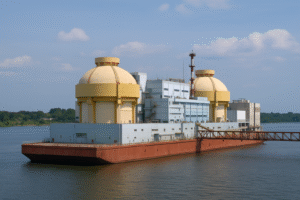
This ensures India will not only host global AI infrastructure — but will host green AI infrastructure, powered by clean energy, giving it a competitive edge as global companies face carbon regulations.
The Geopolitical Outcome: India Becomes Indispensable
The world is polarising into two technology blocs — the US-led AI ecosystem and the China-led digital-orient system. India is the only major power that both sides want on their team. With Russia as a stable defence partner and America as a massive tech investor, India is positioning itself as the central node in global geopolitics.
The silence during Putin’s visit was not weakness. It was diplomacy executed with surgical precision. India protected its relationship with Russia while clearing the pathway for the largest American technology investment in the region. This balance is what gives India real geopolitical power — the ability to shape the future rather than merely react to it.
Conclusion: India’s Rise Is No Longer a Prediction, It’s a Process in Motion
India today is not announcing its power — it is building it silently. With Russia offering strategic support, and America delivering capital and technology, India is uniquely positioned. The Microsoft investment is not just corporate news; it is a geopolitical marker that India is becoming the global centre of AI, digital infrastructure, and technological innovation.
The West sees India as the counterweight to China. Russia sees India as its bridge to Asia. And India sees itself — correctly — as a rising superpower that will not choose sides but will shape the future through intelligence, diplomacy, and strategic economic policy.
The era of India being the back office of the world is over.
The era of India becoming the brain of the world — hosting its data, powering its AI, and shaping its geopolitics — has already begun.