⭐ Florida Governor Candidate James Fishback Promises to End H-1B Jobs in State Agencies – What It Means for 2026
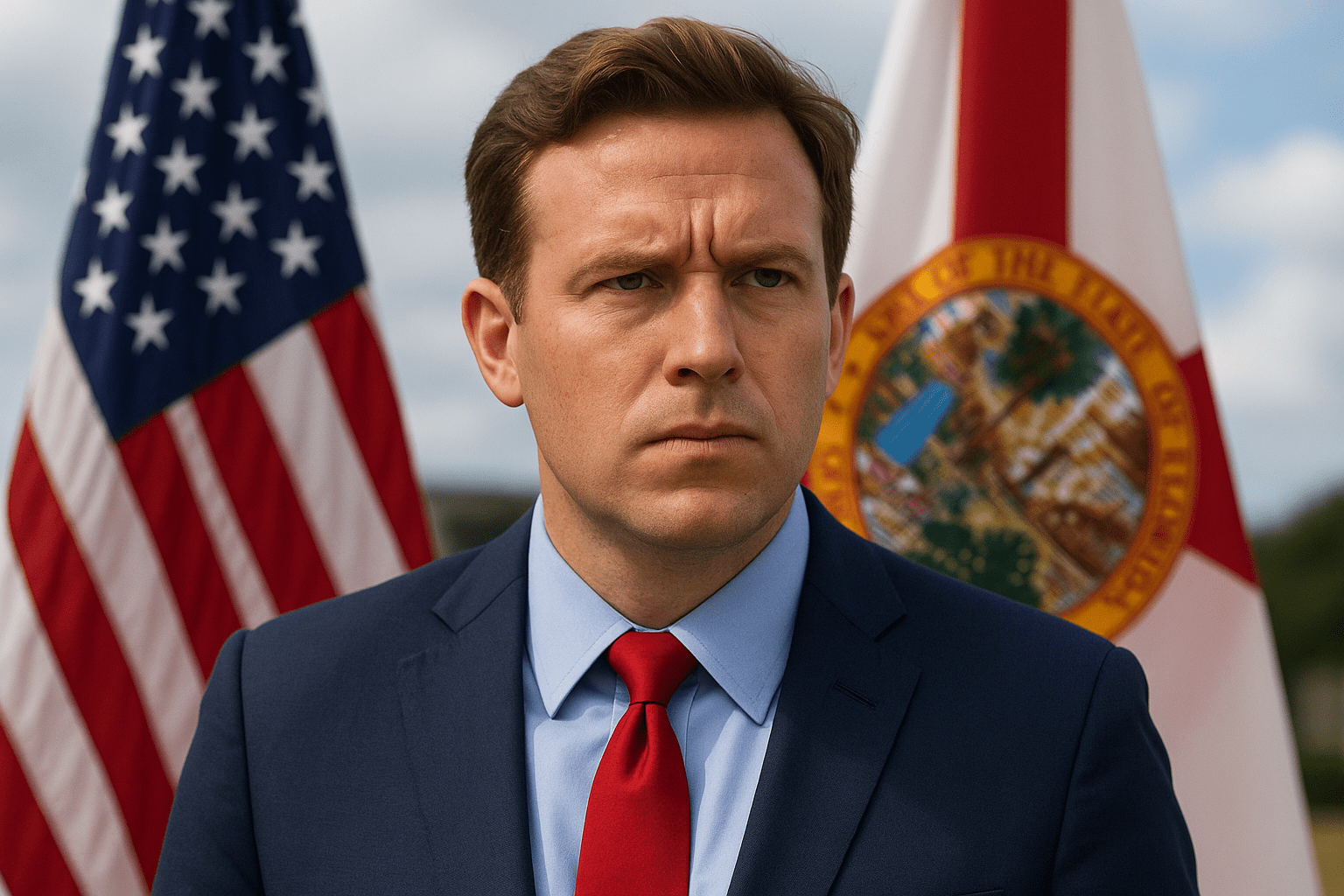
The race for Florida Governor 2026 is already making national headlines, and one of the strongest statements so far has come from James Fishback, a 30-year-old investor and newcomer to state politics. Fishback has promised that, if elected, he would remove all H-1B visa holders from state government jobs and change how Florida works with companies that use foreign workers.
His comments have attracted attention not only in the US, but also in India and other countries whose professionals often work in America under the H-1B visa programme. This article explains his pledge, the political context, why it is becoming a major talking point, and what it could mean in practice — in simple, human language, suitable for general readers and SEO-friendly for news search.
⭐ Who Is James Fishback?
James Fishback is a young Republican candidate running to succeed Governor Ron DeSantis in the 2026 Florida election. He is:
A former hedge fund founder
CEO of Azoria Partners
Founder of a youth debate non-profit (Incubate Debate)
Someone who has worked in the tech and crypto environment, once described as a “Doge architect”
A figure with connections to Elon Musk and conservative entrepreneur Vivek Ramaswamy
Fishback presents himself as a political outsider who wants to disrupt the traditional way state government works.
His campaign theme is “America for Americans”, a slogan that focuses on prioritizing local workers over foreign labour.
⭐ What Exactly Is His H-1B Promise?
The centrepiece of Fishback’s campaign is his strong stance on H-1B visas.
✔ “Fire every H-1B worker in state agencies”
Fishback says that on Day One, if he becomes governor, he would:
End employment for all H-1B workers in Florida’s state government offices
Review state contracts that involve companies reliant on foreign workers
Replace H-1B employees with American citizens where possible
✔ Cancel contracts with companies using H-1B talent
He says companies doing business with Florida must pick one:
Keep their state contracts, OR
Keep their H-1B employees
Fishback calls this move part of his plan to stop what he describes as an unfair hiring practice that favours foreign talent over local workers.
✔ Incentives for American hiring
Fishback adds that he would offer:
Financial incentives for companies hiring American citizens
Strict conditions on firms using migrant or overseas talent in state-supported projects
These ideas are part of his broader pledge to overhaul Florida’s workforce policies.
⭐ Why Is This Statement Controversial?
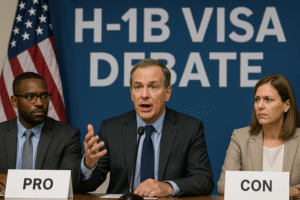
Fishback’s comments received national attention because his stance is much stronger than typical political positions on legal immigration.
✔ Targets legal visa programmes
His criticism is directed at legal pathways such as:
H-1B (specialty occupation workers)
OPT (Optional Practical Training), used by international students
He says these programmes may reduce opportunities for American workers — a claim debated by economists and business groups.
✔ Personal story behind the message
Fishback often mentions his father’s experience of losing a small landscaping business to cheaper labour competition. He says this shaped his belief that immigration affects local workers.
✔ Strong language on workforce “replacement”
In interviews, he argues that dependence on foreign labour is risky and that the state should rebuild a strong local workforce. These comments have been viewed as harsh by some community groups, while his supporters say he is highlighting real economic concerns.
⭐ Political Context: Running After Ron DeSantis
Fishback is part of the Republican primary for Florida governor. His main rival is Rep. Byron Donalds, who has the endorsement of former President Donald Trump.
Fishback has openly criticised Donalds, calling him too close to “H-1B corporate donors.” This tension has added more visibility to the immigration and employment debate within the Republican Party.
He also supports several policies that appeal to conservative voters:
Eliminating property tax
Promoting investments that avoid DEI (Diversity, Equity, Inclusion) frameworks
Halting large AI data centre projects he believes do not benefit local residents
These ideas align with his broader message about protecting affordability and opportunities for Floridians.
⭐ What Would His H-1B Policy Actually Do?
It is important to understand what a state governor can — and cannot — legally do.
✔ A governor can:
Decide hiring rules for state government jobs
Add conditions to state-funded contracts
Offer incentives for local hiring within the state
✔ A governor cannot:
End or change the federal H-1B visa programme
Prevent private companies from hiring H-1B workers
Control federal-level immigration policies
So Fishback’s pledge mainly affects:
State government jobs
State-funded projects
State partnerships with private companies
If implemented, it would apply only to employees or contractors working directly with the Florida state government — not to the entire H-1B workforce in Florida.
⭐ Impact on Indian and Global Workers
Because Indians make up the largest share of H-1B visa holders in the US, this topic is being discussed widely in Indian media and among tech professionals.
Possible impacts:
✔ State government jobs
H-1B workers in Florida government agencies could lose eligibility for continued employment.
✔ Private companies with state contracts
Tech companies, consulting firms, engineering contractors, and data-center operators may face tighter rules if they work with the Florida government.
✔ New H-1B workers
Young Indian professionals or students coming through H-1B or OPT programmes might avoid Florida-based government-linked opportunities if these rules become reality.
However, there are many legal, political, and practical barriers, so the final impact may depend heavily on:
The election outcome
Court challenges
Negotiations with companies
State legislative approval
⭐ Supporters vs. Critics: Two Sides of the Debate
✔ Supporters say:
The policy will encourage companies to hire more Americans
Young Floridians will get better job opportunities
It protects local wages
It prevents over-dependence on foreign labour
✔ Critics argue:
Florida may struggle to fill high-skill jobs without international talent
Companies could pull back from the state
The policy may create unnecessary tension among communities
Legal challenges could overturn several proposals
This debate gives the issue national visibility ahead of the 2026 election.
⭐ Conclusion: A Campaign Built on “Americans First” Hiring
James Fishback’s promise to end H-1B employment in Florida’s state agencies is one of the strongest workforce-related campaign pledges in recent years. His approach focuses on:
Prioritising local workers
Rewriting state employment rules
Pressuring companies to hire American citizens
Reducing foreign labour in government-linked roles
Whether his proposals become policy will depend on the 2026 election outcome and legal scrutiny. But for now, his statements have sparked a major debate on immigration, employment, and the future of workforce policy in the United States.
This issue is being closely watched by businesses, local residents, and especially international professionals — including thousands of Indian workers who are part of the H-1B visa system.