🌍 CDEP Report 2025: Rare-Earth Mineral Mining — India’s Next Economic Frontier
🔍 Introduction: The New Gold Rush — Rare Earths
The CDEP’s latest report on rare-earth minerals highlights an urgent truth — the future of global industries, from green energy to defence and electronics, depends heavily on rare-earth elements (REEs).
For India, rich in reserves yet poor in production, this is both a challenge and an opportunity. The CDEP analysis outlines how mining reforms, bureaucratic efficiency, and investment in technology can turn India into a critical global supplier.
📊 Key Findings from the CDEP Report
India possesses 6.9 million metric tons of rare-earth reserves, among the world’s largest.
Despite this, India’s production share is below 1% of global output.
Over 80% of India’s rare-earth imports come from China, exposing a deep strategic vulnerability.
The report recommends aggressive exploration, domestic processing units, and public-private collaboration to reduce dependence.
⚒️ Limitations in Rare-Earth Mining in India
The CDEP report highlights several core limitations that restrict India’s progress:
Limited Exploration: Geological data remains outdated. Many regions with potential deposits are yet to be surveyed.
Processing Gap: India lacks refining and separation technologies that convert ores into usable oxides or metals.
Regulatory Delays: Multi-layered bureaucratic approvals, slow environmental clearances, and land disputes deter private players.
Environmental Concerns: Extraction can produce hazardous waste; thus, strict ESG frameworks are essential.
Financial & Technological Constraints: Mining REEs requires high investment and advanced technology, which India currently imports.
🏛️ Role of the Government and Bureaucracy
The CDEP report emphasizes that the government’s proactive role is key to unlocking the sector’s full potential.
Policy Leadership: The National Critical Mineral Mission (2025) is a strong start but requires consistent funding and execution.
Ease of Doing Business: Streamlining clearances, digitizing mining approvals, and reducing red tape will encourage investment.
Public-Private Partnerships (PPP): Collaboration with Indian and foreign companies can bring both capital and technology.
Sustainability and Regulation: Transparent ESG norms must be enforced to maintain community trust and environmental balance.
International Partnerships: India should strengthen its position through strategic MoUs and global alliances for supply chain security.
⚠️ Challenges in the Rare-Earth Sector
Over-Dependence on Imports: China dominates global rare-earth supply chains.
Geopolitical Risks: Trade bans or export restrictions can disrupt supply.
High Processing Costs: India’s refining infrastructure is still nascent.
Skill Shortages: Lack of trained engineers and R&D experts in rare-earth technology.
Environmental Risks: Without strong waste-management systems, mining can damage ecosystems.
Value Addition Deficit: Most profits are captured at the processing and manufacturing stage — areas India must focus on.

🧭 What India Should Do — The Way Forward
To bridge the gap between potential and performance, the CDEP report proposes a practical roadmap:
Accelerate Exploration: Deploy AI-based geological mapping and satellite surveys.
Set Up Processing Hubs: Establish dedicated Rare-Earth Processing Parks under the National Mineral Development Corporation (NMDC).
Incentivize Manufacturing: Provide tax breaks for rare-earth magnet, alloy, and EV component makers.
Develop a Recycling Ecosystem: Extract rare earths from e-waste to reduce mining dependency.
Encourage Startups: Support Indian startups in mineral refining, green mining, and sustainable extraction.
Strategic Stockpiles: Build a national reserve of critical minerals for energy security.
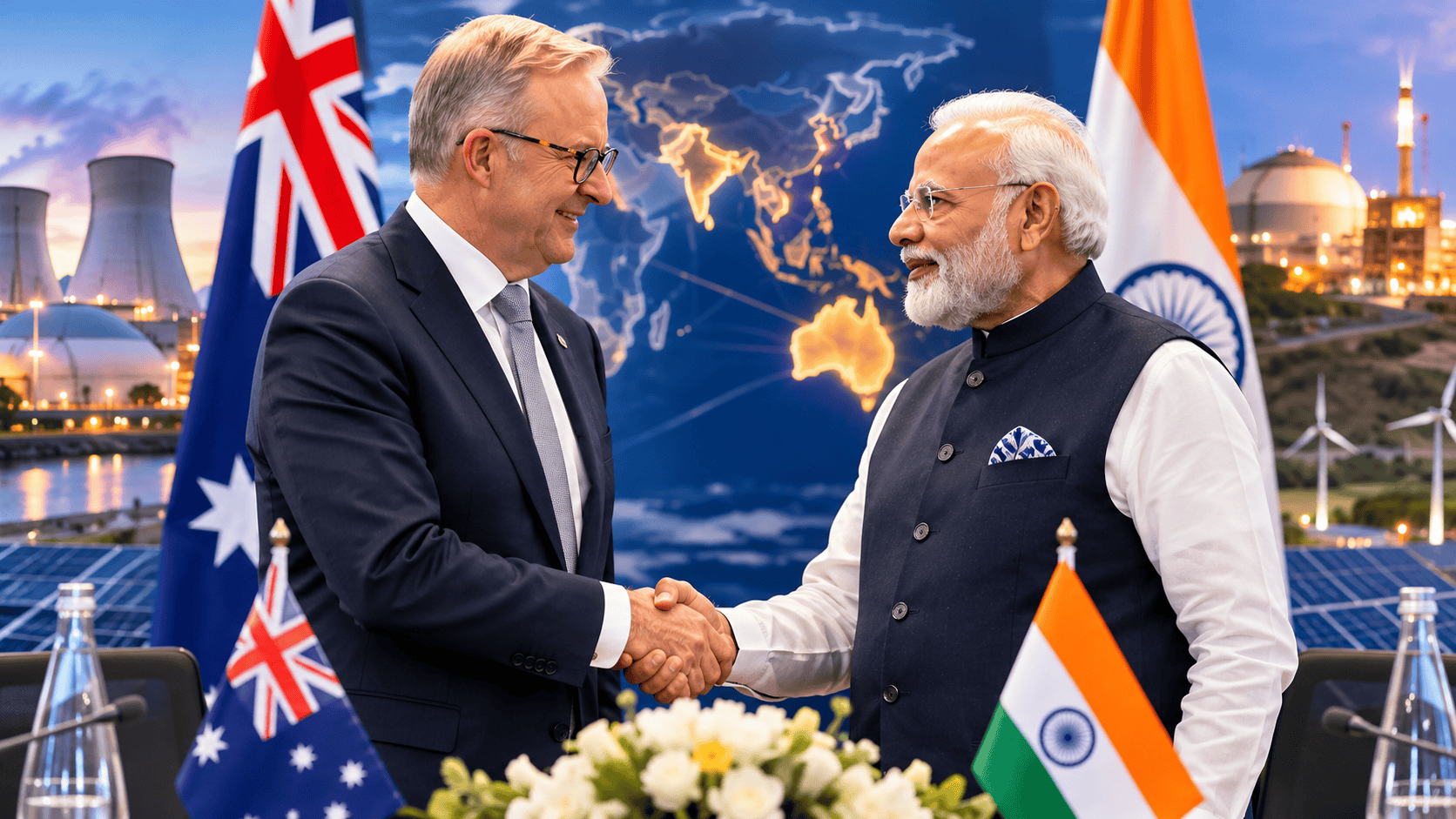
International Collaboration: Partner with Australia, Japan, and the US for technology and joint exploration.

🌏 Global Leaders in Rare-Earth Mining, Storage & Use
Table 1 — Top Countries by Rare-Earth Production & Reserves
| Country | Annual Production (2024) | Known Reserves (Million Tons) | Remarks |
|---|---|---|---|
| China | ~270,000 metric tons | 44 | Global leader; controls refining and exports. |
| United States | ~45,000 metric tons | 1.8 | Large deposits; limited refining. |
| Australia | ~13,000 metric tons | 5.7 | Emerging hub for critical minerals. |
| Myanmar | ~31,000 metric tons | — | Regional competitor with unstable supply. |
| India | <1% of global output | 6.9 | High reserves; low production capability. |
Source: CDEP Report 2025, Nasdaq, ICWA, IMPRI India
Table 2 — India’s Rare-Earth Mineral Dependency
| Metric | Value / Estimate | Comment |
|---|---|---|
| Estimated REE reserves | 6.9 million metric tons | Vast potential yet untapped. |
| India’s global share | <1% | Indicates underutilization. |
| Imports from China | 81–90% of total | Major strategic vulnerability. |
| New exploration (Rajasthan, 2025) | 111,845 tons REO | Promising new findings. |
| Critical minerals import dependency | >40% overall | Needs diversification of supply. |
💡 Economic Impact: How Rare-Earth Mining Can Boost India’s Growth
Industrial Expansion: REEs are essential for EVs, semiconductors, defence, and renewable energy — all key to India’s $5 trillion economy target.
Job Creation: Mining and refining projects will generate thousands of skilled and semi-skilled jobs.
Export Revenue: A self-reliant rare-earth supply chain can turn India into an exporter rather than importer.
Technological Sovereignty: Domestic control over critical minerals strengthens national security and manufacturing independence.
Regional Development: Mining hubs can uplift backward regions such as Odisha, Jharkhand, and Rajasthan.
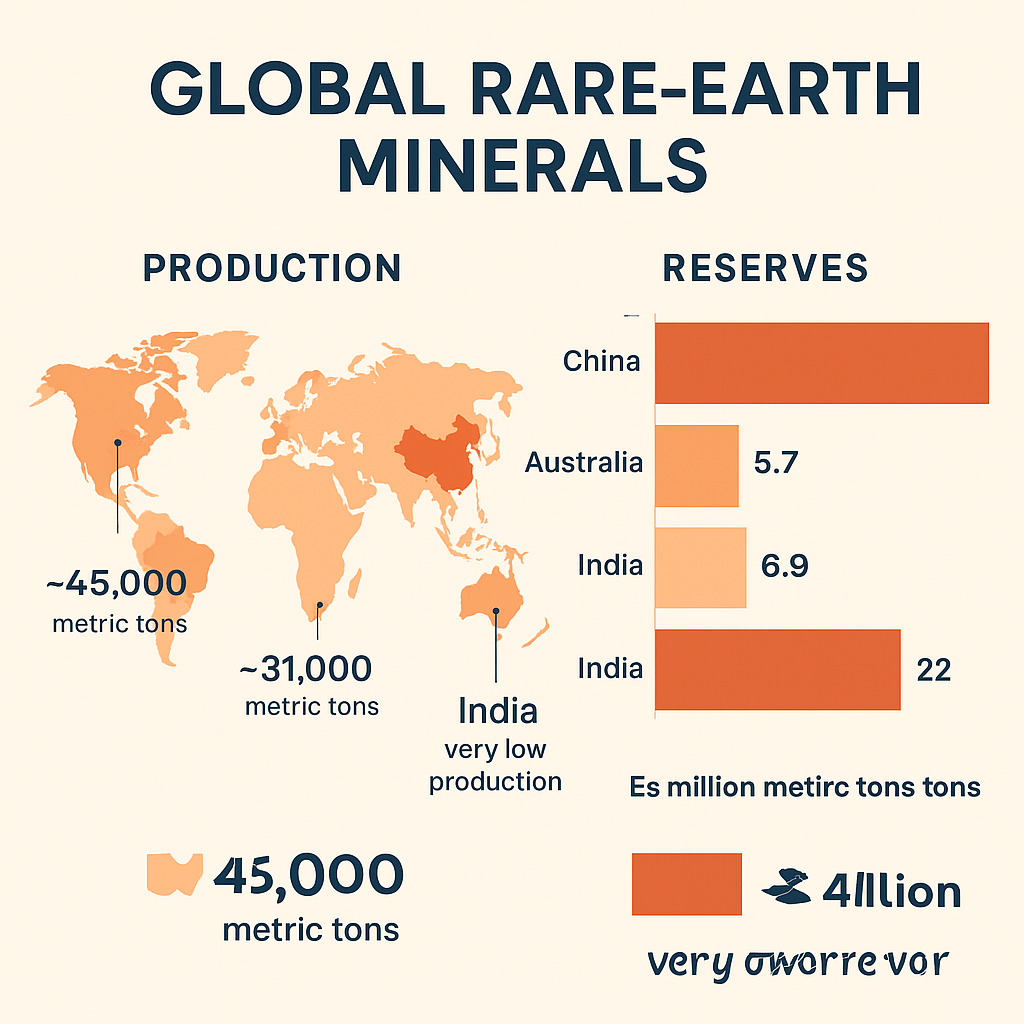
🧩 Infographic: Global Rare-Earth Production & Reserves
(Embed the infographic image below this section in your blog post)
🏁 Conclusion
The CDEP’s 2025 report is a wake-up call: India must move fast from being a resource-rich but technology-poor nation to a global player in the rare-earth economy.
With the right mix of policy reform, bureaucratic agility, foreign partnerships, and investment in R&D, India can capture a major share of this trillion-dollar market.
Rare-earth minerals are not just about mining—they are about securing the future of India’s green energy, digital economy, and strategic autonomy. The time to act is now.