
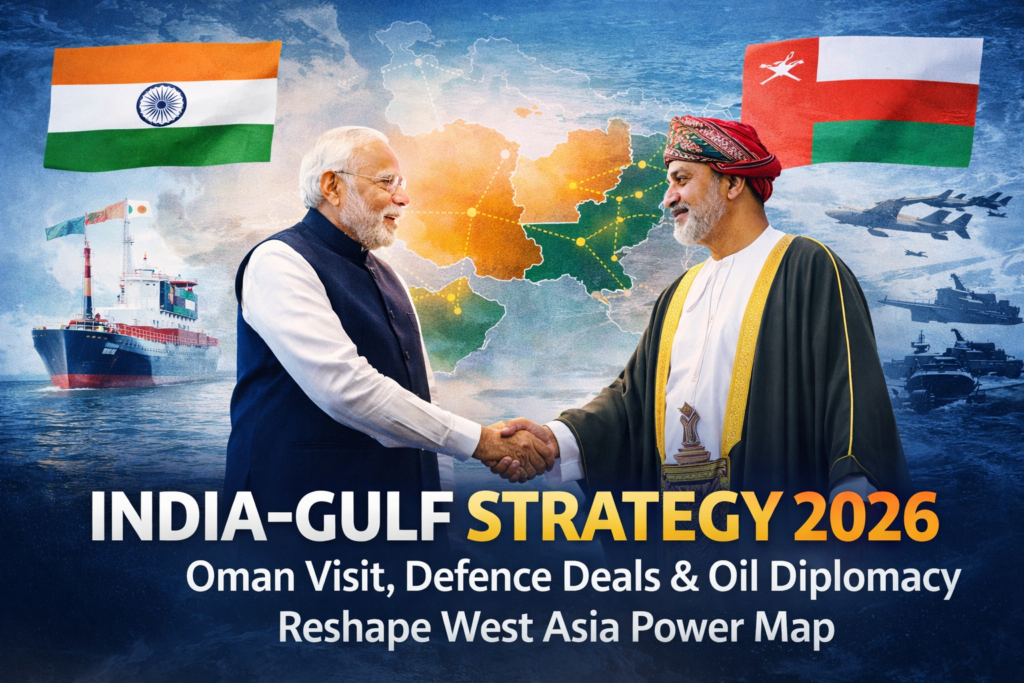
India–Gulf Diplomacy Reaches Historic Peak: Oman Visit & Top Honor Show India’s Rising Power in the Middle East
Introduction: India’s New Gulf Era Is Here — And It Matters to Every Indian
India’s relationship with the Gulf has changed more dramatically in the past ten years than in the previous fifty. Today, Prime Minister Narendra Modi stands among the most decorated foreign leaders in the region, with leaders of UAE, Saudi Arabia, Bahrain and now Oman awarding him their highest national honours. Gulf monarchs publicly describe India as a reliable “long-term partner of stability”, a phrase rarely used for any Asian nation.
This transformation is not symbolic — it is shaping jobs, oil prices, rupee stability, defence access, remittance flow, and India’s global standing.
The Gulf region matters deeply to India because:
65% of India’s crude oil comes from Gulf countries
Over 9 million Indians live and work in the GCC
India receives more than $100 billion in global remittances annually, and a huge part comes from GCC states
Gulf states are among India’s biggest foreign investors
Defence cooperation and port access are expanding fast
At a time when world politics is realigning and China–Pakistan influence is declining in the Gulf, India has stepped into a central position.
The clearest proof? Modi’s grand Oman visit in December 2025, where he received Oman’s highest civilian honour, and the foreign ministries of both countries announced new defence, technology, energy and port cooperation agreements.
For India, this is not just soft diplomacy — this is geo-economics.
Why India and Gulf Nations Are Getting Closer — The Drivers Behind This Rise
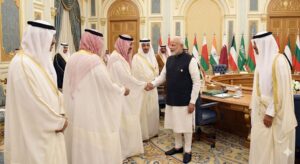
India–Gulf closeness is not accidental. It is the result of long-term structural forces reshaping the region:
1️⃣ India’s Economic Power Matters
With a $4.2 trillion economy in 2025 and the world’s fastest-growing large economy, India represents demand, investment opportunity and demographic advantage. Gulf nations want to diversify away from oil dependence. India is the perfect partner.
2️⃣ Gulf Diversification Plans Need India
Saudi Arabia’s Vision 2030, UAE’s Vision 2050, and Oman’s 2040 Strategy directly involve India in tourism, IT, renewables, manufacturing and financial services.
3️⃣ India’s Neutral Foreign Policy Is Trusted
Unlike many powers, India does not interfere in domestic politics of Gulf states.
4️⃣ Mistrust Toward China & Pakistan
China’s political assertiveness, debt traps, and Iran ties have made Gulf rulers cautious.
Pakistan’s influence has collapsed; its economic crisis and political instability shook Gulf confidence.
5️⃣ India’s Image Shift Since 2014
India now markets itself as:
geopolitical stabilizer
technology hub
labour source
military partner
energy buyer
This image shift is why honours and awards are flowing.
PM Modi’s Oman Visit 2025: India Steps Into Arab Geography Like Never Before
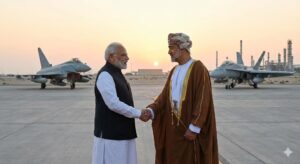
Prime Minister Modi’s December 2025 visit to Oman was more than diplomacy — it signaled a new geopolitical axis emerging in the Indian Ocean.
What happened on this trip?
✔ Modi received Oman’s highest civilian honour — a clear sign of trust and deep respect.
✔ India–Oman maritime defence pact was announced, opening naval access and ship repair routes near the Red Sea and Gulf of Aden — critical for India’s navy.
✔ Talks on linking Iran’s Chabahar port to Oman’s Duqm port moved forward, giving India a West Asian logistics triangle.
✔ Oman offered investment in Gujarat hydrogen projects — part of India’s big green energy push.
✔ Indian companies secured contracts in Omani renewable energy, IT services, healthcare and tourism projects.
✔ Joint space research and satellite launch cooperation was discussed, showing Gulf interest in India’s ISRO success.
✔ Military training and naval exercises were expanded — for the first time, Oman will host rotational Indian naval presence.
This visit confirms that India is no longer a guest in the Gulf — it is becoming a resident power.
India’s Gulf Medal Collection — And Why These Honours Matter
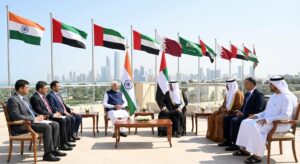
India is now one of the only nations whose leader has been honoured with top national medals by nearly every major Gulf state.
UAE – Order of Zayed
The UAE honoured Modi with its highest national award for deepening political, economic and defence ties. UAE leaders have openly stated that India is their “trusted Asian partner”. Today, UAE–India relations include CEPA free trade, digital rupee payment links, energy security, and space tech partnerships.
Saudi Arabia – King Abdulaziz Award
Saudi Arabia rarely offers such honours, especially to Asian leaders. This reflects India’s growing leverage in oil imports, defence cybersecurity, and intelligence sharing.
Bahrain – King Hamad Order
Bahrain views India as a stability partner as it navigates regional tensions with Iran. India also protects shipping routes Bahrain depends on.
Oman – Highest Civilian Honour (2025)
This recognition reflects Oman’s belief that India will drive future ports, shipping, energy and strategic autonomy away from China’s reach.
These awards are geopolitical currency — signalling that Gulf nations are pivoting away from Pakistan & China toward India.
Why the Gulf Economies Rely on India — Oil, Labour, Remittance, Trade
1️⃣ India is Gulf’s Largest Oil Buyer
Saudi Arabia and UAE are major suppliers, with Saudi alone exporting nearly $29 billion worth of crude to India yearly. India guarantees stable, long-term demand.
2️⃣ Gulf Remittances Fuel India’s Economy
India receives the world’s highest annual remittances — $111 billion in 2024, and a huge share comes from Gulf workers.
These funds stabilize:
rupee value
rural incomes
banking deposits
3️⃣ Indian Labour is the Backbone of Gulf Infrastructure
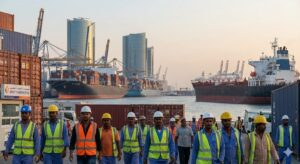
Over 9 million Indians live in GCC countries — building construction, hospitals, IT systems, airports, tourism, and logistics.
4️⃣ Food Security Matters
Gulf nations depend on India for wheat, rice, vegetables and spices. Food flows are stabilizing Gulf inflation.
5️⃣ Tourism & Airlines Network
India is now the largest tourism source for Dubai and a major source for Saudi Arabia’s new tourism projects under Vision 2030.
Defence & Military Partnerships: India Becoming Security Partner in Gulf Waters
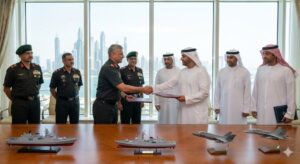
The Gulf region is a frontline for naval rivalry and maritime piracy. India is stepping in.
UAE–India Defence Exercises
Joint training & cyber-security tech transfers are underway.
India–Oman Naval Corridor
Oman’s Duqm port may soon host full-service naval access for India — crucial for Indian Ocean strategy.
Saudi Cybersecurity Links
Indian firms are training Saudi systems engineers and defence cybersecurity experts.
Mideast Sea-Route Intelligence Sharing
India now receives GCC maritime intelligence — something Pakistan had access to for decades.
Pakistan’s military importance to the Gulf has sharply declined.
Major Investments & Economic Announcements in 2025: India the New Gulf Bet
2025 was the year India–Gulf economics erupted with announcements:
UAE extended its $75B investment pipeline into India
Saudi Arabia doubled Vision 2030 cooperation funding
Oman to produce hydrogen with Indian companies
Qatar expanded LNG supply deals into late 2030s
Dubai announced a clean energy investment fund with India
Talks began on creating a GCC–India digital rupee payment system
Riyadh–Mumbai maritime investment corridor identified
These are billions worth of long-term structural commitments.
Jobs, Visas & Why Young Indians Care About The Gulf Boom
For Indian families, the Gulf is not an abstract foreign policy topic — it is a livelihood.
New visa reforms:
UAE is offering long-term “Golden Visas”
Saudi is hiring teachers, nurses, pilots & IT engineers
Oman is hiring Indian medical staff and petroleum engineers
New Zealand–style skilled worker routes may come to UAE & Qatar
Salaries remain 2x–6x higher than India in:
IT
healthcare
hospitality
aviation
oil & gas engineering
This is why Indians keep searching UAE job news daily — the Gulf is a ladder to the middle class.
Impact on Rupee, Stock Market & Oil Prices
India’s Gulf alignment affects markets:
Rupee Support
Oil stability + remittances = currency stability.
Stock Gainers Potential
Adani Ports (Gulf terminals)
ONGC (energy deals)
Reliance (Saudi–energy tie-ups)
Hindustan Aeronautics (defence)
Cheap LNG from Qatar
Reduces electricity cost pressure for India.
Pakistan & China: Silent Losers in India–Gulf Expansion
Pakistan’s Fall
The Gulf once relied on Pakistan militarily. Today:
Pakistan is economically broken
Saudi loans come with harsh conditions
UAE has stopped cash rescue
China’s Decline
Gulf states fear technology dependence.
India’s digital economy looks safer than Chinese surveillance models.
India is replacing both states in Gulf thinking.
Culture & Soft Power: Bollywood, Temples & IPL in the Gulf

Soft power matters. In UAE today:
Bollywood dominates cinemas
cricket stadiums fill up for IPL
Indian food chains boom
India opened the first Hindu temple in Abu Dhabi
Indian schools are expanding in Dubai and Doha
Culture cements diplomacy.
Future Outlook: Will India Replace the West in Gulf Politics?
India won’t replace the US militarily — not yet.
But the Gulf is clearly:
hedging between US and India
shifting away from China
betting on Asian consumer growth
looking to India for tech, youth and security
By 2030, India may be the Gulf’s largest trade partner & workforce supplier.
Conclusion: India–Gulf Bond Is Becoming a New Geopolitical Power Axis
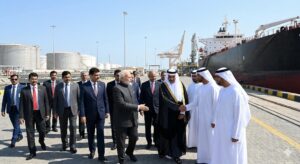
The India–Gulf partnership is not a headline — it is a historic realignment.
Backed by:
oil trade
defence access
remittance economy
maritime cooperation
technology ties
youth mobility
The Oman visit was not the end — it was the beginning of India’s power presence in the Arab world.
The next decade will see:
deeper military routes
digital trade
joint energy missions
Gulf rupee transactions
Indian labour leadership
India is officially a Gulf power now — not an observer.
And this is just the start. 🇮🇳🌍🔥
To visit Ministry of Petroleum and Natural Gas click here
Frequently Asked Questions (FAQ)
1️⃣ Why is India strengthening ties with Gulf countries?
India is boosting relations with Gulf nations to secure long-term oil supplies, expand defence cooperation, attract foreign investment, protect Indian workers abroad, and build direct trade routes that reduce dependence on China. The Gulf is crucial for India’s energy security and remittance economy.
2️⃣ What is the importance of the Oman visit in this strategy?
PM Modi’s 2025 Oman visit opened defence access to Omani ports, expanded maritime intelligence sharing, and brought new investment pledges in hydrogen, space cooperation, energy, healthcare and IT sectors. The visit also reflects rising trust between India and Oman in West Asian geopolitics.
3️⃣ How big is India–Gulf trade currently?
India–GCC trade crossed $184 billion in FY2023–24, making the Gulf region India’s largest trading partner after the US. UAE alone represents more than $85 billion of total bilateral trade, showing deep commercial integration.
4️⃣ Why are Gulf nations awarding top civilian honours to PM Modi?
UAE, Saudi Arabia, Bahrain and Oman awarded PM Modi their highest national honours to recognise India’s growing role in regional stability, energy partnerships, defence cooperation and economic transformation. These awards symbolise India’s rising influence in West Asia.
5️⃣ How does the Gulf region help India’s rupee stability?
Millions of Indian workers in the Gulf send home huge remittance flows. India received more than $111 billion in global remittances in 2024, and a major share came from GCC countries. This constant dollar inflow supports India’s forex reserves and stabilises the rupee.
6️⃣ What defence gains does India get from the Gulf?
India is gaining naval access to Omani ports, stronger intelligence sharing with UAE and Saudi Arabia, joint defence exercises and cyber training cooperation. This strengthens India’s maritime security footprint across the Arabian Sea and Gulf of Oman.
7️⃣ Does India’s growing Gulf role affect Pakistan and China?
Yes. Pakistan’s strategic role in the Gulf has declined due to its ongoing financial crisis and political instability. China now faces counter-balance pressure as Gulf nations diversify away from Beijing’s debt-driven investments and look towards India’s tech and labour supply.
8️⃣ How many Indians live in the Gulf today?
More than 9 million Indians live and work across Gulf Cooperation Council nations, mainly UAE, Saudi Arabia, Kuwait, Qatar, Bahrain and Oman. Their incomes support millions of families within India.
9️⃣ What sectors are booming due to India–Gulf cooperation?
Defence, renewable energy, oil & gas, space technology, fintech, tourism, healthcare, education and IT services are seeing rapid growth as bilateral ties deepen.
🔟 What future opportunities exist in India–Gulf relations?
Upcoming opportunities include rupee-based oil trade mechanisms, hydrogen energy production, digital payment systems between GCC–India, dual-degree education, defence manufacturing and Indo-Gulf maritime corridors connecting Europe to Asia.
To visit official website of MEA click here
People Also Ask (PAA)
1️⃣ What is India trying to achieve in the Gulf region?
India wants long-term energy security, expanded trade routes, defence access, and deeper political influence in West Asia. The Gulf offers oil stability, remittances, markets and naval access points crucial for India’s 2026 strategy.
2️⃣ How does Oman fit into India’s Gulf strategy?
Oman provides India with a maritime gateway to the Arabian Sea and strategic access to ports like Duqm and Salalah. Defence agreements signed in 2025 allow naval support, joint drills and intelligence sharing.
3️⃣ Why are Gulf countries awarding PM Modi top civilian honours?
Gulf monarchies see India as a stable partner for oil markets, defence manufacturing, labour supply and digital trade. These honours signal trust and a major shift away from Pakistan-China dependency.
4️⃣ How will India benefit from Gulf defence partnerships?
India gains naval docking rights, cybersecurity collaboration, maritime intelligence and direct military training links. This boosts India’s presence across the Arabian Sea and helps counter regional threats.
5️⃣ Will India replace China in the Gulf region?
Not fully, but India is rapidly emerging as an alternative economic and defence partner. Gulf nations are diversifying to reduce China exposure due to debt risks and geopolitical tensions.
6️⃣ How important is oil to India–Gulf relations?
The Gulf supplies more than 65% of India’s crude oil needs. Securing discounted, long-term supply contracts protects Indian inflation and stabilises the rupee.
7️⃣ What role does the Indian workforce play in the Gulf economy?
Over 9 million Indians power Gulf infrastructure, healthcare, tourism, aviation, IT and construction. Their remittances support India’s economy and foreign reserves.
8️⃣ Is Pakistan losing influence in the Gulf?
Yes. Economic crisis, instability and security concerns have reduced Pakistan’s importance. India’s economy, tech strength and military rise are filling that space.
9️⃣ What are the new India–Gulf investment sectors?
Hydrogen energy, ports, fintech, e-commerce, healthcare, IT services and defence manufacturing are major expansion areas through 2026.
🔟 How will India’s Gulf strategy impact rupee strength?
Stable oil imports, rising remittances and GCC investments help support forex reserves — improving rupee stability and reducing trade deficit pressure.





1 thought on “1️⃣ “India–Gulf Strategy 2026: Oman Visit, Defence Deals & Oil Diplomacy Reshape West Asia Power Map””